
Jackery vs Goal Zero: what the catalogue actually says
Every brand-level number in this Jackery vs Goal Zero comparison is recomputed from one file: the site catalogue dated 18 August 2026, which holds 446 products. Jackery accounts for 78 of them and Goal Zero for 62.
The basis is whole brand. That means all 78 Jackery entries and all 62 Goal Zero entries — discontinued units included, and solar panels, expansion batteries and accessories alongside the power stations. Both sides of every comparison use that population, and where narrowing to power stations alone changes the answer, the narrower figure is given too.
Cost per watt-hour
Cost per watt-hour is price divided by capacity. Only entries that publish both figures can be counted, so the sample is smaller than the brand totals: 58 of Jackery’s 78 products, and 20 of Goal Zero’s 62.
On that whole-brand basis the median Jackery product costs $0.79 per watt-hour and the median Goal Zero product costs $1.00 per watt-hour. Restrict both sides to the four power-station categories and the medians become $0.93 across 45 Jackery entries and $1.03 across 17 Goal Zero entries. The gap narrows but does not reverse.
Per unit, among models still sold:
| Model | Price | Capacity | Cost per Wh |
|---|---|---|---|
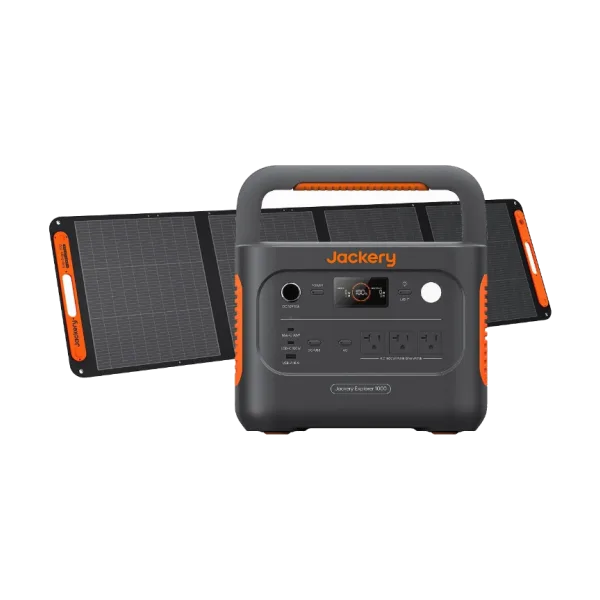 Jackery Explorer 1000 v2 Jackery Explorer 1000 v2 | $519 | 1,070Wh | $0.49 |
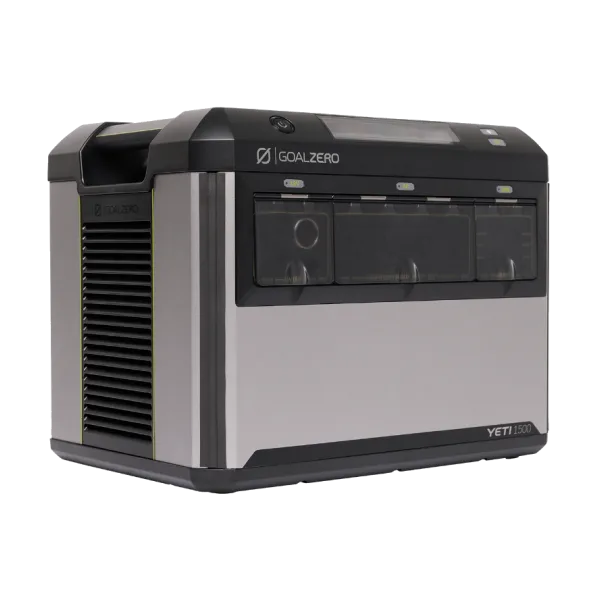 Goal Zero Yeti 1500 Goal Zero Yeti 1500 | $1,499.95 | 1,505Wh | $1.00 |
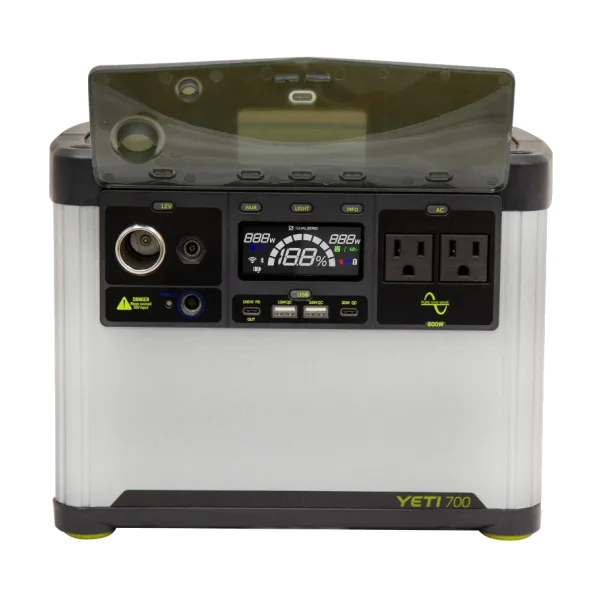 Goal Zero Yeti 700 Goal Zero Yeti 700 | $699.95 | 677Wh | $1.03 |
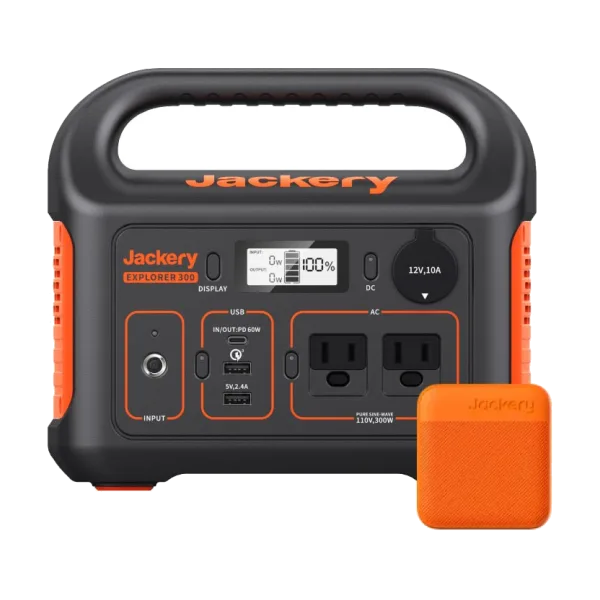 Jackery Explorer 300 Jackery Explorer 300 | $309 | 293Wh | $1.05 |
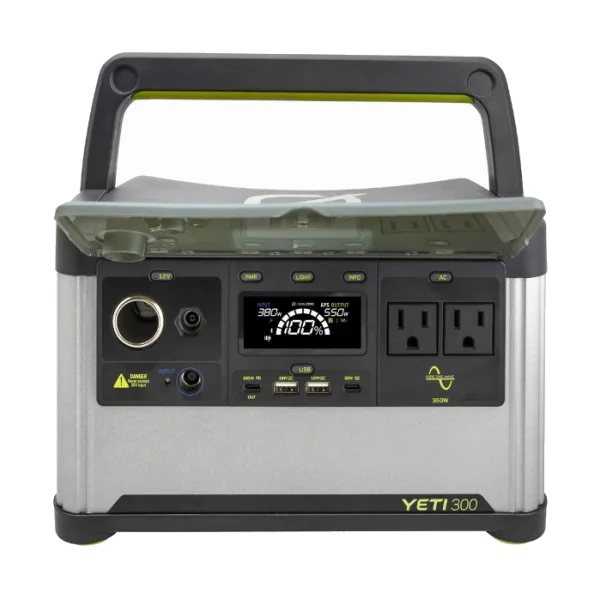 Goal Zero Yeti 300 Goal Zero Yeti 300 | $349.95 | 297Wh | $1.18 |
The brand median does not hold at every size. Jackery’s Explorer 300 costs $1.05 per watt-hour, which is worse than the Goal Zero Yeti 700 at $1.03. Small units spread case, ports and inverter across fewer cells, a penalty that applies to both brands.
Cell chemistry
Jackery’s 78 entries break down as 65 LiFePO4, 10 lithium-ion and 3 with no chemistry published. There is no lead-acid and no NMC anywhere in its range.
Goal Zero’s 62 entries are more mixed: 11 LiFePO4, 12 NMC, 10 lead-acid, and 29 with no chemistry published. That unpublished share — nearly half the brand — is the single largest group.
One naming trap is worth flagging. The Jackery Explorer 300 is a LiFePO4 unit and is currently sold. The older lithium-ion 300 in the catalogue is a different product, listed as Solar Generator 300 — 294Wh, lithium-ion, rated at 800 cycles. The two should not be conflated.
Cycle ratings
Jackery publishes a cycle count on 40 of its 78 entries. Of those 40: 19 are rated at 4,000 cycles, 8 at 6,000, and 3 at 3,000, which puts 30 of the 40 published ratings at 3,000 cycles or more. The remaining 10 sit lower, at 2,000, 1,000, 800 and 500.
Goal Zero publishes a cycle count on 15 of its 62 entries. Of those 15, 11 are rated at 500 cycles and 4 at 4,000 — so 4 of 15 reach 3,000 or more.
Goal Zero has four models rated as highly as anything Jackery sells, but publishes no rating on 47 of its 62 products. Jackery discloses cycle life far more often, and where Goal Zero does disclose it, the figure is usually 500.
Head to head: Explorer 1000 v2 against Yeti 1500
These are the closest current LiFePO4 units the two brands offer in the mid-to-large range.
| Spec | Jackery Explorer 1000 v2 | Goal Zero Yeti 1500 |
|---|---|---|
| Price | $519 | $1,499.95 |
| Capacity | 1,070Wh | 1,505Wh |
| Cost per Wh | $0.49 | $1.00 |
| Chemistry | LiFePO4 | LiFePO4 |
| Cycle rating | 4,000 to 70%+ | Not published |
| AC output | 1,500W | 2,000W |
| Surge | 3,000W | 3,600W |
| Solar input | 400W | 600W |
| AC charge input (W) | Not published | Not published |
| Weight | 23.8 lb | 52.8 lb |
| Warranty | 3 years base | 5 years |
| Expandable | No | No |
Two notes on that table. Jackery hedges its own weight figure as “around 23.8 lbs”. Its warranty is published as 3+2 years, the extra two conditional on registering the unit, so the flat term is three.
The AC charge input row is not an oversight. Neither maker publishes a charging wattage: the figure is absent on all 78 Jackery and all 62 Goal Zero entries. Jackery gives a voltage and current limit instead. Any wattage quoted for either brand was calculated downstream, not published by the maker.
What that capacity actually runs
Usable AC energy runs about 85% of rated capacity once inverter losses are taken out; on DC it is nearer 92%. For the Explorer 1000 v2 that is 1,070 × 0.85 = 909.5Wh on AC, and 1,070 × 0.92 = 984.4Wh on DC.
- Fridge at 50W: 909.5 ÷ 50 = 18.2 hours
- CPAP at 40W: 909.5 ÷ 40 = 22.7 hours
- Laptop at 60W: 909.5 ÷ 60 = 15.2 hours
- Router at 10W on DC: 984.4 ÷ 10 = 98.4 hours
- Microwave at 1,000W: 909.5 ÷ 1,000 = 0.91 hours, about 55 minutes
A 1,500W kettle gives 909.5 ÷ 1,500 = 0.61 hours, roughly 36 minutes, but it sits exactly at the 1,500W rated output with no headroom. The Yeti 1500 has 1,279.3Wh usable on AC (1,505 × 0.85), which is 25.6 hours on the same fridge and 51 minutes on the kettle, with 500W of output to spare.
Which one
On the catalogue evidence, Jackery is the cheaper brand per watt-hour on both populations, ships LiFePO4 far more consistently, and publishes cycle life on half its range against Goal Zero’s quarter. Goal Zero answers with longer warranties — five years against a three-year base — and higher output at the top of the range.
Buy Jackery if the deciding number is capacity per dollar. Buy Goal Zero if you want the longer unconditional warranty and the output headroom. Start with the power station index, compare candidates in the comparison tool, or work through getting started if you are still sizing a unit. Full write-ups: Explorer 1000 v2Check price on Amazon, Yeti 1500Check price on Amazon.