
What E-Bike Should I Buy?
Four decisions, in order, and the first one is arithmetic. Get those right and the rest is taste.

There are only four decisions
Shopping for an e-bike feels impossible because every brand leads with a different number and none of them are comparable. It gets much easier once you accept that there are only four questions that actually change what you should buy, and that they have an order.
- How much battery do I need? Arithmetic. Do this first.
- Which class am I allowed to ride? Law and land access. This narrows the field more than anything else.
- What shape of bike? Commuter, cruiser, folder, cargo, fat-tire, trail, trike.
- How much can I lift? The question nobody asks and everybody regrets.
Motor wattage, claimed range, and the number of assist levels are not on this list. They are the three things marketing leads with and the three that tell you least.
1. Work out the watt-hours
Advertised range is measured on the lowest assist level, on flat ground, by a light rider, in still air. It is not a lie exactly, but it describes a ride nobody takes. The number that survives contact with reality is battery capacity in watt-hours, and the consumption figure to plan against is simple:
- Flat ground, moderate assist, average rider — about 15Wh per mile.
- Hills, cargo, or a heavier rider — 18 to 25Wh per mile.
- Sustained Class 3 pedal-assist speeds (25-28 mph) — 20 to 30Wh per mile.
- Off-road on loose ground — 25 to 35Wh per mile.
Take the round trip you actually ride, not the one you imagine. Multiply by the figure above. Then add a third, because you should never arrive on an empty pack and because capacity fades as the battery ages.
A 12-mile round trip on flat ground therefore needs about 180Wh (12 × 15), or roughly 240Wh of usable capacity once the reserve is added. Read the distance carefully: a 12-mile commute each way is a 24-mile round trip, which needs about 360Wh, or 480Wh with the reserve. Almost every bike sold will clear the shorter trip easily, which is worth knowing before you pay for a 960Wh pack and then carry its weight twice a day for years.
The same arithmetic for longer round trips, with the one-third reserve already added:
| How you ride | Plan on | 10-mile round trip | 20-mile round trip | 30-mile round trip |
|---|---|---|---|---|
| Flat ground, moderate assist | 15Wh/mi | 200Wh | 400Wh | 600Wh |
| Hills, cargo or a heavier rider | 18–25Wh/mi | 240–330Wh | 480–670Wh | 720–1,000Wh |
| Sustained Class 3 pedal-assist speeds | 20–30Wh/mi | 270–400Wh | 530–800Wh | 800–1,200Wh |
| Off-road on loose ground | 25–35Wh/mi | 330–470Wh | 670–930Wh | 1,000–1,400Wh |
If a maker lists only volts and amp-hours, multiply them to get watt-hours: a 48V, 14Ah pack is 672Wh, and a 48V, 15.2Ah pack is about 730Wh. That figure is fixed and comparable across brands, which a range claim is not.
2. Pick the class you are allowed to ride
The three-class system is what most US states use, and it controls where you may ride far more than how fast you may go.
- Class 1 — pedal assist only, cuts out at 20mph. The class land managers are most likely to permit on trails and shared paths, though national forests, covered below, treat it as a motor vehicle. If you want to ride anywhere that is not a road, this is usually the answer.
- Class 2 — adds a throttle, still capped at 20mph. Many path and trail systems that allow Class 1 exclude Class 2 specifically because of the throttle.
- Class 3 — pedal assist to 28mph. Roads and bike lanes. Often carries a helmet requirement and a minimum age, and is commonly banned from shared-use paths.
Anything that assists beyond 28mph or has a motor above 750W nominal may not meet the definition of a bicycle in your state at all, which changes it into a moped for legal purposes — with registration, insurance and licensing attached. If a listing is vague about class, treat that as an answer.
Some bikes let you switch class in the settings. On a bike that will cross a boundary — a road commute that ends on a park path — that is a genuinely useful feature rather than a spec-sheet one.
Age limits, helmet rules and where each class may ride are set state by state, and local rules vary; e-bike classes explained goes through them.
National parks and national forests
In national parks and national forests the federal agency decides where e-bikes may go, and the two agencies take different approaches.
National parks allow e-bikes only where traditional bicycles are allowed, and never in wilderness. Each superintendent decides which classes may use which road or trail, and can open a trail to Class 1 only. Class 2 riders may not use the throttle alone, without pedaling, for extended periods except where public motor vehicles are allowed. State helmet and age rules still apply, but state law does not decide where e-bikes may ride in a park (National Park Service).
In national forests the Forest Service manages all three classes as motor vehicles. E-bikes may use roads and trails open to motor vehicles, plus trails designated for e-bikes, but not other non-motorized trails, mountain bike trails included (Willamette National Forest). Check the forest’s Motor Vehicle Use Map; a road or trail missing from it is closed to e-bikes.
3. Choose the shape
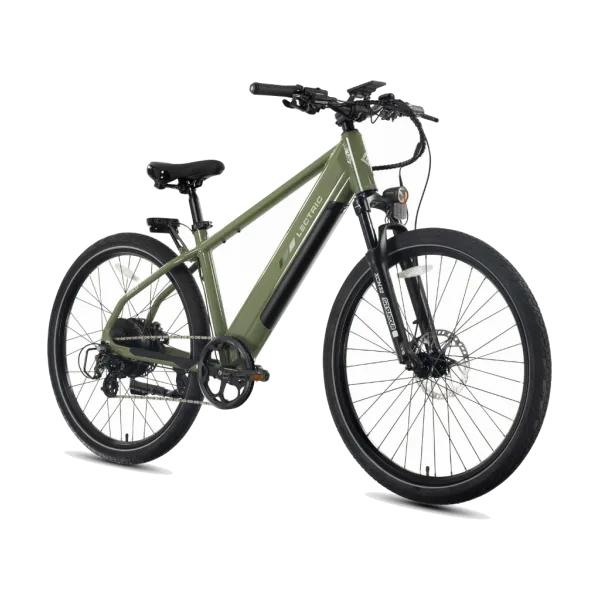
Only now does the type of bike matter, because the first two decisions have already ruled out most of the market.
- Commuter — racks, fenders and lights as standard, moderate tires, upright but not extreme. The default, and the right answer more often than people expect.
- Cruiser — upright, swept bars, comfortable at low speed. Short trips on flat ground.
- Folding — solves storage, not carrying. Buy one only if storage is a real constraint.
- Fat tire — sand, snow, gravel and forest roads. Heavy, thirsty, and unnecessary on pavement.
- Cargo — children, shopping, a second passenger. A different bike entirely, with a payload rating you must check.
- Trail / e-MTB — mid-drive, suspension, Class 1, under 55lb. For singletrack.
- Trike — three wheels, no balance required. The right answer for many older riders and anyone with a balance impairment.
Check fit before features. Makers list a rider-height range for each frame size, and many sell a step-through version you walk over rather than swing a leg across. If you are on the short side or lifting a leg is hard, check both first; the commuter table below gives each maker’s range.
Shortlists by shape: commuter e-bikes, folding e-bikes, electric mountain bikes and electric tricycles for adults.
4. Decide what you can lift
E-bikes run from under 30lb (lightweight road and urban models) to over 100lb. Nothing else on the spec sheet affects daily ownership as much, and nothing else is left out of the comparison as often.
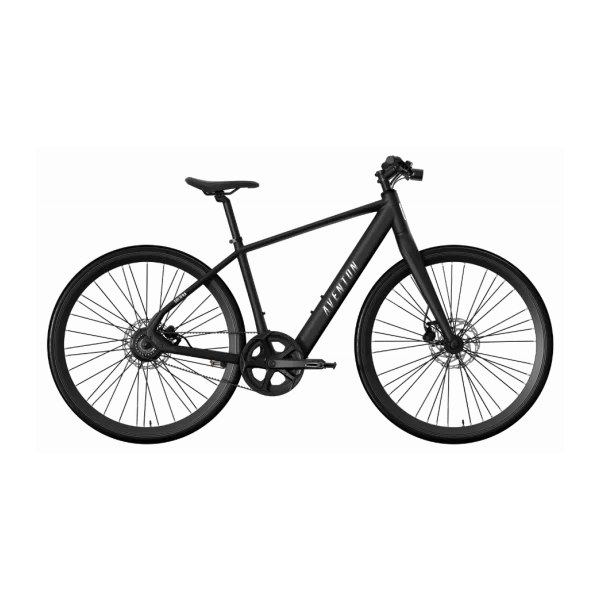
Toward the light end, Aventon lists the Soltera 3 ADV at 37lb with a 366.8Wh battery — a bike one person can carry up a flight of stairs or lift onto a car rack. At the heavy end, a fat-tire bike such as the Heybike Saturn weighs 103lb with a 956.8Wh battery, by Heybike’s figures. That is a lot of battery, and more bike than most people can carry up to a second floor.
If the bike will live at street level and be ridden from where it is parked, ignore weight and buy the battery. If it has to go up a step, through a door, into a car trunk or onto a rack, weight beats every other specification on the page.
The things worth paying extra for
- UL 2849 certification. The whole-system standard covering battery, charger and controller together, not just the cell. This is the one item worth being inflexible about. A battery bought on its own should carry UL 2271. New York City bars the sale, lease or rental of e-bikes not certified to UL 2849 and batteries not certified to UL 2271 (Local Law 39 of 2023; see the city’s micromobility notices). That law covers selling, not charging; building owners and local fire codes may set their own charging and storage rules.
- Hydraulic disc brakes. A 70lb bike at 20mph in the wet asks a lot of a cable brake.
- A torque sensor. Assist that scales with your effort rather than switching on when the cranks move. It is the single upgrade that most changes how a bike feels to ride.
- A brand that publishes its numbers. A manufacturer that states capacity in watt-hours, payload in pounds and torque in newton-meters is telling you something about how it will behave when you need a warranty.
The things not worth paying extra for
A bigger motor, past a point. Motor wattage sells bikes and rarely improves them: on a steep, slow climb a 250W mid-drive in a low gear can out-climb a 750W hub motor, because it puts its power through the gears rather than straight at the wheel. Above 750W you are usually buying weight, heat and a legal problem. Hub motor vs mid-drive sets out when the extra cost of a mid-drive pays off.
Claimed range. It is not comparable between brands and it is not achievable on your ride. Convert everything to watt-hours and compare that instead.
Assist levels. Nine levels is not better than five; it is five levels with four duplicates.
Three commuters to compare first
If the four decisions point to a commuter, these three are a sensible starting point. Each maker states the battery in watt-hours and lists UL 2849 certification, and each bike can run as Class 2 or Class 3. The figures are the makers’ own, and prices are as shown on each maker’s site on 9 October 2026.
| Bike | Battery | Motor | Class | Listed weight | Rider height | Price, 9 Oct 2026 |
|---|---|---|---|---|---|---|
| Lectric XPress2 Commuter | 672Wh | 750W hub | Switchable 1, 2 or 3; 28mph | 60lb without battery | 5′4″–6′4″ | $1,399 sale ($1,735 list) |
| Aventon Level 4 REC | 733Wh | 750W hub | Class 2 as shipped; Class 3 (28mph) in the app | 68.5lb | Regular 5′3″–5′10″; Large 5′10″–6′4″ | $1,999 |
| Velotric Discover 3 | 730Wh | 750W hub | Switchable 1, 2 or 3; 28mph | 61lb | Regular 5′2″–5′11″; Large 5′9″–6′7″ | $1,999 |
Lectric XPress2 Commuter. The lowest price of the three while the sale lasts. Lectric lists a 48V, 14Ah battery, a torque sensor that can be switched to cadence, hydraulic disc brakes, a 330lb payload, and UL 2849 for the bike with UL 2271 for the battery. It lists the bike at 60lb without its 8lb battery (another line on the same page says 55lb), so plan on about 68lb ready to ride.
Aventon Level 4 REC. Aventon lists a suspension fork and seatpost, a rack and fenders, regenerative braking, UL 2849 certification and a 300lb total weight limit. It ships as a Class 2 bike limited to 20mph; Aventon’s app can raise it to Class 3, which may not be allowed on every path you use.
Velotric Discover 3. Velotric lists a 48V, 15.2Ah battery, a 440lb maximum load, and both UL 2849 and UL 2271. It ships limited to 20mph and switches between Class 1, 2 and 3. The Velotric guide covers the rest of the range.
Sizing. Shorter riders have step-through options. Aventon lists the Level 4 REC Step-Through for riders 4′11″–5′7″ (Regular) and 5′7″–6′1″ (Large), and Lectric lists its step-thru XPress2, sold as the XPress2 Cruiser, for 5′2″–6′3″. The Discover 3 is step-through only. Its ranges assume the suspension seatpost it ships with; with a plain post, which Velotric says it will supply free on request, the Regular frame fits 4′11″–5′9″.
Why there is no Rad Power Bikes pick. In November 2025 the Consumer Product Safety Commission told owners to stop using Rad batteries with model numbers RP-1304, RAD-S1304Y and HL-RP-S1304, fitted to bikes including the RadRunner 1, 2 and Plus, RadWagon 4 and RadCity HS 4; Rad disputed the finding, said its newer Safe Shield batteries are not covered, and did not agree to a recall (CPSC warning 26-118). Life EV bought the Rad brand and assets out of bankruptcy in March 2026 (Bicycle Retailer). If you are looking at a used Rad, check the model number on the battery label against the CPSC list first.
Common questions
How much should I spend? Below about $800 the compromises stop being cosmetic — cable brakes, unbranded cells, no certification. Between about $1,000 and $2,000 you can get a UL 2849-certified bike from a maker that publishes its numbers; the three commuters above sell for $1,399 to $1,999 (as of 9 October 2026). Above $3,000 you are buying suspension, weight savings and a mid-drive.
Should I buy online or from a shop? Online is where the value is and where most of these brands sell. A shop gives you assembly, a warranty conversation with a human, and someone to blame. If you are not comfortable adjusting brakes and gears yourself, that is worth real money.
How long will it last? The frame and motor will outlast the battery. Most e-bike packs are rated for 500 to 1,000 full charge cycles before they fall to about 80% of their original capacity. Partial charges count as fractions of a cycle: the 12-mile flat round trip above uses about a quarter of a 700Wh pack, so five rides a week come to roughly 65 full cycles a year. Lithium-ion cells also lose capacity with age, faster when stored hot or fully charged, so treat the cycle rating as a ceiling rather than a forecast, and check that the maker sells a replacement pack before you buy the bike. More in electric bike batteries explained.
Do I need a license or insurance? Usually not, if the bike fits one of the three classes and its motor is under 750W. California, for example, exempts e-bike riders from its driver’s license, registration and insurance rules (Vehicle Code 24016) and requires Class 3 riders to be at least 16 and wear a helmet (Vehicle Code 21213). Rules vary by state and by local adoption, so check your own state before you buy; a bike outside the three classes can fall under moped rules instead.
Can I charge one from a portable power station? Yes. Charging takes about 20% more energy than the pack holds, and a station delivers about 85% of its rated capacity through its inverter, so each full charge uses station capacity equal to about 1.4 times the pack’s watt-hours. A 600–700Wh pack needs a station rated at roughly 850–1,000Wh. See charging an e-bike from a power station.