
Are Electric Bikes Worth It?
The running costs are trivial. The purchase price and the battery replacement are not, and that is where the honest answer lives.
The running cost is not the interesting number
Charging an e-bike is close to free, and every article about e-bike economics leads with it. A 672 Wh battery at the US average of roughly 17 cents per kilowatt-hour costs about 11 cents to fill. At 15Wh per mile, that is around a quarter of a cent per mile.
A car at 30mpg and $3.20 a gallon costs about 11 cents per mile in fuel alone, before insurance, depreciation, parking and maintenance. So the e-bike is roughly forty times cheaper to move, and the comparison is so lopsided that it stops being useful. Nobody decides against an e-bike because of electricity.
The decision is made on three other numbers: what it costs to buy, what the battery costs to replace, and how many car trips it genuinely displaces.
What it actually costs to own
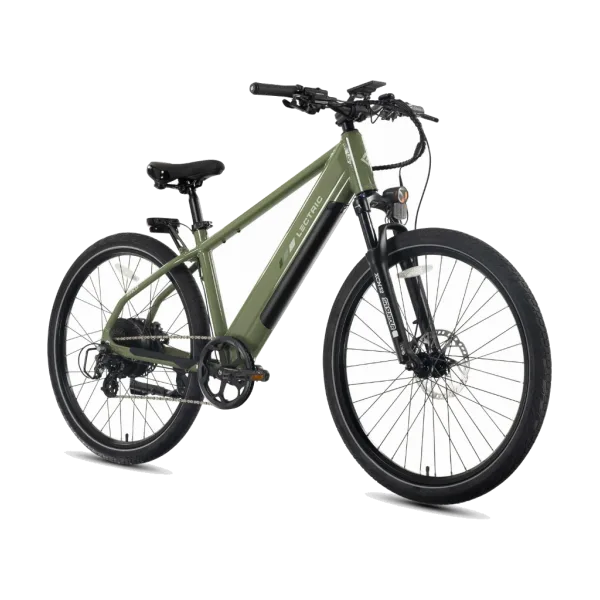
Take a middle-of-the-road commuter at around $1,400 — the Lectric XPress2 Commuter is $1,399, which is representative. Over five years:
- Purchase — $1,400.
- Electricity — about $12 a year at 3,000 miles. Call it $60.
- Consumables — tyres, brake pads, two or three chains, a cassette. Roughly $90 a year, or $450, if you do the work yourself. Double it if a shop does.
- Battery replacement — usually not needed inside five years, but budget $400 to $600 for year six or seven.
- Accessories you will actually buy — a good lock, lights, a helmet, panniers. $250 to $400, and the lock should not be the part you economise on.
That comes to roughly $2,200 over five years, or about $37 a month. If it replaces even one car journey a day, it pays for itself several times over — the AAA figure for the average car is over $12,000 a year all-in.
The battery is the real depreciation
The frame and motor will outlast you. The battery will not. Lithium packs lose capacity with cycles and with time, and after six to eight years, or roughly 800 full cycles, you will notice the range has gone.
What matters is the replacement price relative to the bike. On a $1,000 bike a $500 pack is half the value of the machine, and at that point plenty of people simply buy a new bike — which is why the second-hand market for cheap e-bikes with tired batteries is so poor. On a $3,000 bike the same pack is a service item.
Two practical consequences. First, check that replacement packs are actually available for the model before you buy, because for a number of brands they are not. Second, treat the battery well: keep it between 20% and 80% for daily use, charge to full only before a long ride, and do not store it flat or in a freezing garage. Doing this can add years.
When an e-bike is worth it
- A commute of 3 to 15 miles each way. The sweet spot. Far enough that an ordinary bicycle is sweaty and slow, close enough that a car is mostly parked.
- Hills that stopped you cycling. This is the single most common reason people who own one say it changed things.
- Replacing a second car. Here the arithmetic is overwhelming rather than marginal.
- School runs and shopping with a cargo bike. A Rad Power RadWagonâ„¢ 5 Cargo Bike at $2,399 does a job a bicycle cannot.
- Getting back on a bike after injury, illness or a long gap. The assist is what makes the first month survivable.
When it is not worth it
- You have nowhere secure to keep it. E-bikes are stolen constantly and are difficult to insure. If it lives on a street, factor in a serious lock and the real chance of losing it.
- You live above the ground floor with no lift. A 70lb bike up two flights, twice a day, ends in the bike not being ridden. If this is you, weight is the specification that decides — or buy a folder and accept the compromises.
- Your trips are under a mile. Walking is free and an e-bike will not save you meaningful time.
- Your commute is 30 miles each way. Possible, but you are buying a large battery, riding an hour and a half each way, and the case gets thin against a train.
- You want the exercise. An e-bike is genuine exercise — studies consistently find riders cover more miles and ride more often than they did on analogue bikes — but it is lower-intensity per mile. If training is the goal, buy a bicycle.
The honest summary
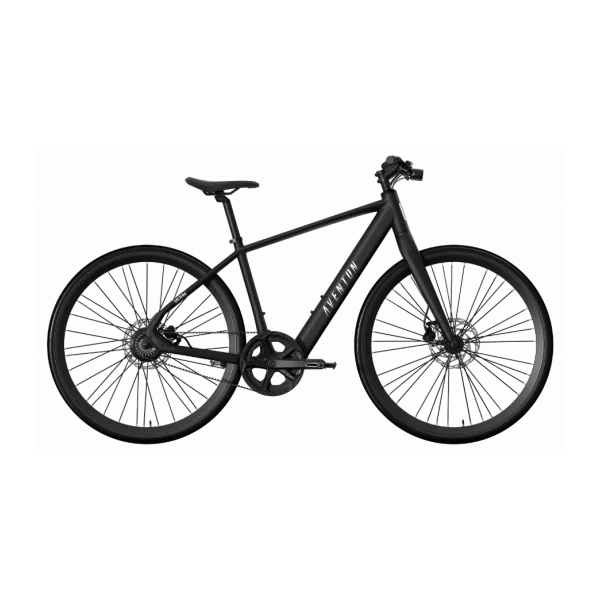
For someone with a 5 to 10 mile commute, somewhere secure to park, and a route that does not require a motorway, an e-bike is one of the few purchases that reliably pays for itself and is also more pleasant than the thing it replaces. The Aventon Soltera 3 ADV at $1,499 and 37lb, or the Lectric XPress2 Commuter with more battery for less money, are both defensible ways to test that.
For someone buying one because it looks fun, with no storage plan and no route, it will join the treadmill. The bike is not the variable; the trip you are replacing is.
Common questions
Do e-bikes hold their value? Poorly, at the cheap end, largely because of battery uncertainty. Established brands with available replacement packs hold value considerably better.
Is insurance worth it? If the bike cost more than about $1,500 and is ever locked outside, probably. Check whether your home policy covers it — many cap bicycle cover well below the price of an e-bike.
How much do I save versus driving? On fuel alone, roughly 10 cents a mile. Including insurance, depreciation and maintenance the honest figure for a displaced car trip is closer to 50 to 70 cents a mile.
How this page makes money. Some links here are affiliate links and we earn a commission if you buy through them — currently BLUETTI, ALLPOWERS, Mango Power, Renogy and MoonCool. Every other brand on this page is here because leaving it out would make the comparison useless to you, and we are paid nothing either way. Prices are each maker’s own list price at the time of writing and change often.