

Amp-hours equal watt-hours divided by volts: Ah = Wh ÷ V. A 12V circuit pulling 5A for 2 hours has used 10Ah, which is the same 120Wh you’d get from Wh = Ah × V run the other way. Both directions matter once you’re sizing a 12V house bank for an RV, van, boat or off-grid cabin, because amp-hours are the number printed on every deep-cycle battery label and quoted by every solar charge controller — while everything else in your build, from appliance ratings to solar panel output, is usually specified in watts.
Why an amp-hour rating is meaningless without a voltage
Nominal voltage matters more than it looks. A “12V” flooded or AGM lead-acid battery is rated at 12V, so a 100Ah label means 1,200Wh. A “12V” LiFePO4 battery is actually a 12.8V pack — four 3.2V cells in series — so a 100Ah LiFePO4 battery holds 1,280Wh, about 7% more energy for the same Ah number. It’s a small difference in percentage terms but a real one, and it’s why two “100Ah” batteries at different prices aren’t necessarily the same product. Always check which voltage the Ah rating was calculated against before comparing.
The same formula translates a portable power station’s spec sheet into amp-hour terms, which is handy when you’re comparing it against a raw battery bank rather than buying an all-in-one unit. Divide the stated watt-hours by 12 to get the 12V-equivalent capacity:
| Power station | Rated capacity | 12V-equivalent |
|---|---|---|
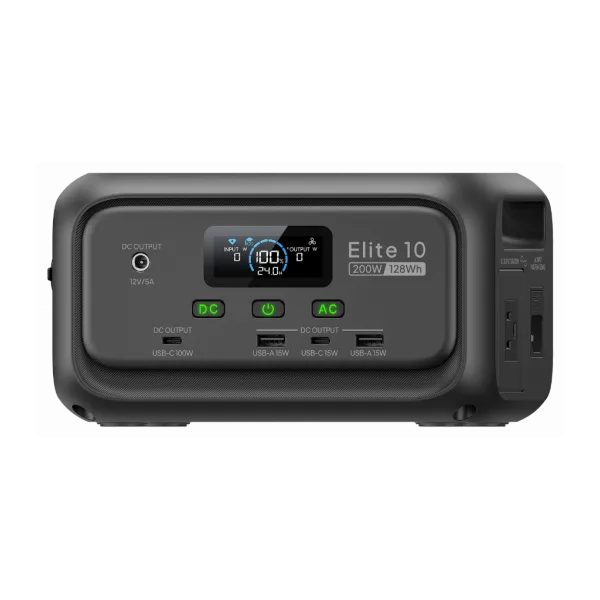 BLUETTI Elite 10 Mini Power Station BLUETTI Elite 10 Mini Power Station | 128 Wh | 10.7 Ah |
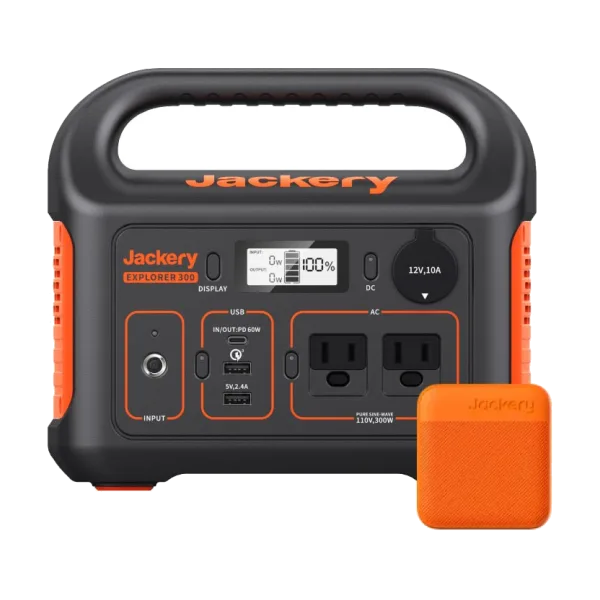 Explorer 300 Explorer 300 | 293 Wh | 24.4 Ah |
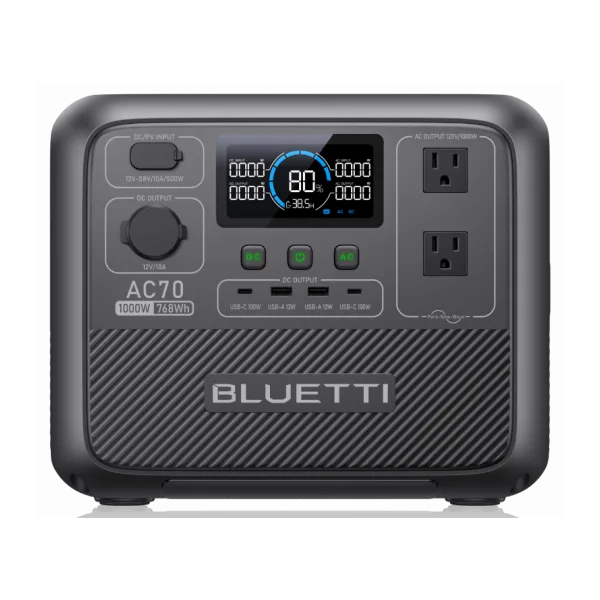 BLUETTI AC70 Portable Power Station BLUETTI AC70 Portable Power Station | 768 Wh | 64.0 Ah |
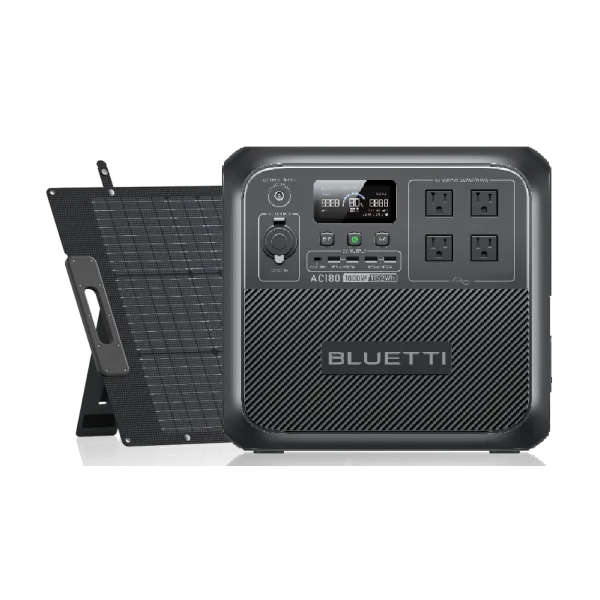 BLUETTI AC180 Portable Power Station BLUETTI AC180 Portable Power Station | 1,152 Wh | 96.0 Ah |
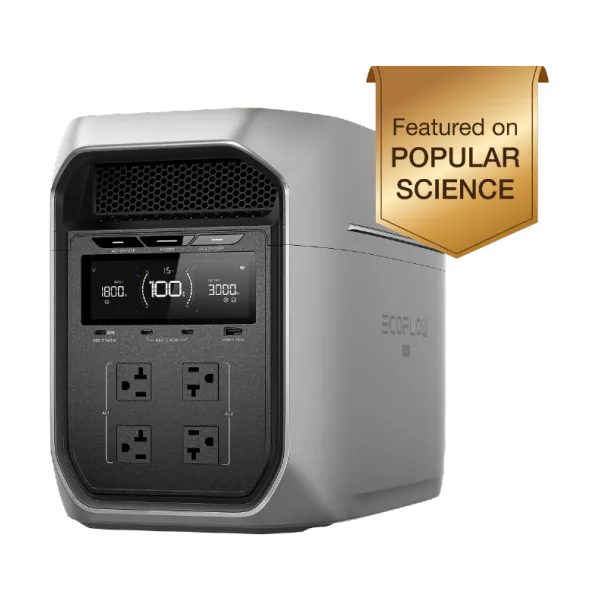 EcoFlow DELTA 3 Max Series Portable Power Station (2048Wh) EcoFlow DELTA 3 Max Series Portable Power Station (2048Wh) | 2,048 Wh | 170.7 Ah |
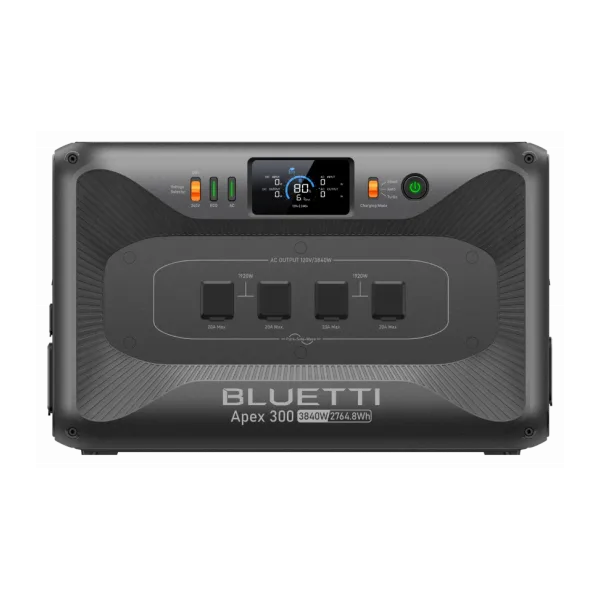 Apex 300 Versatile Power Station Apex 300 Versatile Power Station | 2,765 Wh | 230.4 Ah |
None of these units necessarily runs an internal 12V lead-acid-style pack — most step their battery voltage up or down electronically before it reaches the output ports — but the 12V-equivalent Ah figure is still the right yardstick for sizing against a 12V load budget or for comparing dollars-per-Ah against a raw battery bank. You can run the same conversion either direction with the watt-hours to amp-hours calculator or the amp-hours to watt-hours calculator.
Build a daily load budget in amp-hours before you buy anything
List every load your 12V system will run, its draw in amps, and how many hours a day it actually runs, then multiply and sum. For loads that run on 12V DC directly — lighting, water pump, fans, a 12V compressor fridge — the draw is on the label or the fuse panel. For anything running through an inverter on AC, find the watt-hours first (watts × hours), divide by 0.85 to cover the roughly 15% inverter loss, then convert to Ah at 12V. Here’s a weekend-trip budget for a typical single-axle travel trailer:
| Load | Draw | Hours/day | Daily Ah |
|---|---|---|---|
| LED interior lighting (12V DC) | 3 A | 5 h | 15.0 Ah |
| Water pump (12V DC) | 6 A | 0.3 h | 1.8 Ah |
| Furnace blower (12V DC) | 8 A | 3 h | 24.0 Ah |
| 12V compressor fridge, cycling average | 3.5 A | 24 h | 84.0 Ah |
| Roof vent fan | 2.5 A | 6 h | 15.0 Ah |
| Laptop charging, 65W via inverter | 6.4 A equiv. | 3 h | 19.1 Ah |
That totals about 159Ah a day, or roughly 1,908Wh. The appliance wattage chart is worth checking against your own appliances before you commit to a number — a residential-style compressor fridge or an RV furnace with a bigger blower motor can easily push the total higher.
Peukert’s effect: a battery’s Ah rating is not one fixed number
A lead-acid battery’s Ah rating is tied to a specific discharge rate, usually the 20-hour rate (written C/20). Pull the same battery down faster — in 5 hours instead of 20 — and Peukert’s law says you get meaningfully less than the rated Ah, because internal resistance wastes more energy as heat as current rises. A typical flooded or AGM Peukert exponent sits around 1.1–1.3; at that exponent, a 100Ah (C/20) battery discharged over 5 hours delivers roughly 80–85Ah, not 100. LiFePO4 cells have far lower internal resistance and a Peukert exponent close to 1.00–1.05, so a LiFePO4 battery delivers close to its full rated Ah whether it’s drawn down over 20 hours or 2.
This matters most exactly when it’s least convenient: a lead-acid bank sized only on its rated Ah will come up short during the furnace blower’s high-draw stretches or a fridge compressor’s startup pull. A LiFePO4 bank of the same rated Ah holds much closer to its number through those same pulls.
Depth of discharge decides how much of that capacity you’re allowed to use
Rated Ah and usable Ah are not the same figure. Routinely discharging lead-acid below 50% state of charge shortens its cycle life sharply, so treat only half the rated Ah as usable — a 200Ah lead-acid bank gives you about 100Ah a day before you’re into damaging territory. LiFePO4 tolerates discharge down to 0–20% state of charge without the same cycle-life penalty, and makers allow 80–100% depth of discharge depending on the battery, but we plan on 80%, the depth many makers quote their cycle ratings at, which leaves a reserve for cold, aging and an early BMS cutoff. More on the chemistry difference in LiFePO4 vs. lithium-ion.
Sizing the bank: finishing the RV example
Take the 159Ah daily budget from above and apply both corrections. For lead-acid: divide by the 50% usable DoD (159 ÷ 0.5 = 318Ah), then divide by roughly 0.85 to cover Peukert loss at the faster pulls (318 ÷ 0.85 ≈ 374Ah). That points to something like three 12V, 125–130Ah AGM batteries wired in parallel — call it 375–390Ah of rated lead-acid capacity to comfortably cover one day.
For LiFePO4: divide by the 80% usable DoD and skip the Peukert derate (159 ÷ 0.80 ≈ 199Ah). A single 200Ah, 12.8V LiFePO4 battery just covers the day, or two 100Ah units in parallel if you want redundancy; go larger if you want margin. In watt-hour terms that 200Ah battery holds 2,560Wh gross, about 2,048Wh usable at 80% DoD — still above the 1,908Wh the load budget calls for.
If wiring a raw battery bank isn’t the plan, an all-in-one LiFePO4 power station can cover the same 1,908Wh-a-day requirement, but size it with margin: a power station delivers only about 85–90% of its rated watt-hours once conversion losses are taken out, so look for about 2,300Wh or more of rated capacity. By that measure a 2,048Wh unit such as the EcoFlow DELTA 3 Max falls short of this budget, while a 2,765Wh unit such as the BLUETTI Apex 300 clears it. Check the 12V output as well: a power station’s 12V car port is often limited to about 10A, less than this trailer’s 12V loads draw when the furnace blower, fridge and lights run together (about 14.5A), and the Apex 300 base unit has no 12V outputs at all without BLUETTI’s separate Hub D1 add-on. Whichever route you take, size the bank to the daily amp-hour budget first, then work out solar input separately — the solar sizing guide and off-grid RV setup guide cover pairing panels to a bank this size, and the power station finder and what size power station guide help if an all-in-one unit is the simpler build.