
Segway Electric Scooters: The Current Lineup Explained
Segway’s fastest current model, the GT3 Pro, has a manufacturer-claimed top speed of 50 mph and up to 86 miles of range on a 2,160Wh battery, according to Segway’s published specifications checked in September 2026.

Most Segway electric scooters today fall into one of four active adult lineups — E, F, Max and GT — plus the Zing C series built for kids and teens. Segway’s own store lists prices from $349 for the entry-level E2 Plus up to roughly $2,500 for the 50 mph GT3 Pro, current as of September 2026. Two older names, D and P, still surface in scooter searches but are not sold new through Segway’s US store; more on those below.
Segway and Ninebot are the same company, sold under two names
In 2015 the Beijing-based personal-transporter maker Ninebot acquired the US company Segway Inc., and the two engineering teams have shared a single product line ever since. In the US, Segway’s official store sells scooters under both names depending on the model: budget and mid-range commuters are usually labeled “Ninebot KickScooter” or “Segway Ninebot,” while the performance flagships — the Max and GT “SuperScooter” lines — are marketed under the Segway name alone. There is one company and one engineering lineup behind both names; the badge on the stem reflects a marketing choice for a given market, not a separate product line with different parts.
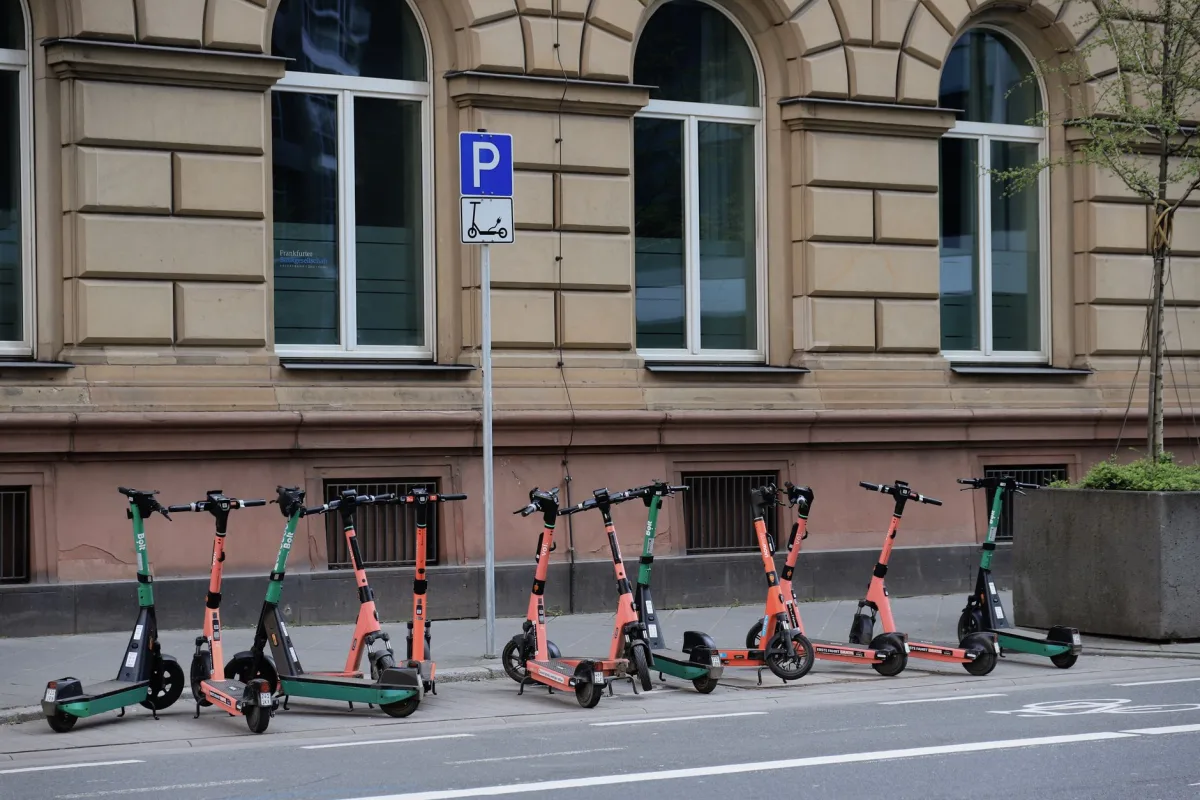
Segway’s electric scooter lineup, series by series
Segway groups its current adult scooters into three tiers: E for short, flat commutes, F for daily commuting with more range and some suspension, and Max as the flagship all-rounder. The GT line sits above all three, built for speed and range rather than portability or price. The table below uses each series’ published top speed, range and motor power, checked against Segway’s store and spec pages in September 2026.
| Series | Key models | Top speed | Range (up to) | Motor power |
|---|---|---|---|---|
| E (entry commuter) | E2 Plus, E2 Pro, E3, E3 Pro | 15.5-20 mph | 15.5-34 mi | 300-400W |
| F (mid-range commuter) | F2, F2 Pro, F3, F3 Pro | 18-20 mph | 25-44 mi | 350-450W (700-1,000W peak) |
| Max (flagship all-rounder) | Max G2, Max G3, Max G3 Plus | 22-28 mph | 43-56 mi | 450-850W (1,000-2,200W peak) |
| GT / SuperScooter (performance) | GT3, GT3 Pro | 31-50 mph | 45-86 mi | 2,400-7,000W peak |
| Zing C (kids and teens) | C8, C10, C20 | 6.2-12.4 mph | 6.2-12.4 mi | 120-150W |
| D and P (legacy, not sold new in the US) | D-series, P65, P100S | varies by model | varies by model | varies by model |
The E series is Segway’s cheapest adult line. The E2 Plus uses a 300W motor for a 15.5 mph top speed and a claimed 15.5-mile range, and lists for $349 on Segway’s site. The E2 Pro raises the top speed to 18.6 mph and the range to 21.7 miles for roughly $420 to $500 depending on the retailer. Neither model carries suspension beyond its tires; both are built for pavement, not gravel or grass. The E3 and E3 Pro step up to a 400W motor and a 20 mph top speed, with claimed ranges of 28 and 34 miles in ECO mode and elastomer shock absorbers front and rear.
The F series adds a bigger battery and more motor power in a similar-size scooter. The base F2 runs a 350W motor (700W peak) off a 36V, 10.2Ah battery pack. Multiply amp-hours by volts — the same math behind our amp-hour-to-watt-hour calculator — and that pack works out to about 367Wh, good for an 18 mph top speed and up to 25 miles of range. Divide the 350W rating by the battery’s 36V nominal instead and you get roughly 9.7A continuous draw, the same division our watts-to-amps calculator runs. The F2 Pro adds front suspension and a larger pack for 20 mph and up to 34 miles. Segway’s newest F3 and F3 Pro, launched in 2025, carry the whole series to a 20 mph top speed and up to 44 miles of range.
Max is Segway’s flagship all-rounder, priced above the F series and below GT. The outgoing Max G2 pairs rear-wheel drive with dual suspension and traction control for around 22 mph and roughly 40 to 43 miles of range, and has listed for about $800 at major retailers. Its replacement, the Max G3, raises the top speed to 28 mph (it ships limited to 20 mph; the higher setting is switched on in the Segway Mobility app) and the claimed range to 50 miles, and cuts the 0-15 mph sprint to 2.4 seconds, according to Segway’s launch specifications. The Max G3 Plus pairs the Max G3’s 850W rated motor and 28 mph top speed with a larger 717Wh battery (597Wh on the Max G3), for a claimed 56 miles in ECO mode at 9.3 mph.
Segway markets the GT line as “SuperScooters” rather than commuters, and the numbers back that up. The GT3 runs a 1,200W motor (2,400W peak) off an 899Wh battery for a 31 mph top speed and up to 45 miles of range, with a $1,900 list price that has sold for closer to $1,700 at major retailers. The GT3 Pro pairs two 1,700W motors (3,500W peak each) with a 72V, 2,160Wh battery for a 50 mph top speed, up to 86 miles of range, and a claimed 0-30 mph time of 3.9 seconds; it has priced around $2,500. Charging that 2,160Wh pack from empty costs about 39 cents (2.16kWh times $0.18) at the US average residential rate of about 18 cents per kWh (EIA, 2026) — electricity is not what makes a GT3 Pro expensive. At 50 mph a GT3 Pro behaves like a moped rather than a sidewalk scooter: many states cap the legal definition of an electric scooter well under that speed, so check local rules before riding one on public roads.
For kids and teens, Segway sells the Zing C series, a separate naming scheme from the adult letters above. The entry Zing C8 uses a 120W motor for about 6.2 mph and 6.2 miles of range and suits ages 6 to 12. The C10 steps up to roughly 11.2 mph for ages 8 to 14, and the C20 tops the line with a 150W motor, 12.4 mph, up to 12.4 miles of range and a 165-lb rider limit for teens 10 and up. All three ship with a software-limited “Safe Mode” for new riders.
Two more series turn up in scooter searches but are not part of Segway’s current US lineup. The D series (regenerative braking, 10-inch pneumatic tires) still has parts and support pages on Segway’s US store but no new model for sale there as of September 2026. The P series (including the P65 and P100S), a heavy, long-range commuter line rather than a portable one, is likewise absent from the US store and mostly shows up through overseas retailers. Buy either used or through a non-US seller and Segway’s US support and warranty network may not cover it.
Segway scooter specs, model by model
The table covers Segway’s current adult models, with figures from each model’s spec page on Segway’s US store, checked in October 2026. Segway publishes two range figures: a headline one at low speed or in the slowest riding mode, and one at top speed. Its footnotes describe the tests: a full battery, a 165 lb (75 kg) rider, about 77°F and pavement.
| Model | Top speed | Range: headline / top speed | Battery | Motor (rated / peak) | Net weight | Max payload | Water rating |
|---|---|---|---|---|---|---|---|
| E2 Plus II | 15.5 mph | 15.5 / 12.4 mi | 220 Wh | 300 / 500 W | 36.2 lb | 198 lb | IPX4 |
| E2 Pro | 18.6 mph | 24.9 / 15.5 mi | 275 Wh | 350 / 750 W | 41.4 lb | 265 lb | IPX4 |
| E3 Pro | 20 mph | 34 / 17.5 mi | 368 Wh | 400 / 800 W | 40.1 lb | 265 lb | IPX5 |
| F2 Pro | 20 mph | 34 / 22 mi | 460 Wh | 450 / 900 W | 40.8 lb | 265 lb | IPX5 |
| F3 | 20 mph | 44 / 25 mi | 477 Wh | 450 / 1,000 W | 42.3 lb | 265 lb | IPX6 |
| ZT3 Pro | 24.9 mph | 43.5 / 18.6 mi | 597 Wh | 650 / 1,600 W | 65.5 lb | 265 lb | IPX5 |
| Max G2 | 22 mph (20 as shipped) | 43 / 25 mi | 551 Wh | 450 / 1,000 W | 53.5 lb | 265 lb | IPX5 |
| Max G3 | 28 mph (20 as shipped) | 50 / 25 mi | 597 Wh | 850 / 2,000 W | 54.2 lb | 286 lb | IPX6 |
| Max G3 Plus | 28 mph | 56 / 22 mi | 717 Wh | 850 / 2,200 W | 56 lb | 286 lb | IPX6 |
| GT3 | 31 mph | 45 / 25 mi | 899 Wh | 1,200 / 2,400 W | 87.1 lb | 330 lb | IPX6 |
| GT3 Pro | 50 mph | 86 / 34 mi | 2,160 Wh | 2 x 1,700 / 2 x 3,500 W | 117.1 lb | 330 lb | IPX6 |
The ZT3 Pro sits outside the E, F, Max and GT series, with 11-inch off-road tires and front and rear suspension.
If you ride at top speed, plan on the second figure. At that speed, Segway’s own range figure drops by roughly 35 to 60 percent on every model except the E2 Plus II: from 50 to 25 miles on the Max G3, and from 86 to 34 miles on the GT3 Pro. UL Solutions verified the Max G3’s range claims under IEC 63281-3-1 with a 75 kg (165 lb) load at 25°C (77°F): 80 km (50 mi) at up to 15 km/h (9.3 mph), 65 km (40 mi) at up to 25 km/h (15.5 mph) and 40 km (25 mi) at up to 45 km/h (28 mph). Its verified energy use doubled across that span, from 0.746 to 1.492 kWh per 100 km, or about 12 to 24 Wh per mile.
Weight jumps above the F series: 36 to 42 lb for the E and F models, 53.5 to 56 lb for the Max models, 65.5 lb for the ZT3 Pro, 87.1 lb for the GT3 and 117.1 lb for the GT3 Pro. If the scooter has to go up stairs or onto a train, that column matters more than top speed. Payload runs from 198 lb on the E2 Plus II to 330 lb on the GT3 pair, and water ratings from IPX4 on the E2 models to IPX6, which Segway describes as protection against powerful water jets from any direction.
Which Segway series fits which rider
Match the series to how far and how fast you actually ride, not the top-of-line spec sheet:
- Short, flat commute under five miles, budget-conscious: E2 Plus or E2 Pro.
- Daily commute of five to fifteen miles with some hills: F2 Pro or F3 Pro, for the extra range and front suspension.
- Longer commute or rougher pavement, want more speed and cushioning: Max G3.
- Want moped-like speed and range, and can accept the legal gray area: GT3 or GT3 Pro.
- Buying for a child: a Zing C model matched to the rider’s age and weight limit, not the fastest one on the shelf.
Unlike e-bikes, which most states sort into three classes under their own state laws (see our e-bike classes explainer; federal law only defines a low-speed electric bicycle, with a motor under 750 W and under 20 mph on motor power alone), electric scooters have no equivalent class system shared across states. Top-speed limits, sidewalk rules and helmet requirements are set state by state and sometimes city by city, which is why a GT3 Pro that is fine on private property can be a citation on a public bike lane. For scooter picks across other brands, see our electric scooters hub.
What the law says: California and New York
California defines a motorized scooter by design, not speed: two wheels, handlebars, a floorboard to stand on (or a seat and footrests) and an electric motor, excluding motorcycles, motor-driven cycles and mopeds as the code defines them (VC 407.5). The Vehicle Code’s rules for those scooters (VC 21235 and VC 22411):
- 15 mph maximum on all highways, including bikeways, whatever the posted limit.
- No roads posted above 25 mph except inside a Class II or Class IV bikeway, unless the city or county allows scooters on roads posted up to 35 mph.
- No sidewalk riding, except to enter or leave adjacent property.
- A driver’s license or instruction permit, no passengers, and a bicycle helmet for riders under 18.
Where a Class II bike lane exists, a scooter rider must ride in it, and a left turn means stopping near the right curb, dismounting and crossing on foot (VC 21229). The 15 mph cap is in the statute, not the scooter, so a motorized scooter rated for 28 or 50 mph gets no extra legal speed.
New York defines an electric scooter as one that weighs under 100 lb and tops out at no more than 20 mph on motor power on a paved, level surface (VTL 114-e). Every E and F model in the table above fits. The Max, ZT3 Pro and GT3 models can go faster than 20 mph, and the GT3 Pro also weighs 117 lb. Since August 6, 2026, Segway’s US store has not taken orders for the Max G2, Max G3, Max G3 Plus, ZT3 Pro, GT3 or GT3 Pro shipping to New York State addresses, according to its order notice. Other states set their own limits.
Charging, certification and warranty
The CPSC’s micromobility guidance on charging comes down to a few rules:
- Follow the maker’s charging instructions and unplug the scooter when charging is done.
- Be present while it charges. Never charge it while you sleep or when you are away from home.
- Use only the charger supplied with the scooter or one the maker recommends, and only replacement batteries tested and approved for that model.
- Never put a lithium battery in the trash or general recycling; take it to a battery recycler or hazardous waste collection center.
Segway’s spec tables set the lowest charging temperature at 32°F, and its spec notes say not to charge a scooter while it is wet or in a damp place. After a ride in freezing weather or rain, let the scooter warm up and dry off indoors before plugging it in.
UL 2272 is the safety standard for a scooter’s electrical drive train, battery and charger. It covers energy and electrical shock hazards, not performance, reliability or the physical hazards of riding. New York City requires e-scooters sold or rented there to be certified to UL 2272 by an accredited testing laboratory, under Local Law 39 of 2023 (NYC Council). Segway’s spec tables do not list certifications, so look for a certification mark naming UL 2272 on the scooter, its box or its manual, or ask the seller.
Segway’s US store lists a 2-year limited warranty on its scooters, subject to terms and conditions; the terms for each model are on its warranty policy page.
Frequently asked questions
What is the difference between a Segway and a Ninebot scooter?
None, mechanically. Ninebot acquired Segway Inc. in 2015, and both names now label the same engineering lineup; which name appears on a given model is a market and marketing decision, not a sign of different parts or a different factory.
What is Segway’s fastest electric scooter?
The GT3 Pro, with a manufacturer-claimed 50 mph top speed and up to 86 miles of range on a 2,160Wh battery, according to Segway’s published specifications checked in September 2026.
Are Segway electric scooters street legal?
It depends on the state and the model. California caps every motorized scooter at 15 mph and bans sidewalk riding. New York’s definition covers only scooters under 100 lb with a top speed of 20 mph or less, which the E and F models meet and the Max, ZT3 Pro and GT3 models do not. Check your state’s vehicle code or DMV before riding a fast model on public roads.
How far can a Segway electric scooter go on one charge?
Segway’s published ranges run from 6.2 miles on the kids’ Zing C8 up to a claimed 86 miles on the GT3 Pro, but each adult model’s headline figure is measured at low speed or in the slowest riding mode (ECO on the Max G3 and GT3 models), with a 165 lb rider on pavement at about 77°F; in its fastest mode the GT3 Pro is rated for 34 miles. Segway lists speed, load, starts and stops, and outside temperature among the factors that cut range.
How much does a Segway electric scooter cost?
Segway’s own store prices the E2 Plus at $349 on the low end and the GT3 Pro at around $2,500 on the high end, with the F and Max series filling in the middle; exact pricing shifts with sales and retailer, so treat any figure here as a starting point rather than today’s price.