

A manual transfer switch is a small sub-panel, usually mounted beside a home’s main panel, that lets a portable generator power a chosen set of circuits without ever connecting the generator to the utility grid. Installed, a 6- to 10-circuit switch typically costs $400 to $1,300; a switch built to cover more of the panel costs more again. It works by physically isolating whichever circuits it controls from the utility feed, so the generator and the grid can never be connected to the same wire at the same time.
Why Back-Feeding a Panel Is Dangerous
Plugging a generator into a wall outlet or a dryer receptacle to power a house – commonly called back-feeding – pushes generator power out through the main panel and back up the line that’s supposed to be feeding the house, not the other way around. That line runs to a transformer on a nearby pole or pad that steps neighborhood distribution voltage down to the 120/240V a house uses. Feed it backward and the transformer does the same job in reverse, stepping a generator’s 240V up to distribution-level voltage – often into the thousands of volts – on a line a utility crew has every reason to believe is dead. Line workers have been killed this way. The National Electrical Code addresses it directly: Article 702 requires any optional standby power source connected to a home’s wiring, portable generators included, to use listed transfer equipment that makes it physically impossible to connect the generator and the utility at the same time. The panel-side connection is licensed-electrician work, not a DIY job, and running the generator itself indoors or in a garage adds a second hazard, carbon monoxide, that a transfer switch does nothing to prevent.
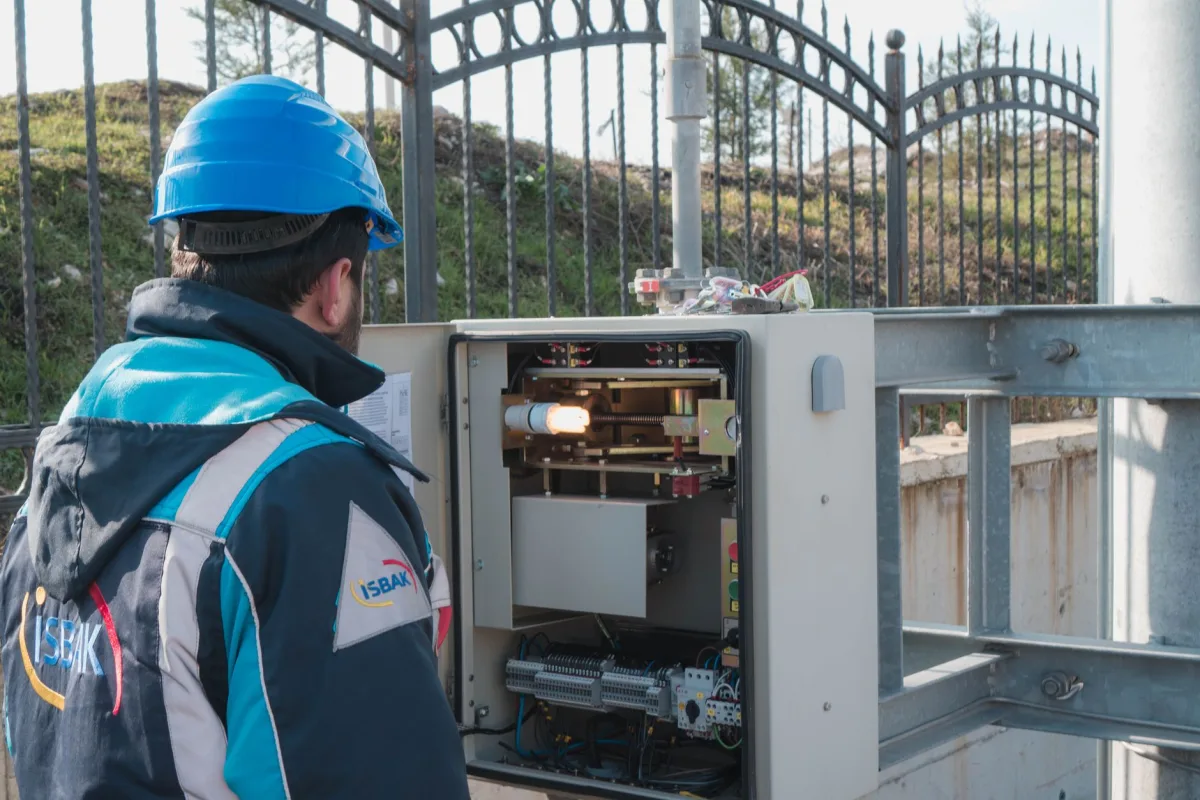
How a Manual Transfer Switch Works
A manual transfer switch sits between the main panel and a set of breakers it controls, with each controlled circuit wired through a switch that has three positions: line (utility), off, and generator, never both sources at once. During an outage, you shut off the main breaker, start the generator outside, connect it to a locking inlet the switch is wired to, then flip only the circuits you want powered over to generator one at a time, checking a built-in wattmeter or your own arithmetic so the total draw stays under what the generator and the inlet can carry. Restoring utility power means reversing the process: generator off, then main breaker on. Everything not wired into the switch stays dead until utility power returns, which is also why the rest of the panel needs no special wiring at all. For keeping the generator itself ready to do its half of the job, see our generator maintenance guide.
6-Circuit vs. 10-Circuit vs. Whole-Panel Switches
Manufacturers sell manual switches in 6-, 10-, 12- and 16- to 20-circuit sizes, plus higher-amperage units meant to stand in for most or all of a panel. 100A Manual Transfer Switch(for maintenance) ($399), for example, is rated for 100A – built to carry far more load than a small sub-panel switch, at the cost of a bigger wiring job. See it here: 100A Manual Transfer Switch(for maintenance). The table below shows what each tier is realistically sized for.
| Switch size | Typical inlet | What it usually covers | Installed cost range |
|---|---|---|---|
| 6-circuit | 30A L14-30 | Refrigerator, furnace blower, a few lights and outlets | $400-$900 |
| 10-circuit | 30A or 50A | The above plus a well or sump pump and more general circuits | $600-$1,300 |
| 16- to 20-circuit | 50A 14-50 | Most of a small home’s essential loads running together | $1,000-$2,000+ |
| High-amperage (75-100A) | 50A-100A | Close to a full panel, short of a permanent standby setup | Quoted per job |
Choose circuits, not just a circuit count. A refrigerator, a furnace or boiler blower, a sump or well pump, one working kitchen outlet, some lighting, and the garage door cover most households’ actual needs, and that list runs to about 8 circuits before you’ve added anything optional.
Sizing a Transfer Switch to Your Generator: 30A L14-30 vs. 50A 14-50
The switch’s inlet, not the generator’s spec sheet, sets the hard ceiling on how much power can reach the house. A 30A NEMA L14-30 inlet carries at most 30A x 240V = 7,200W. A 50A NEMA 14-50 inlet carries at most 50A x 240V = 12,000W. Match the inlet to the generator’s running-watts rating rather than its surge rating, and leave headroom: the same 80%-of-rating margin that applies to a continuously loaded breaker is a sensible target here too, working out to about 5,760W sustained on the 30A inlet and 9,600W on the 50A inlet. A 7,000-7,500W running generator is the usual match for an L14-30 switch; anything bigger belongs on a 14-50. If your generator’s label only lists amps, or lists a wattage you want to check against an inlet’s rating, our watts-to-amps calculator does the conversion.
Motors complicate the total more than continuous loads do. A well pump rated 1,500W running can surge 3 to 5 times that at startup – 4,500W to 7,500W for roughly a second – so a 30A/7,200W inlet already carrying a refrigerator, a furnace blower and some lighting can trip the moment the pump kicks on, even though nothing was overloaded a second earlier. Our appliance wattage chart has running-watts figures for the loads that show up on most transfer switches; add them up before you buy a switch, not after it trips.
What a Manual Transfer Switch Costs, Installed
Installer cost guides checked September 2026 put a 6- to 10-circuit manual transfer switch, installed, at roughly $400 to $1,300: $200 to $800 for the switch and its outdoor inlet kit, plus $200 to $500 in electrician labor for a straightforward run from an accessible panel. Add whatever your jurisdiction charges for the electrical permit and inspection that transfer equipment normally requires. Distance from panel to inlet, whether the existing panel has room for extra breakers without a subpanel, and local labor rates account for most of the spread; an older panel that needs a subpanel added first, or a long conduit run out to where the generator will sit, pushes a job toward the top of that range or past it. A high-amperage switch built to cover most of a panel is a bigger job again and is worth a direct quote rather than an estimate scaled up from a small-switch price.
Manual vs. Automatic Transfer Switches
A manual switch asks you to be home, go outside, start the generator and flip breakers yourself. An automatic transfer switch senses an outage and starts a permanently installed standby generator without anyone touching anything, which costs more: the same cost data puts a full automatic transfer switch, installed, at roughly $600 to $2,500, against $400 to $1,300 for a manual one, largely because it needs its own control wiring and is normally paired with a permanently installed standby generator rather than a portable one. Some products sit in between. 120V 30 Amp Automatic Transfer Switch ($103) automates a single 30A circuit rather than a whole panel: 120V 30 Amp Automatic Transfer Switch. [Add-on] Jackery Smart Transfer Switch ($1,159) switches a circuit over to a battery power station rather than a fuel generator: [Add-on] Jackery Smart Transfer Switch. See our comparison of a power station against a generator for whether that trade suits your home. A generator interlock kit, a metal tab that blocks the main breaker and a generator breaker from closing together, is a cheaper way to satisfy the same code requirement without adding a subpanel, though it only works with panels it’s specifically listed for and it doesn’t add separate circuits the way a transfer switch does. Homeowners pricing a large standby generator and an automatic switch together sometimes find a whole-house battery lands in a similar cost range and skips fuel entirely; our home battery backup guide covers what that alternative actually delivers in an outage.
Frequently asked questions
Can I install a manual transfer switch myself?
The outdoor inlet box and the conduit run to it are within reach of an experienced DIYer in some jurisdictions, but the connection inside the live main panel is exactly the work this article’s safety section warns against. Most manufacturers require a licensed electrician for that step, and most localities require a permit and inspection regardless of who does the labor.
What size generator do I need for a 10-circuit transfer switch?
The circuit count doesn’t set a wattage limit; the inlet does. A 10-circuit switch wired to a 30A L14-30 inlet still caps out at 7,200W, and the same 10-circuit switch wired to a 50A 14-50 inlet caps out at 12,000W. Size the generator, then the inlet, to the sum of the circuits you actually plan to run together, not to the circuit count printed on the switch’s label.
Is a manual transfer switch required by law?
The National Electrical Code requires listed transfer equipment for any optional standby power source connected to a home’s wiring, and most jurisdictions enforce that through the electrical permit process. A bare interlock kit and a full transfer switch can both satisfy it if the local inspector accepts that specific listed product for your panel, so check with your permitting office before buying either one.
Can a manual transfer switch work with a portable power station instead of a generator?
Only if the power station’s continuous AC output and its plug match what the switch expects, and both the switch and the connection are listed for that use; most transfer switches are designed and tested around fuel generators. A small number of manufacturers, Jackery among them, now sell a transfer switch built specifically around one of their own power stations rather than a generic generator inlet.
How many circuits does a typical household need on a transfer switch?
Most homes cover their outage essentials – refrigerator, furnace or boiler blower, sump or well pump, a few lights and outlets, and a garage door – in around 8 to 12 circuits, which is why 10-circuit switches are the size sold most often.
How this page makes money. Some links here are affiliate links and we earn a commission if you buy through them — currently BLUETTI, ALLPOWERS, Mango Power, Renogy, Himiway, MoonCool and Amazon. Every other brand on this page is here because leaving it out would make the comparison useless to you, and we are paid nothing either way. Prices are each maker’s own list price at the time of writing and change often.