

1,500 watts at a standard 120V US household outlet is 12.5 amps (1,500W ÷ 120V = 12.5A). That single number explains why a 1,500W space heater or electric kettle is the appliance most likely to trip a breaker, and why some outlets can run one comfortably while others can’t.
The formula is Amps = Watts ÷ Volts. Change the voltage and the amp figure changes with it, which is the part most wattage charts skip. Run the same numbers yourself with the watts-to-amps calculator.
1,500W at 120V: 12.5 amps, and why that matters on a 15A breaker
A standard US household circuit runs at 120V and is protected by either a 15A or 20A breaker. The National Electrical Code caps a continuous load — anything running three hours or more — at 80% of the breaker’s rating, not the full number stamped on the switch.
- 15A breaker: 80% continuous limit is 12A. A 1,500W heater draws 12.5A, which is over that limit. Run one for hours on a 15A circuit and it’s doing something the code doesn’t want it doing, even before it gets warm enough to trip.
- 20A breaker: 80% continuous limit is 16A. The same 12.5A load has 3.5A of headroom, which is why 20A circuits are standard in kitchens and utility rooms where heaters and kettles actually live.
A kettle boiling for four minutes isn’t a continuous load in the code’s sense and won’t trip a 15A breaker on its own. A space heater left running for an evening is exactly the continuous case the 80% rule exists for, and 1,500W is the wattage almost every plug-in space heater is capped at for precisely this reason.
Amps at 120V for common wattages
The same division applied to the wattages you’ll actually see on appliance labels:
| Watts | Amps at 120V |
|---|---|
| 500 W | 4.17 A |
| 750 W | 6.25 A |
| 1,000 W | 8.33 A |
| 1,200 W | 10.00 A |
| 1,500 W | 12.50 A |
| 1,800 W | 15.00 A |
| 2,000 W | 16.67 A |
| 2,400 W | 20.00 A |
1,800W is the practical ceiling for a 15A circuit even before the continuous-load rule tightens it, and 2,400W is the equivalent ceiling on 20A. For a deeper look at what specific appliances draw at these levels, the appliance wattage chart covers the full range, and how many amps a microwave uses walks through one of the more common 1,000-1,500W kitchen loads specifically.
1,500W at 240V and at 12V
Change the voltage and the same 1,500W becomes a different amp figure entirely, which is the point: watts is the fixed quantity, amps moves with volts.
At 240V — the voltage for a US electric dryer, range, central AC or EV charger circuit — 1,500W ÷ 240V = 6.25A, exactly half the 120V figure, because doubling the voltage halves the current needed to deliver the same power. That’s the whole reason high-draw appliances get run on 240V circuits: half the amps means thinner wire and less heat for the same job. See how many amps a dryer uses for how that plays out on an appliance that’s usually rated in kilowatts, not watts.
At 12V — the voltage inside an RV, a boat, or a solar battery bank before it hits an inverter — 1,500W ÷ 12V = 125A. That’s an enormous current for a wire to carry, and it’s why 12V systems use thick, expensive cable and why nobody tries to run a 1,500W load in raw 12V DC over any real distance. It’s also why every portable power station converts its battery voltage up before it reaches the AC outlets: moving 1,500W at pack voltage (typically 12V to 51V) keeps the internal wiring manageable, then the inverter steps it up to 120V for the plug.
What it takes to run 1,500W off a power station
Running a 1,500W load off battery power costs more capacity than the wattage alone suggests, for two reasons. First, the inverter that turns DC into 120V AC loses roughly 15% to heat, so plan on about 85% of the rated watt-hours reaching the appliance. Second, a 1,500W resistive load (a heater or kettle draws steady current, no compressor surge) pulls that 1,500W continuously the whole time it runs, so runtime is just usable watt-hours divided by 1,500.
Applied to a few units around the 1,500-2,000Wh mark, all of them LiFePO4 so the full rated capacity is usable:
| Power station | Capacity | Runtime at 1,500W | Price |
|---|---|---|---|
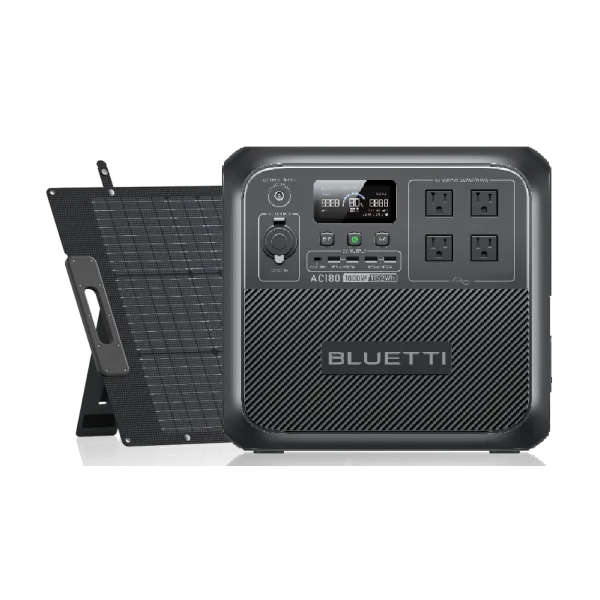 BLUETTI AC180 Portable Power Station BLUETTI AC180 Portable Power Station | 1,152 Wh | ~39 min | $449 |
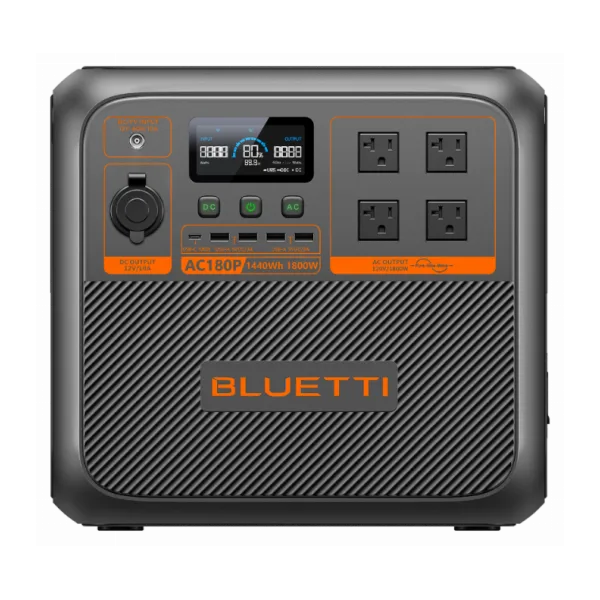 BLUETTI AC180P Portable Power Station BLUETTI AC180P Portable Power Station | 1,440 Wh | ~49 min | $649 |
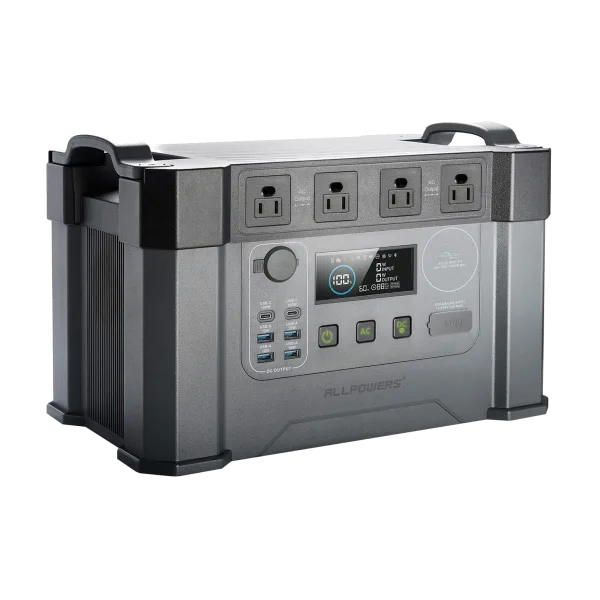 ALLPOWERS S2000 Pro Portable Power Station ALLPOWERS S2000 Pro Portable Power Station | 1,451 Wh | ~49 min | $549 |
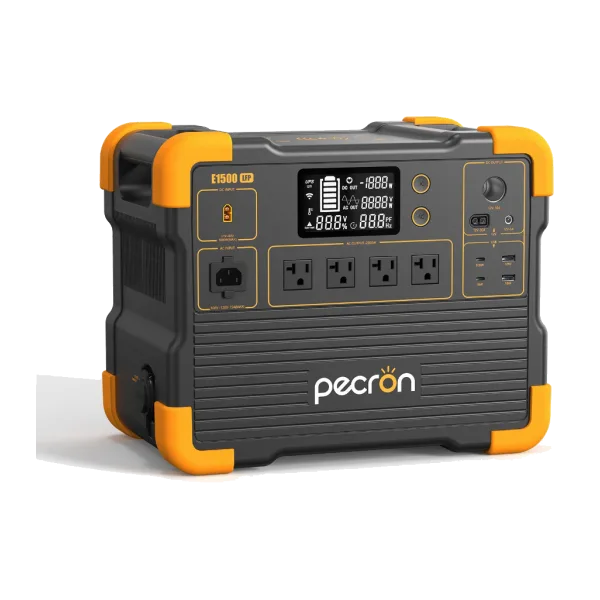 PECRON E1500LFP Expandable Portable Power Station 2200W 1536Wh V3 Version PECRON E1500LFP Expandable Portable Power Station 2200W 1536Wh V3 Version | 1,536 Wh | ~52 min | $549 |
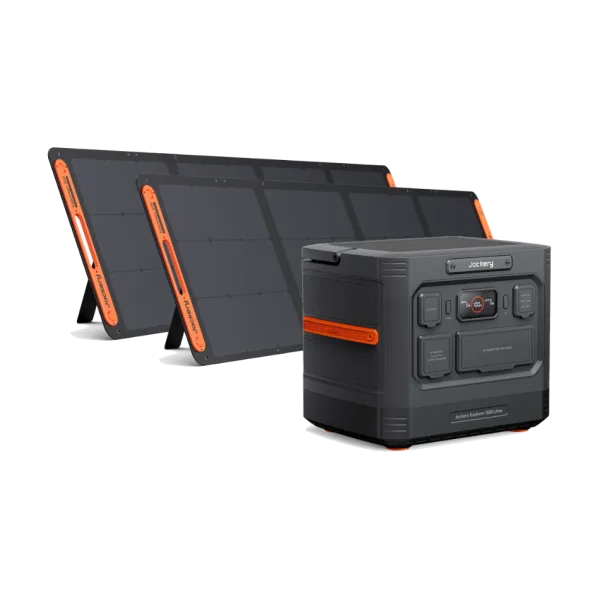 Jackery Portable Power Station Explorer 1500 Ultra Jackery Portable Power Station Explorer 1500 Ultra | 1,536 Wh | ~52 min | $1,199 |
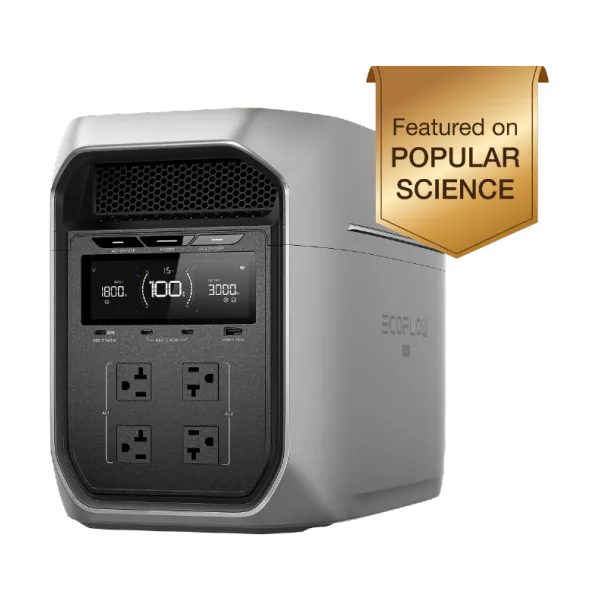 EcoFlow DELTA 3 Max Series Portable Power Station (2048Wh) EcoFlow DELTA 3 Max Series Portable Power Station (2048Wh) | 2,048 Wh | ~70 min | $799 |
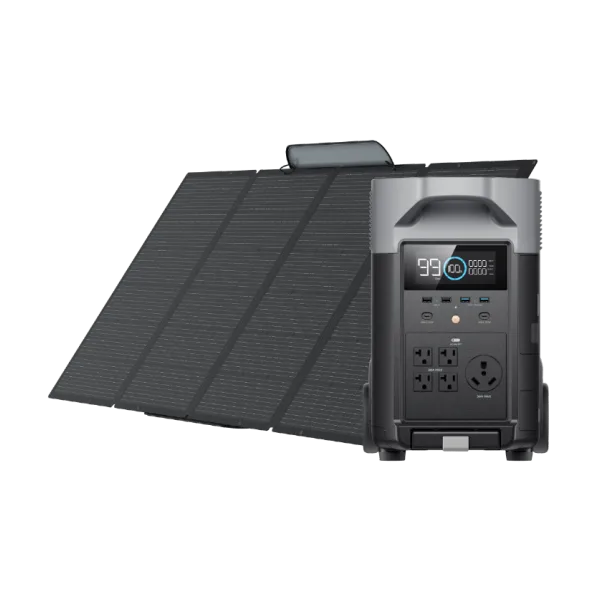 EcoFlow DELTA Pro Solar Generator (PV400W) EcoFlow DELTA Pro Solar Generator (PV400W) | 3,000 Wh | ~102 min | $2,399 |
None of these run a 1,500W heater through the night on a single charge; that would take a battery well north of 6,000Wh. What they’re suited for is an hour or two of targeted heat, powering a kettle a few dozen times, or covering a 1,500W load during an outage until utility power or a generator comes back. Jackery Portable Power Station Explorer 1500 Ultra and ALLPOWERS S2000 Pro Portable Power Station carry rated AC output well above 1,500W, which matters less for a steady resistive load like a heater but leaves headroom if the same station also needs to start something with a compressor later in the day, like the fridge covered in watts to run a refrigerator.
Also worth checking before buying: the AC output rating on the spec sheet is what limits whether a station can run 1,500W at all, not the capacity in Wh. PECRON F1000LFP Solar Generator 1500W 960Wh is rated at exactly 1,500W output on paper, which means a 1,500W heater would be running it at its ceiling with no margin — not a configuration to plan around. For picking a size against your actual list of loads rather than one appliance, see what size power station you need and the full power station price index for how these prices compare across capacity.
If the goal is whole-home backup rather than a single 1,500W appliance, the amp-hour and voltage math above still applies, just at a larger scale — see watt-hours to amp-hours for converting between the two.
How this page makes money. Some links here are affiliate links and we earn a commission if you buy through them — currently BLUETTI, ALLPOWERS, Mango Power, Renogy and MoonCool. Every other brand on this page is here because leaving it out would make the comparison useless to you, and we are paid nothing either way. Prices are each maker’s own list price at the time of writing and change often.