

A portable air conditioner draws roughly 900 to 1,400 watts while it is running, with the number set mostly by BTU rating and whether the unit vents through one hose or two. An 8,000 BTU unit typically lands near 800-940W, a 10,000 BTU unit near 1,000-1,175W, and a 12,000 BTU unit runs about 1,260W if it is dual-hose or up to about 1,500W if it is single-hose. None of that includes the compressor’s startup surge, which runs 3 to 5 times higher for well under a second and is the number that actually decides whether a battery or generator can start the thing at all.
The BTU-to-watts math
Portable air conditioners are rated in BTU (British Thermal Units) of cooling, not watts. To convert, divide by the unit’s Energy Efficiency Ratio: watts = BTU ÷ EER. A higher EER means more cooling per watt drawn. Portable units run lower EERs than window units of the same capacity — commonly 8 to 10.5, against 10 to 15 for a window unit — which is one reason a portable AC costs more to run for the same room. For how that compares against central and window systems, see how many amps an air conditioner uses across AC types.
| Rated Capacity | Typical EER | Running Watts |
|---|---|---|
| 8,000 BTU, dual-hose | 10.0 | about 800 W |
| 8,000 BTU, single-hose | 8.5 | about 940 W |
| 10,000 BTU, dual-hose | 10.0 | about 1,000 W |
| 10,000 BTU, single-hose | 8.5 | about 1,175 W |
| 12,000 BTU, dual-hose | 9.5 | about 1,260 W |
| 12,000 BTU, single-hose | 8.0 | about 1,500 W |
Why single-hose units cost more to run than the EER suggests
The EER figure understates the real gap between single-hose and dual-hose portable units. A single-hose unit pulls its exhaust air from inside the room and pushes it outdoors, which drops the room’s air pressure slightly and draws hot, humid outdoor air back in through every gap, socket and door threshold — air the compressor then has to cool all over again. A dual-hose unit draws its exhaust air from outside instead of from the room, so it never creates that vacuum in the first place. In practice a single-hose unit’s real electricity draw runs roughly 15-30% above what its rated EER implies, even though the compressor’s own wattage has not changed. That is a room-pressure problem, not a wiring one, and it is why two 8,000 BTU units with an identical spec sheet can leave noticeably different marks on a power bill.
The compressor surge, not the running watts, decides whether it starts
Running watts are rarely what stops a portable AC from starting on battery or generator power. Every compressor — the one in this unit, plus the one in a fridge, freezer or well pump — pulls 3 to 5 times its running wattage for a fraction of a second at startup while the motor gets moving from a dead stop. A unit running at 900W can spike to 2,700-4,500W on startup; a 1,300W unit can spike to 3,900-6,500W. An inverter or generator that comfortably covers the running load can still shut down at that instant if its surge headroom falls short, which is why “the AC won’t turn on” is almost always a surge problem rather than a capacity one.
Soft-start kits are the real fix for battery power
A soft-start kit sits between the compressor and its start capacitor and stretches the motor’s startup current over one to two seconds instead of delivering it all at once, cutting the surge by roughly 60-70%. For a 900W unit that is the difference between a 3,000W-plus spike and one that stays under 1,500W — small enough for a mid-size power station or a modest generator to absorb without tripping. Most portable AC manufacturers sell a matched kit, and third-party kits cover the compressors used in most 8,000-12,000 BTU units. At $40-80, it is worth trying before assuming the answer is a bigger, pricier battery.
Runtime on a portable power station
Once the AC is running, runtime is usable watt-hours divided by load, with roughly 15% lost crossing the inverter from DC to AC. Every station below uses LiFePO4 cells, so depth of discharge is not the limiting factor it would be with lead-acid — usable capacity nets out to about 85% of the rated Wh figure once inverter loss is accounted for. The table uses two loads: 900W, representing an 8,000-10,000 BTU unit, and 1,300W, representing a harder-working 12,000 BTU unit.
| Power Station | Rated Capacity | Runtime at 900W | Runtime at 1,300W |
|---|---|---|---|
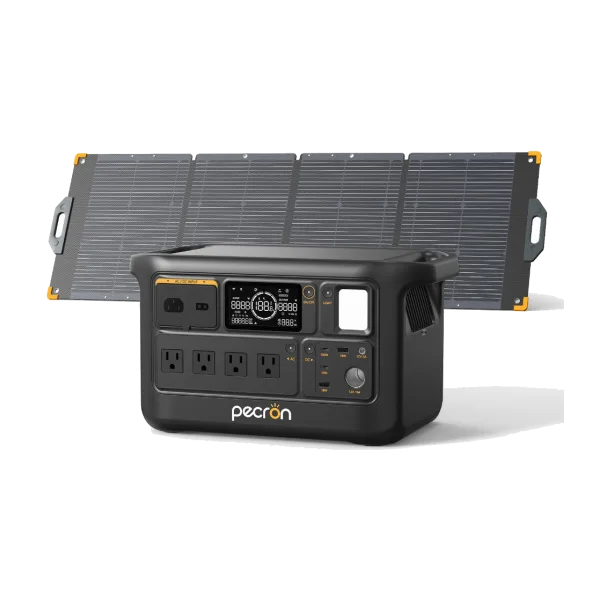 PECRON F1000LFP Solar Generator 1500W 960Wh ($538) PECRON F1000LFP Solar Generator 1500W 960Wh ($538) | 960 Wh | about 54 min | about 38 min |
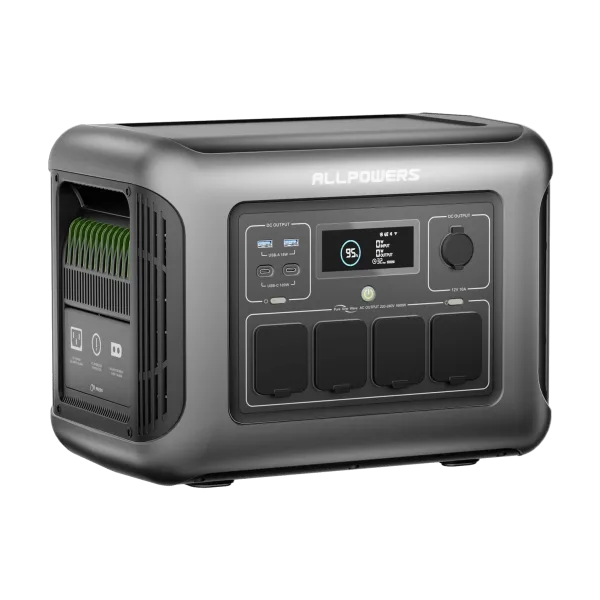 ALLPOWERS R1500 LITE Portable Power Station ($389) ALLPOWERS R1500 LITE Portable Power Station ($389) | 1,056 Wh | about 60 min | about 41 min |
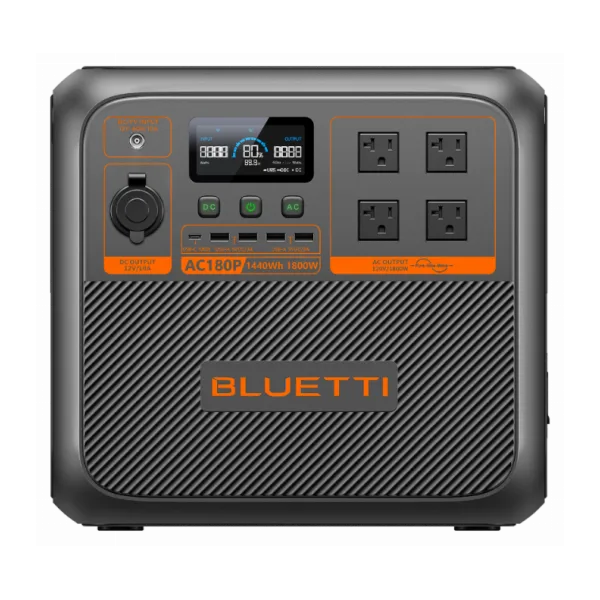 BLUETTI AC180P Portable Power Station ($649) BLUETTI AC180P Portable Power Station ($649) | 1,440 Wh | about 1 h 22 min | about 57 min |
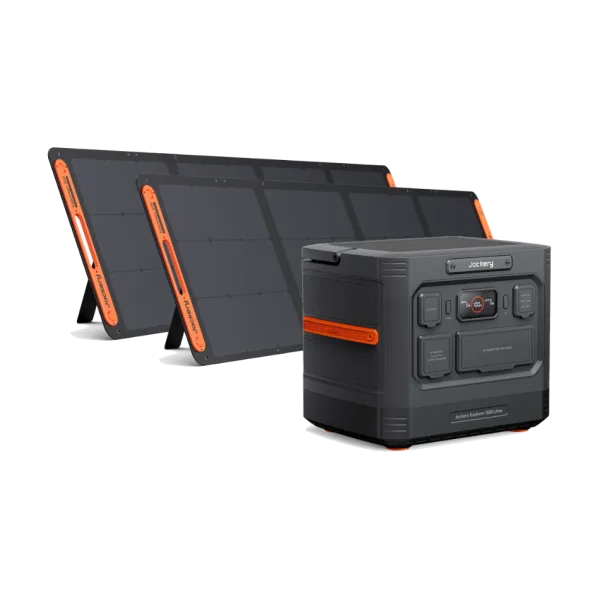 Jackery Portable Power Station Explorer 1500 Ultra ($1,199) Jackery Portable Power Station Explorer 1500 Ultra ($1,199) | 1,536 Wh | about 1 h 27 min | about 60 min |
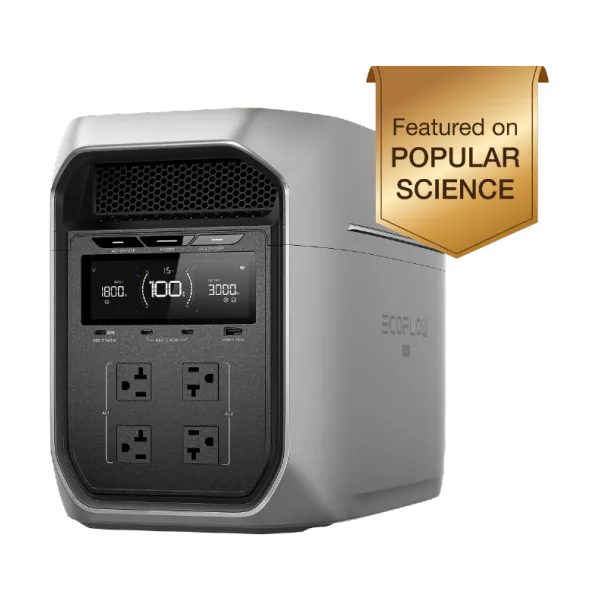 EcoFlow DELTA 3 Max Series Portable Power Station (2048Wh) ($799) EcoFlow DELTA 3 Max Series Portable Power Station (2048Wh) ($799) | 2,048 Wh | about 1 h 56 min | about 1 h 20 min |
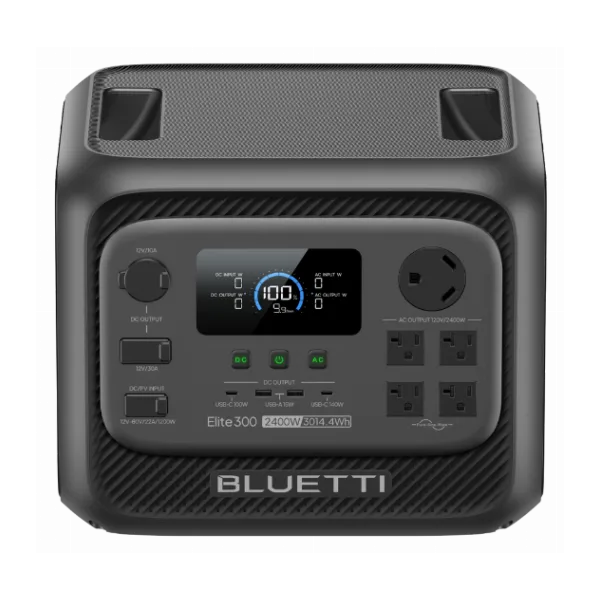 BLUETTI Elite 300 Portable Power Station ($1,099) BLUETTI Elite 300 Portable Power Station ($1,099) | 3,014 Wh | about 2 h 51 min | about 1 h 58 min |
None of these are all-day numbers, and that is the honest picture: a portable AC is one of the thirstiest things you can plug into a power station. Pairing one with solar input to offset draw during the day, or reserving battery power for the hottest overnight hours only, is what makes the arithmetic work — see how a solar generator works for how that charging math fits together.
What it draws from a wall outlet
On a standard 120V household circuit, amps = watts ÷ volts. A 900W unit draws about 7.5A, a 1,300W unit about 10.8A, and a 1,500W single-hose 12,000 BTU unit about 12.5A. Each of those fits inside a 15A circuit on its own, but a portable AC is rarely the only load on that circuit for long. Run the numbers for your own outlet with the watts-to-amps calculator before sharing one with a fridge, microwave or space heater.
Sizing a power station to a portable AC
A power station has to cover three separate numbers: the running watts continuously, the surge for that first half-second, and enough usable capacity to be worth plugging in at all. An hour of runtime from a budget unit is a bridge through an afternoon outage, not an all-day cooling plan. What size power station walks through sizing for a full circuit rather than one appliance, and the appliance wattage chart lines a portable AC’s draw up against everything else in the house. All the runtimes above assume the LiFePO4 chemistry that current power stations use almost universally; a lead-acid deep-cycle battery of the same rated Wh would give roughly half the runtime, because that chemistry should not be discharged past 50%. Prices on units this size move often enough that it is worth checking the power station price index before buying rather than trusting a number from a few months back.
How this page makes money. Some links here are affiliate links and we earn a commission if you buy through them — currently BLUETTI, ALLPOWERS, Mango Power, Renogy and MoonCool. Every other brand on this page is here because leaving it out would make the comparison useless to you, and we are paid nothing either way. Prices are each maker’s own list price at the time of writing and change often.