
Nakto Electric Bikes: Models, Specs and Prices
Nakto’s seven current electric bikes range from the $529, 360Wh Pony to the $1,799 F4 cargo model, according to Nakto’s product pages checked in September 2026.

How this page makes money. Some links on this page are affiliate links: if you buy through them we may earn a commission (on this page: Himiway). Brands that pay us nothing are included wherever leaving them out would make a comparison less useful.
A Nakto electric bike currently costs between $529 and $1,799 depending on the model, according to Nakto’s own product pages, checked September 2026. The brand sells seven electric bikes today: the Pony, Skylark 2, Classic 2, Camel Step-Thru, F2, F4 and the S02 trike, with rear-hub motors from 250W to 750W and battery packs from about 360Wh to 960Wh. Nakto is a mass-market budget brand sold directly at its own site and through dozens of independent electric-bike resellers rather than through one flagship dealer network, and every figure below comes from Nakto’s published specs, not from us riding, charging or weighing a bike ourselves.
Nakto electric bike prices and specs, model by model
The lineup splits into narrower-tired city bikes (Pony, Skylark 2, Classic 2, Camel Step-Thru) and fat-tire or cargo-leaning bikes (F2, F4, S02 trike). The table below lists what each Nakto product page states; where a cell is blank here, Nakto’s own page leaves it out too.
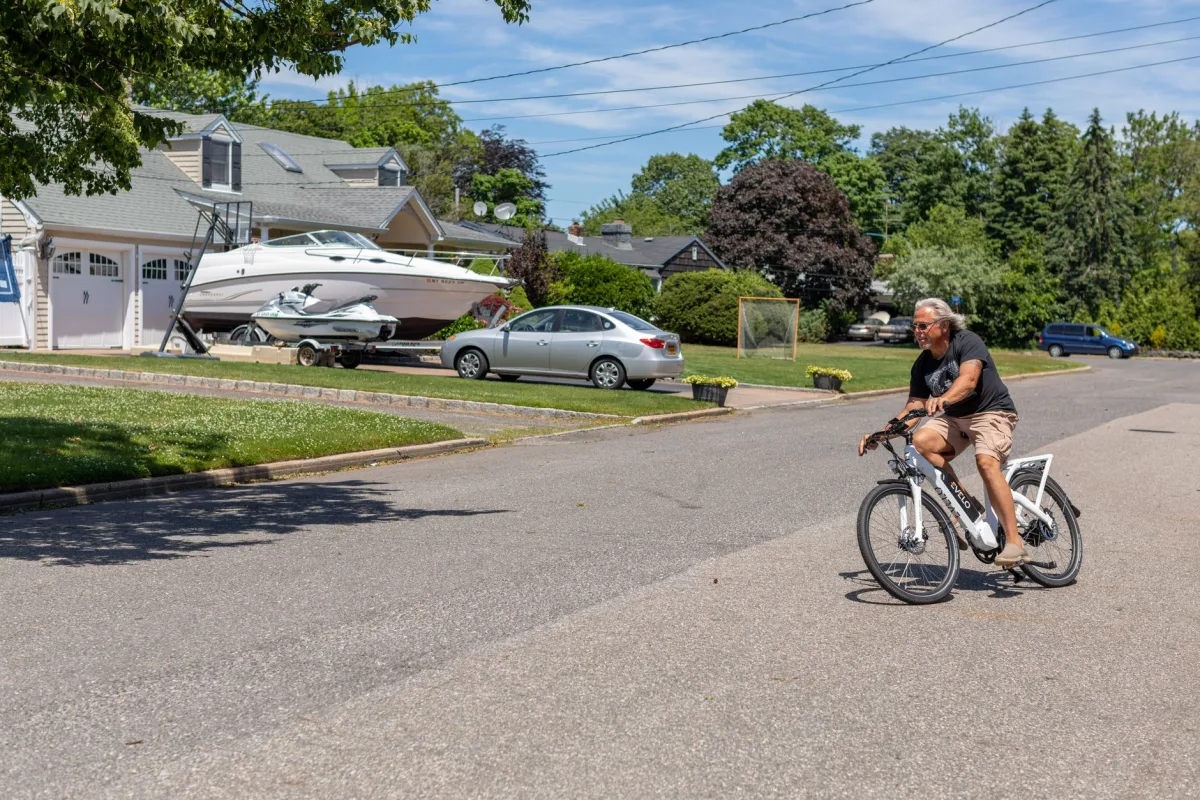
| Model | Price | Battery | Motor | Wheels and format |
|---|---|---|---|---|
| Pony | $529 (reg. $709) | 36V 10Ah (360Wh) | 250W, 450W peak | 20 in x 1.75 in, city |
| Skylark 2 | $549 (reg. $799) | 48V 8Ah (384Wh) | 500W | 16 in, compact city |
| Classic 2 | $795 (reg. $895) | 36V lithium, Ah not stated by Nakto | 250W | 26 in, step-through cruiser |
| Camel Step-Thru | $795 (reg. $895) | 36V 10Ah (360Wh) | 250W | 26 in x 1.75 in, step-through |
| F2 | $1,099 (reg. $1,199); Plus $1,299 | 48V 16Ah (768Wh) | 500W, 750W on the Plus | 20 in x 4 in, fat tire |
| F4 | $1,799 | 48V 16Ah or 20Ah (768-960Wh) | 500W or 750W | 20 in x 3 in, cargo |
| S02 trike | $1,699 (reg. $1,999) | 48V 16Ah (768Wh) | 500W | 20 in x 4 in, three-wheel |
Only some of these let you do the Wh arithmetic, because Nakto does not publish an amp-hour rating for the Classic 2. For the Pony: 36V x 10Ah = 360Wh, and $529 / 360Wh works out to about $1.47 per Wh. Run the same math on the rest and the Skylark 2 comes to about $1.43 per Wh, the F2 to about $1.43 per Wh, the Camel Step-Thru to about $2.21 per Wh, and the S02 trike to about $2.21 per Wh. The F4’s $1,799 covers two different battery-and-motor pairings on the same page (48V 16Ah with a 500W motor, or 48V 20Ah with a 750W motor), so its real per-Wh cost falls somewhere between about $1.87 and $2.34 depending on which one actually ships.
A few gaps are worth flagging rather than guessing at. Nakto’s F2, F4 and S02 pages all list an identical 68 lb curb weight despite different frames, tire widths and a trike-versus-two-wheel format, which reads more like a template number than three separate scale readings. The Classic 2’s page gives a voltage but not an amp-hour figure, so its true Wh capacity is not something we can publish. And of the seven current models, only the Pony’s page states a top speed at all, and it does so twice with two different numbers: 20 mph in the spec table and 22 mph in the marketing copy on the same page.
Motor watts, top speed and where that leaves the e-bike class question
None of Nakto’s current product pages state a class number (Class 1, 2 or 3) or a UL 2849 electrical safety certification for any model. That is a gap, not an accusation: plenty of budget e-bikes skip third-party certification, but it leaves that decision to the buyer rather than the manufacturer. The federal definition of a low-speed electric bicycle covers a motor under 750W paired with a top speed under 20 mph on level pavement powered by the motor alone. Every current Nakto motor, 250W to 750W, sits under that wattage ceiling, but without a published top speed for most models there is no way to confirm the speed half of that definition from Nakto’s own pages, and state rules on registration, helmets and minimum age hang on exactly that class number. Our guides to ebike classes explained and how fast electric bikes go cover what the class numbers actually change about where you can legally ride.
How a Nakto electric bike compares with similarly priced e-bikes
The fairest apples-to-apples comparison is battery size, since Wh is the one number Nakto and most other brands both publish consistently. Lining up Nakto’s two smallest-battery city bikes against other commuter bikes we track in a similar Wh range shows where the price actually goes.
| Bike | Battery | Motor | Price |
|---|---|---|---|
| Nakto Pony | 360Wh (36V 10Ah) | 250W | $529 |
| Nakto Skylark 2 | 384Wh (48V 8Ah) | 500W | $549 |
| Aventon Soltera 3 ADV | 366.8 Wh | 250W | $1,499 |
| Velotric Tempo | 374 Wh | 350W | $1,499 |
| Lectric XP4 | 500 Wh | 500W | $1,020 |
| Himiway A3 / Urban Commuter Bike ST | 720 Wh | 500W | $999 |
Per Wh, the gap is not uniform. At the list prices in this table, the Aventon Soltera 3 ADV (about $4.09 per Wh) and Velotric Tempo (about $4.01 per Wh) cost roughly 2.7 to 2.9 times as much per Wh as the Pony or Skylark 2, and the Lectric XP4 (about $2.04 per Wh) about 1.4 times as much, while the Himiway A3 (about $1.39 per Wh) costs slightly less per Wh than either Nakto. Where a gap exists, that is what you are actually weighing against Nakto’s lower price, not a difference in raw battery capacity. Our electric bike battery guide covers how Wh, cycle life and cell brand affect how long a pack actually holds up, which matters more with an unbranded cell than a name-brand one.
Who a Nakto electric bike suits
Nakto’s own pages state a maximum rider-and-cargo load of 350 lb for the Pony and 250 lb for the Skylark 2 and Camel Step-Thru, and pitch the lineup at casual and commuting riders rather than trail use. If your budget is under $600 and you want the lightest, simplest bike here, that points to the Pony or Skylark 2. If you want a fat-tire or cargo-leaning bike, or a trike, and can spend about $1,100 to $1,800 (Nakto’s September 2026 prices), that points to the F2, F4 or S02. Riders who want a documented class rating, a safety certification, or a wider network of independent mechanics stocking parts should also read our best commuter electric bike picks and our are electric bikes worth it breakdown of what you are paying for at each price tier, and weigh that against the Nakto prices above. Start from our electric bikes hub for the wider field rather than a single budget brand.
Frequently asked questions
Is a Nakto electric bike good?
It depends on what you are grading it against. Nakto’s prices, $529 to $1,799, undercut most name-brand bikes with similar battery sizes, but Nakto’s own pages do not publish a class rating, a UL 2849 certification, or, for most models, a top speed, so you are trading documentation and dealer support for a lower price rather than trading away a specific measurable feature.
Where can you buy a Nakto electric bike?
Directly from Nakto’s own site, and through independent electric-bike resellers that carry Nakto alongside other budget brands. Nakto is not sold through a single big-box retail chain the way some competitors are.
How long does a Nakto electric bike battery last?
Nakto’s F2 and S02 product pages state up to 1,000 charge cycles for their 48V packs. Nakto does not publish a cycle-life figure for its 36V models on the pages we checked.
Do you need a license to ride a Nakto electric bike?
Most states do not require a driver’s license for a low-speed electric bicycle that meets the federal motor and speed thresholds, but registration, helmet and minimum-age rules vary by state and depend on which class a bike actually is, which is exactly the number Nakto’s pages leave out.
What is the cheapest Nakto electric bike?
The Pony, at $529 on sale ($709 regular) for a 250W motor and a 36V 10Ah, 360Wh battery, according to Nakto’s product page, checked September 2026.