
Specialized Turbo Levo: Generations, Specs and Prices
Specialized’s Turbo Levo 4 pairs an 840Wh battery with up to 111 Nm of motor torque, while the lighter Turbo Levo SL uses a 320Wh battery and 50 Nm of torque.

The Specialized Turbo Levo is a full-suspension electric mountain bike now in its fourth generation, and the name now covers five bikes: four full-power models (the Levo R, Levo 4, Levo 4 EVO and Levo 4 X) and the lighter Turbo Levo SL. The full-power Turbo Levo 4 runs an 840Wh battery and a motor putting out up to 111 Nm of torque, while the Turbo Levo SL pairs a 320Wh battery with a smaller 50 Nm motor built for pedaling feel over raw output. All are mid-drive, pedal-assist e-MTBs, and all but the Levo 4 X come in more than one build tier, with complete-bike list prices running from about $5,000 for the base Levo 4 Alloy to about $13,900 for the top S-Works Turbo Levo SL 2 build, according to Specialized’s US site as of 9 October 2026 (several builds were on sale for less).
The Specialized Turbo Levo lineup: Levo 4 versus Levo SL
The Turbo Levo name covers separate frames rather than one bike with option packages: the lighter Turbo Levo SL has had its own frame since it launched in 2020, and the full-power Turbo Levo 4 went on sale in 2025 as a 2026 model. The Turbo Levo 4 is the full-power version: a 160mm-fork, 150mm-rear-travel enduro-leaning trail bike built around Specialized’s biggest e-MTB battery yet. The Turbo Levo SL keeps similar travel and geometry but carries 320Wh against the Levo 4’s 840Wh and 320 W of peak motor power against 810 W, aiming at riders who want a bike that still pedals like an analog mountain bike between assist bursts. Specialized continues to sell both side by side rather than replacing one with the other.
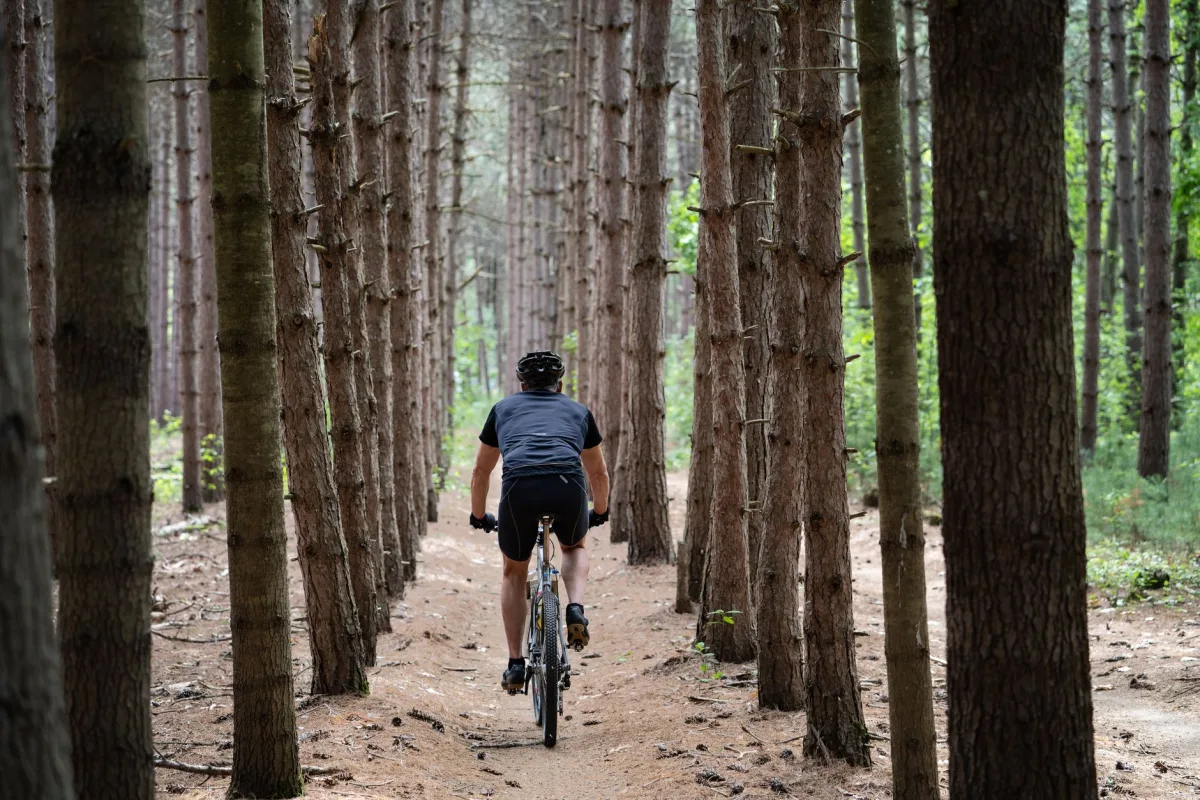
The current Turbo Levo family
Specialized now sells five bikes under the Turbo Levo name, and its lineup pages mark three of them, the Levo R, Levo 4 EVO and Levo 4 X, as new. The four full-power models share the 3.1 motor and the optional 280Wh range extender; the Levo SL keeps its own smaller motor and battery. The figures below come from Specialized’s US Turbo Levo pages. Each weight is the lightest complete build Specialized lists for that model, weighed at size S3 for the Levo R and size S4 for the others.
| Model | Built for | Travel (front/rear) | Peak power / torque | Battery | Lightest listed build | From (maker list price, October 2026) |
|---|---|---|---|---|---|---|
| Levo R | Downcountry and smoother trails | 140/130mm | 810 W / 105 Nm; S-Works 850 W / 111 Nm | 840Wh; 900Wh or 600Wh on some S-Works builds | 18.84 kg (41 lb 8.6 oz) for the S-Works Levo R Ultralight; other builds from 21.16 kg (46 lb 10.4 oz) | $6,699.99 |
| Levo 4 | All-round trail | 160/150mm | 810 W / 105 Nm; S-Works 850 W / 111 Nm | 840Wh; 900Wh on one S-Works build | 23.68 kg (52 lb 3.3 oz) | $4,999.99 |
| Levo 4 EVO | Steep terrain and aggressive descents | 180/170mm | 810 W / 105 Nm | 840Wh | 24.4 kg (53 lb 12.7 oz) | $8,499.99 |
| Levo 4 X | Overland riding and bikepacking | 160/150mm | 850 W / 111 Nm | 840Wh | 27.25 kg (60 lb 1.2 oz), the only build listed | $11,999.99 |
| Levo SL 2 | Lightweight trail | 160/150mm | 320 W / 50 Nm | 320Wh; optional 160Wh extender | 18.0 kg (39 lb 10.9 oz) | $8,699.99 |
Battery size is no longer the same across the full-power bikes. Most builds carry 840Wh, but two S-Works builds, one Levo 4 and one Levo R, carry 900Wh, and the S-Works Levo R Ultralight, the lightest full-power build at 18.84 kg, uses a 600Wh battery. Specialized says complete Levo R builds are up to 2 kg lighter than the Levo 4. The Levo 4 X adds patent-pending front and rear racks rated for 22 kg combined, and its S-Works build weighs about 3.6 kg more than the lightest S-Works Levo 4.
Turbo Levo 4: motor, battery and how far the range extender adds
The Turbo Levo 4’s standard motor, the Specialized 3.1, is rated at 105 Nm of torque and 810 W of peak output on the Alloy, Comp, Expert and Pro builds; S-Works models use the S-Works 3.1 motor, rated at 111 Nm and 850 W peak, per Specialized’s US spec sheets as of October 2026. Most Levo 4 builds ship with an 840Wh internal battery, one S-Works build carries a 900Wh battery, and Specialized also sells a lighter 600Wh battery for riders who want to shed weight and accept less range. A 280Wh range extender mounts in the bottle cage on the down tube and raises total on-board capacity to 840 + 280 = 1120Wh. Specialized’s Levo 4 Expert page rates that pairing at up to 4.40 hours of riding in Eco mode with an 80 kg rider and significant climbing, while its Turbo Levo FAQ quotes up to 5.33 hours for the same setup; the user manual says the added range varies considerably with gradient and support mode. The bike can also be ridden with the main battery removed and only the range extender fitted, at reduced motor power.
Turbo Levo SL: a smaller battery built for pedaling feel
The Turbo Levo SL uses Specialized’s SL 1.2 motor, rated at 50 Nm of torque and 320 W, matched to a 320Wh internal battery, both far smaller than the full-power bike’s. That is by design: Specialized markets the SL as the bike for riders who want an e-MTB that still feels like a normal trail bike when the motor is backed off, at the cost of a little more than a third of the full-power bike’s stored energy. An optional 160Wh range extender mounts in the water-bottle cage; 320 + 160 = 480Wh, which Specialized says adds about 50 percent more range. The smaller battery and motor do not make the SL cheaper, though: its entry build costs more than the entry Levo 4, as the price bands below show.
Mullet wheels and adjustable geometry
Both the Levo 4 and Levo SL ship with a mixed wheel setup across most frame sizes: a 29-inch front wheel for roll-over and a 27.5-inch rear wheel for maneuverability in tight corners, matching what most other enduro-focused e-MTBs in this category now spec as stock. The Levo 4’s frame adds three ways to adjust the ride without new parts: flip chips at the rear shock mount move bottom-bracket height by 6mm, flip chips at the Horst-link pivot change chainstay length by 11mm, and eccentric headset cups move the head angle across three positions spanning about 2 degrees. Stock geometry lands at roughly a 64.5-degree head angle, a 77-degree seat tube angle and 435mm chainstays across the size range (the smallest S1 alloy frame gets a 64-degree head angle and a 76-degree seat angle), putting the Levo 4 firmly in enduro territory rather than a cross-country lean. The Levo 4 EVO starts slacker still, at a 63.6-degree head angle with the same 435mm chainstays. Riders comparing frame designs before buying may also want a primer on hub motor vs mid-drive systems, since every Turbo Levo uses a mid-drive motor, part of why they can support this kind of adjustable, low-center-of-gravity geometry.
Model tiers and price bands: Comp, Expert, Pro, S-Works
Specialized sells the Levo family across the same Comp, Expert, Pro and S-Works tier names it uses on its acoustic mountain bikes, plus alloy entry builds. The Levo 4 Alloy, Levo 4 Comp Alloy and Levo R Comp Alloy use aluminum frames; Comp, Expert and Pro builds use FACT 11m carbon frames with progressively better suspension and drivetrain parts; S-Works builds get the top-spec components and, on the full-power bikes, the higher-output S-Works motor. On the Turbo Levo 4, Specialized’s US list prices as of 9 October 2026 start at $4,999.99 for the base Levo 4 Alloy, which sits below the Comp tier, and $6,799.99 for a Comp Alloy build; S-Works builds list at $11,499.99 and $12,499.99. The Turbo Levo SL lineup does not start lower: its cheapest complete bike listed, the SL 2 Comp, is $8,699.99, and the S-Works SL 2 Di2 is $13,899.99, though Specialized showed several SL builds on sale for less. The newer models sit inside the same band: Levo R builds run from $6,699.99 to $12,999.99, the Levo 4 EVO from $8,499.99 to $10,499.99, and the single Levo 4 X build is $11,999.99 (maker list price, October 2026). Because e-bike pricing shifts with model-year updates and sales, treat these as bands rather than fixed numbers and check Specialized’s own site before buying.
How the Specialized Turbo Levo compares with other e-MTBs
Specialized doesn’t sell through the retailers we track, so there is no tracked price or shop link for the Turbo Levo itself. The table below sets its published specs next to two bikes we track that sit in the same two brackets: a full-power enduro e-MTB and a lightweight SL-style e-MTB.
| Bike | Segment | Battery | US list price (as of 9 October 2026) |
|---|---|---|---|
| Specialized Turbo Levo 4 (Comp Alloy) | Full-power enduro | 840Wh | about $6,800 |
| Specialized Turbo Levo 4 (S-Works) | Full-power enduro | 840Wh | about $11,500 |
| Specialized Turbo Levo SL 2 (Comp) | Lightweight SL | 320Wh | about $8,700 |
| Santa Cruz Bullit 90 | Full-power enduro | 600 Wh | $9,099 |
| Santa Cruz Heckler SL 90 | Lightweight SL | 480 Wh | $8,699 |
The pattern holds across brands: full-power e-MTBs cluster around 600-850Wh, while SL-style bikes cluster around 400-500Wh and weigh less. Riders cross-shopping the category may find our best electric mountain bike roundup useful for seeing how these two brackets play out across more brands.
Class 1 or Class 3: how fast the Turbo Levo actually goes
Specialized’s US Turbo Levo FAQ describes the Levo 4 as a Class 1 e-bike: the motor assists only while you pedal, up to 20 mph, so the bike can be ridden on trails that permit Class 1 e-bikes. The Levo 4 user manual adds that every Turbo bike has a fixed assist speed limit set for its region, that unauthorized tampering with the power output voids the warranty, and that changing the speed limit can change the bike’s legal classification. The Levo SL manual likewise says its motor helps only while you pedal. Neither Specialized’s US spec pages nor the Levo 4 manual document a 28 mph Class 3 mode, so ask a Specialized retailer before counting on one for road riding. Which class actually applies on a given trail depends on local rules, not the bike’s top available setting; see our guide to e-bike classes for how the three-class system works and our page on how fast electric bikes go for how assisted top speed compares across bike types.
Turbo Levo generations and what changed
Specialized’s archived US product pages trace four generations of the full-power Levo and two of the Levo SL. The years below are the model-year labels on those pages. Early spec sheets give only a 250 W nominal motor rating, so peak power and torque appear only where Specialized published them.
| Generation | Model years on Specialized’s site | Motor | Battery | Wheels and rear travel |
|---|---|---|---|---|
| Turbo Levo FSR (Gen 1) | Up to 2018 | Specialized motor, 250 W nominal; 2018 builds moved to the 1.3 motor, rated at 15 percent more power than the 1.2 | 460Wh (504Wh on the 2017 S-Works) | 27.5 x 3.0-in 6Fattie tires; 140mm on 2017 builds |
| Turbo Levo (Gen 2) | 2019-2021 | Specialized 2.1, 250 W nominal, which Specialized says amplifies rider input by up to 410 percent | 500Wh on the base alloy build; 700Wh on Expert and S-Works | 29-in wheels with 2.6-in tires; 150mm |
| Turbo Levo 3 (Gen 3) | From 2022 | Specialized 2.2, 565 W / 90 Nm | 700Wh | 29-in front, 27.5-in rear; 150mm |
| Turbo Levo 4 (Gen 4) | From 2026 (on sale in 2025) | Specialized 3.1, 810 W / 105 Nm; S-Works 850 W / 111 Nm | 840Wh; 600Wh option; 900Wh on some S-Works builds | 29-in front, 27.5-in rear; 150mm |
| Turbo Levo SL | From 2020 | SL 1.1, up to 240 W | 320Wh; optional extender for about 50 percent more range | 29-in wheels; 150mm |
| Turbo Levo SL 2 | From 2022 | SL 1.2, 320 W / 50 Nm | 320Wh; optional 160Wh extender | 29-in front, 27.5-in rear (a flip chip allows a 29-in rear); 150mm |
The big changes by generation: Gen 2 introduced the asymmetric Sidearm frame and standard 29-inch wheels; Gen 3 moved to mixed wheel sizes and the 2.2 motor, rated at 90 Nm; Gen 4 brought the 3.1 motor and the 840Wh battery. On the SL side, Specialized says the SL 1.2 motor delivers 43 percent more torque and 33 percent more power than the SL 1.1, while the battery stayed at 320Wh.
On a used Levo, check the battery first. Specialized still lists a 700Wh replacement pack for Gen 2 Levo, Gen 2 Kenevo and Gen 3 Levo bikes at $1,699.99 (maker list price, October 2026). It is UL and EN 15194 certified and sold as a bare pack without the small parts needed to install it, and the listing does not cover Gen 1 bikes.
Which Turbo Levo should you buy
Pick the model for your terrain and load first, then the build tier. The Levo R suits riders on smoother, flowing trails who want the lightest full-power bike: it keeps the 3.1 motor but cuts travel to 140/130mm. The Levo 4 is the all-rounder, with 160/150mm of travel, an 840Wh battery and the widest spread of builds, starting with the Levo 4 Alloy at $4,999.99 (maker list price, October 2026).
The Levo 4 EVO is for steep, rough terrain and aggressive descents, where its 180/170mm of travel and 63.6-degree stock head angle matter more than the extra weight (from 24.4 kg, against 23.68 kg for the lightest Levo 4). The Levo 4 X is for carrying gear on overland or bikepacking trips, with racks rated for 22 kg combined, but the only build Specialized lists is the S-Works version. The Levo SL suits riders who want the most natural pedaling feel and the lowest weight, from 18.0 kg, and who accept a 320Wh battery, or 480Wh with the 160Wh extender, against 840Wh on the full-power bikes.
On a tighter budget, a used Gen 3 Levo has the same mixed-wheel layout and a 700Wh battery that Specialized still sells as a replacement. Riders still narrowing down the category more broadly, including non-Specialized options, can work through our which electric bike should I buy guide, and anyone unclear on how battery capacity translates to real-world range on any e-bike can check our electric bike battery explainer.
Frequently asked questions
What is the difference between the Specialized Turbo Levo and Turbo Levo SL?
The Turbo Levo 4 uses an 840Wh battery and up to 111 Nm of motor torque; the Turbo Levo SL uses a 320Wh battery and 50 Nm of torque. The SL is lighter and pedals more like an unassisted mountain bike once the motor’s contribution drops, while the Levo 4 carries roughly 2.6 times the stored energy per charge.
How much does a Specialized Turbo Levo cost?
Complete Turbo Levo 4 bikes list from about $5,000 for the base Levo 4 Alloy and about $6,800 for a Comp Alloy build to about $11,500-$12,500 for S-Works builds. Complete Turbo Levo SL 2 bikes list from about $8,700 to about $13,900, according to Specialized’s US site as of 9 October 2026; several builds were on sale for less.
Can you add a range extender to a Turbo Levo?
Yes. The Turbo Levo 4 accepts a 280Wh range extender bottle, taking total capacity to 1120Wh. The Turbo Levo SL accepts a smaller 160Wh range extender, taking its 320Wh battery to 480Wh, roughly 50 percent more capacity.
Is the Specialized Turbo Levo Class 1 or Class 3?
Specialized describes the Turbo Levo 4 as Class 1 in the US: pedal-assist only, with motor support up to 20 mph. Its US spec pages and user manual do not document a 28 mph Class 3 setting, so confirm with a Specialized retailer before relying on one.
Does the Turbo Levo use a mullet wheel setup?
Mostly. The Levo 4, Levo 4 EVO, Levo 4 X and Levo SL ship with a 29-inch front wheel and a 27.5-inch rear wheel as stock spec, while the Levo R runs 29-inch wheels at both ends on all but the smallest size.