
The Best Electric Mountain Bikes
Two completely different machines share this name, and buying the wrong one is the most common mistake in the category.
“Electric mountain bike” describes two different machines
Search the term and you will be shown two things that have almost nothing in common. One is a trail bike — a proper mountain bike frame with a small, quiet mid-drive motor, full suspension, and a weight somewhere in the forties of pounds. The other is a fat-tyre utility bike with a 750W or 1000W hub motor bolted into the rear wheel, often eighty or ninety pounds, sold on the strength of a big battery and a throttle.
Both are legitimate purchases. They are not alternatives to each other. The trail bike is for riding singletrack; the fat-tyre bike is for gravel roads, fire tracks, snow and hunting access, and it will be miserable on anything technical. Most of the disappointment in this category comes from buying one while picturing the other.
The quickest way to tell them apart on a spec sheet is weight and motor placement. A mid-drive motor under 500W in a frame under 55lb is a trail bike. A 750W to 1000W rear hub in a frame over 70lb is a utility bike wearing knobbly tyres.
Battery capacity is the only honest range number
Claimed range on an e-MTB is close to meaningless. It is measured on the lowest assist setting, by a light rider, on flat ground — which is the opposite of what the bike is for. Watt-hours are the number that does not lie.
Off-road riding is expensive. On road a commuter uses roughly 15Wh per mile. Climbing loose ground on full assist you can spend 25 to 35Wh per mile, and a 700Wh pack that would carry you 45 miles to work will give you perhaps 22 miles of real trail riding. Plan on a third of the advertised figure and you will rarely be caught out.
- Under 500Wh — a light trail bike. One to two hours of hard riding, and easy to carry up stairs.
- 600 to 800Wh — the sensible middle. A full day of mixed riding, or a long climb with reserve.
- 900Wh and up — almost always a heavy hub-drive bike. The battery is doing the work the gearing should be doing.
The trail bikes
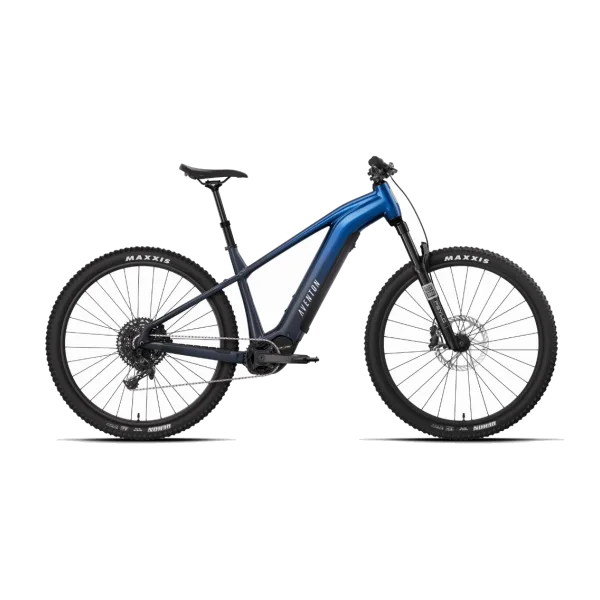
The Aventon Ramblas ADV at $2,899 is the cheapest way into a genuine mid-drive trail bike from a brand with US service behind it. 708 Wh of battery, a 250W mid-drive, Class 1, and 54lb on the scales. That weight is the point: it handles like a mountain bike rather than a moped, and Class 1 is the classification land managers actually write into their rules when they permit e-bikes at all.
Above it, the Aventon Current ADV at $3,999 adds capacity — 800 Wh — for about two pounds more. If your rides are long rather than technical, that is the better trade.
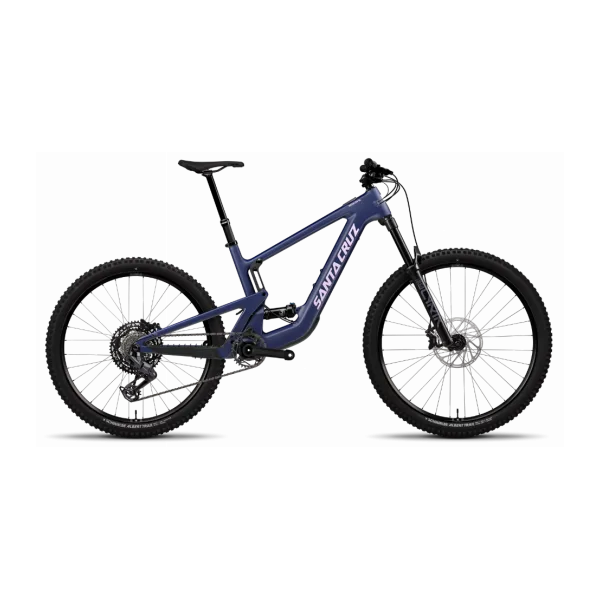
At the top, Santa Cruz Heckler SL 70 is $7,299 and carries only 480 Wh — less than half what a fat-tyre bike at a fifth of the price will sell you. That is deliberate. The whole bike weighs about 44lb, which is roughly what the battery difference alone would cost you elsewhere. You are paying for the suspension, the frame and the restraint.
The fat-tyre bikes
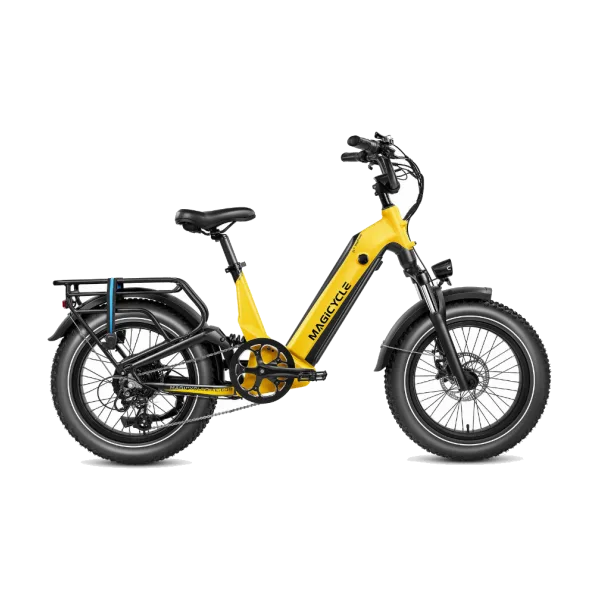
If your mountain is a forest road, this is the better value by a wide margin. The Magicycle 20" Deer Step-Thru Full Suspension SUV is $1,649 with 1,040 Wh — more than double the Santa Cruz battery for less than a quarter of the money. It also weighs 83lb, is Class 2, and will not be welcome on singletrack.
The Magicycle Deer 2.0 Step-Thru Full Suspension Torque Sensor at $1,849 adds a torque sensor, which is the single upgrade that most changes how an inexpensive e-bike feels: assist that responds to how hard you pedal rather than merely to whether you are pedalling.
The Engwe ENGINE PRO at $1,599 and 768 Wh is the budget entry into the category, and it folds.
Full suspension or hardtail
Full suspension is worth the money on an e-MTB more than it is on an analogue bike, for an unglamorous reason: the extra twenty to forty pounds of motor and battery has to be controlled somewhere, and an unsuspended rear end transmits all of it into the frame and into you. If you are riding anything rocky, take the suspension.
If you are riding fire roads and gravel, a hardtail is lighter, cheaper, has less to service, and the tyre volume on a fat-tyre bike is already doing much of the damping. Rear suspension behind a 20 by 4in tyre is largely decorative.
Class rules decide where you can ride
Trail access, not speed, is what the class system actually controls. Class 1 — pedal assist only, cutting out at 20mph — is the class land managers permit. Class 2 adds a throttle, and a great many trail systems that allow Class 1 do not allow Class 2. Class 3 assists to 28mph and is usually restricted to roads and bike lanes.
This is why a 1000W throttle bike can be a poor buy for trail riding regardless of how good the specification looks. Check your local land manager before you check the spec sheet.
What we would buy
- Real trails, sensible money — Aventon Ramblas ADV. Class 1, mid-drive, 54lb.
- Forest roads and hunting access — Magicycle 20" Deer Step-Thru Full Suspension SUV. Twice the battery for a quarter of the price.
- Long days over technical ground — Aventon Current ADV.
- No compromise — Santa Cruz Heckler SL 70, accepting the small battery as the price of a bike that rides properly.
Common questions
Is a 1000W motor better than a 250W one? For climbing a gravel road under load, yes. For riding singletrack, no. A good mid-drive puts its power through the gears, so 250W at the cranks does more useful work on a steep climb than 1000W at the hub, and it does it without the weight.
How long will the battery last? Six to eight years, or roughly 800 full cycles, before you notice a real loss of range. A replacement pack is a significant fraction of a cheap bike’s price, which is worth factoring in at the point of purchase rather than discovering later.
Can I ride an e-MTB on ordinary mountain bike trails? Sometimes. It depends entirely on the land manager and usually on the class. Class 1 is the one with a chance.
How this page makes money. Some links here are affiliate links and we earn a commission if you buy through them — currently BLUETTI, ALLPOWERS, Mango Power, Renogy and MoonCool. Every other brand on this page is here because leaving it out would make the comparison useless to you, and we are paid nothing either way. Prices are each maker’s own list price at the time of writing and change often.