
What E-Bike Should I Buy?
Four decisions, in order, and the first one is arithmetic. Get those right and the rest is taste.
There are only four decisions
Shopping for an e-bike feels impossible because every brand leads with a different number and none of them are comparable. It gets much easier once you accept that there are only four questions that actually change what you should buy, and that they have an order.
- How much battery do I need? Arithmetic. Do this first.
- Which class am I allowed to ride? Law and land access. This narrows the field more than anything else.
- What shape of bike? Commuter, cruiser, folder, cargo, fat-tyre, trail, trike.
- How much can I lift? The question nobody asks and everybody regrets.
Motor wattage, claimed range, and the number of assist levels are not on this list. They are the three things marketing leads with and the three that tell you least.
1. Work out the watt-hours
Advertised range is measured on the lowest assist level, on flat ground, by a light rider, in still air. It is not a lie exactly, but it describes a ride nobody takes. The number that survives contact with reality is battery capacity in watt-hours, and the consumption figure to plan against is simple:
- Flat ground, moderate assist, average rider — about 15Wh per mile.
- Hills, cargo, or a heavier rider — 18 to 25Wh per mile.
- Full throttle at Class 3 speeds — 20 to 30Wh per mile.
- Off-road on loose ground — 25 to 35Wh per mile.
Take the round trip you actually ride, not the one you imagine. Multiply by the figure above. Then add a third, because you should never arrive on an empty pack and because capacity fades as the battery ages.
A 12-mile round trip on flat ground therefore needs roughly 240Wh of usable capacity. Almost every bike sold will clear that easily, which is worth knowing before you pay for a 960Wh pack and then carry its weight twice a day for five years.
2. Pick the class you are allowed to ride
The three-class system is what most US states use, and it controls where you may ride far more than how fast you may go.
- Class 1 — pedal assist only, cuts out at 20mph. The class land managers permit on trails and shared paths. If you want to ride anywhere that is not a road, this is usually the answer.
- Class 2 — adds a throttle, still capped at 20mph. Many path and trail systems that allow Class 1 exclude Class 2 specifically because of the throttle.
- Class 3 — pedal assist to 28mph. Roads and bike lanes. Often carries a helmet requirement and a minimum age, and is commonly banned from shared-use paths.
Anything that assists beyond 28mph or has a motor above 750W nominal may not meet the definition of a bicycle in your state at all, which changes it into a moped for legal purposes — with registration, insurance and licensing attached. If a listing is vague about class, treat that as an answer.
Some bikes let you switch class in the settings. On a bike that will cross a boundary — a road commute that ends on a park path — that is a genuinely useful feature rather than a spec-sheet one.
3. Choose the shape
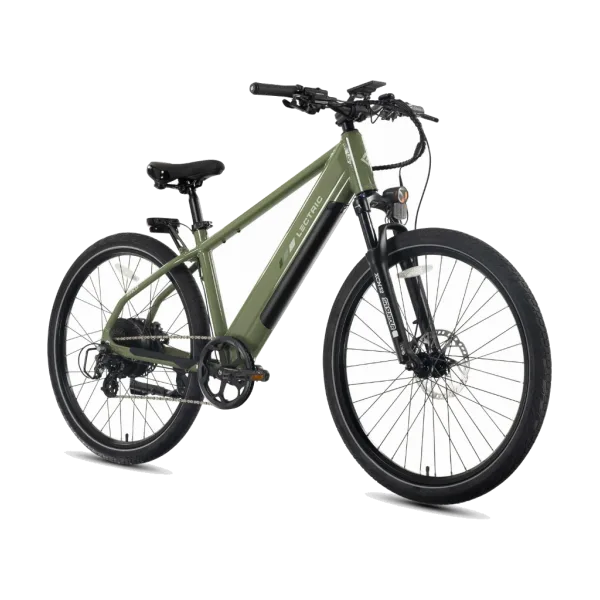
Only now does the type of bike matter, because the first two decisions have already eliminated most of the catalogue.
- Commuter — racks, fenders and lights as standard, moderate tyres, upright but not extreme. The default, and the right answer more often than people expect.
- Cruiser — upright, swept bars, comfortable at low speed. Short trips on flat ground.
- Folding — solves storage, not carrying. Buy one only if storage is a real constraint.
- Fat tyre — sand, snow, gravel and forest roads. Heavy, thirsty, and unnecessary on pavement.
- Cargo — children, shopping, a second passenger. A different bike entirely, with a payload rating you must check.
- Trail / e-MTB — mid-drive, suspension, Class 1, under 55lb. For singletrack.
- Trike — three wheels, no balance required. The right answer for many older riders and anyone with a balance impairment.
4. Decide what you can lift
E-bikes run from about 37lb to over 100lb. Nothing else on the spec sheet affects daily ownership as much, and nothing else is left out of the comparison as often.
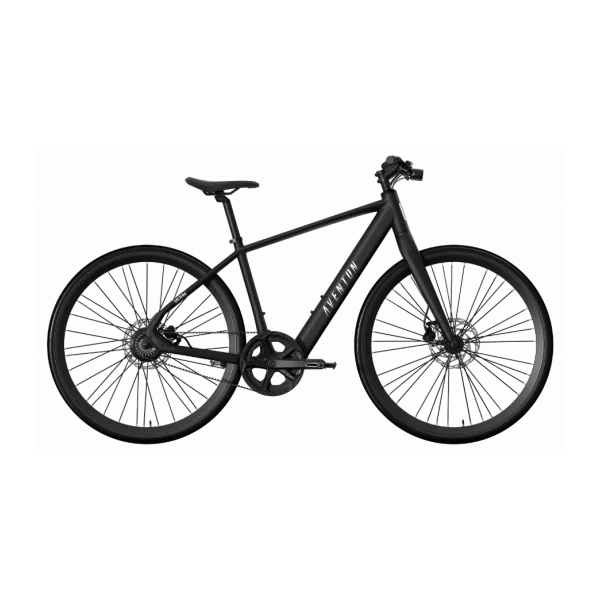
At the light end, Aventon Soltera 3 ADV is 37lb with 366.8 Wh — a bike one person can carry up a flight of stairs or lift onto a car rack. At the heavy end, a fat-tyre bike such as Heybike Saturn carries 956.8 Wh for $999, and weighs 103lb. That bike is superb value and it is also completely immovable if you live on the second floor.
If the bike will live at street level and be ridden from where it is parked, ignore weight and buy the battery. If it has to go up a step, through a door, into a boot or onto a rack, weight beats every other specification on the page.
The things worth paying extra for
- UL 2849 certification. The whole-system standard covering battery, charger and controller together, not just the cell. This is the one item worth being inflexible about.
- Hydraulic disc brakes. A 70lb bike at 20mph in the wet asks a lot of a cable brake.
- A torque sensor. Assist that scales with your effort rather than switching on when the cranks move. It is the single upgrade that most changes how a bike feels to ride.
- A brand that publishes its numbers. A manufacturer that states capacity in watt-hours, payload in pounds and torque in newton-metres is telling you something about how it will behave when you need a warranty.
The things not worth paying extra for
A bigger motor, past a point. Motor wattage sells bikes and rarely improves them: a 250W mid-drive geared properly will out-climb a 1000W hub motor, because it puts its power through the gears rather than straight at the wheel. Above 750W you are usually buying weight, heat and a legal problem.
Claimed range. It is not comparable between brands and it is not achievable on your ride. Convert everything to watt-hours and compare that instead.
Assist levels. Nine levels is not better than five; it is five levels with four duplicates.
Common questions
How much should I spend? Below about $800 the compromises stop being cosmetic — cable brakes, unbranded cells, no certification. Between $1,000 and $1,800 you get a bike that will last, from a brand that will still exist. Above $3,000 you are buying suspension, weight savings and a mid-drive.
Should I buy online or from a shop? Online is where the value is and where most of these brands sell. A shop gives you assembly, a warranty conversation with a human, and someone to blame. If you are not comfortable adjusting brakes and gears yourself, that is worth real money.
How long will it last? The frame and motor will outlast the battery. Expect six to eight years, or around 800 full charge cycles, before capacity is noticeably down — then price a replacement pack, because on a cheap bike it can be a third of what the bike cost.
How this page makes money. Some links here are affiliate links and we earn a commission if you buy through them — currently BLUETTI, ALLPOWERS, Mango Power, Renogy and MoonCool. Every other brand on this page is here because leaving it out would make the comparison useless to you, and we are paid nothing either way. Prices are each maker’s own list price at the time of writing and change often.