
Hub Motor vs Mid-Drive: Which E-Bike Motor You Actually Want
Two ways of putting power into a bicycle, and the cheaper one is the right answer more often than enthusiasts admit.
The difference in one paragraph
A hub motor sits inside the wheel and turns it directly. A mid-drive sits at the cranks and turns the chainring, so its power goes through the gears exactly as your legs do. That single difference — whether the motor can use the gearbox — explains almost every other difference between them.
Roughly nine out of ten e-bikes sold in the United States use a rear hub motor. It is cheaper to build, simpler to service and perfectly adequate for the riding most people do. Mid-drives dominate at the expensive end and on anything intended for real climbing.
Why wattage is the wrong comparison
A 250W mid-drive will out-climb a 750W hub motor on a steep, slow ascent. That sounds like nonsense until you remember what the gears are for.
An electric motor produces its best power in a narrow band of speeds. On a steep climb the wheel is turning slowly, so a hub motor bolted to that wheel is forced to turn slowly too — well below its efficient band. It responds by drawing far more current, converting the difference into heat, and delivering disappointing torque at the tyre. A mid-drive in the same situation is not tied to wheel speed: shift down and the motor spins back up into its efficient range while the gearing multiplies its torque.
This is why comparing a 750W hub to a 250W mid-drive by wattage is meaningless. The useful comparison is torque at the wheel on the gradient you actually ride, and no manufacturer publishes that.
Where the hub motor wins
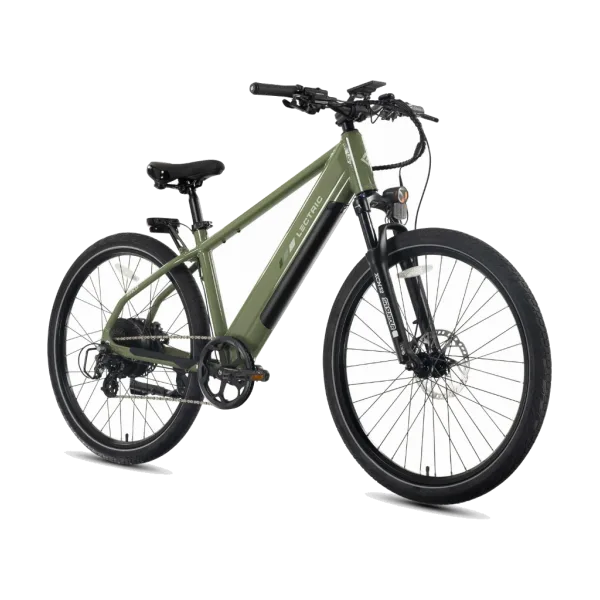
On flat ground and gentle hills — which is most riding — the mid-drive advantage largely disappears, and the hub motor’s advantages are real:
- Cost. A comparable hub bike is typically $1,000 to $2,000 cheaper. The Lectric XPress2 Commuter is $1,399 with 672 Wh; a mid-drive with that battery starts at roughly twice the price.
- Drivetrain wear. A hub motor does not put its power through your chain, so the chain, cassette and chainring wear at bicycle rates. A mid-drive pushes motor torque through the same components and eats them — expect to replace chains two or three times as often.
- Throttle. A throttle is straightforward on a hub motor and awkward on a mid-drive, because a mid-drive with a throttle can be asked to start in the wrong gear.
- Redundancy. If the motor fails, a hub bike is still a bicycle with slightly more drag. A failed mid-drive can leave resistance in the drivetrain.
Where the mid-drive wins
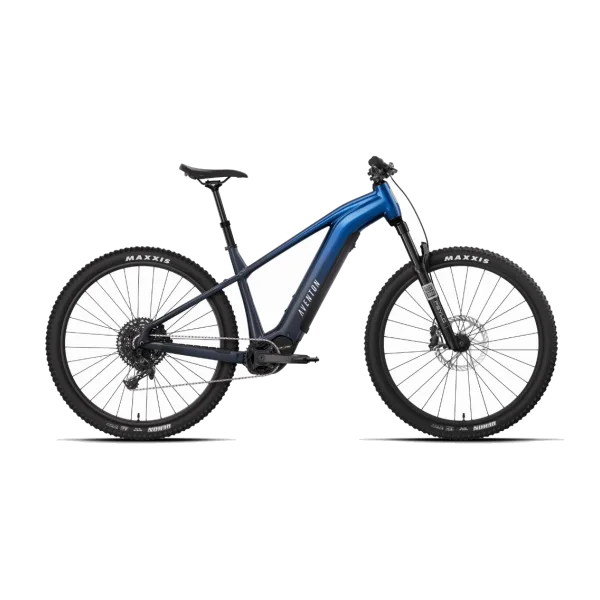
- Steep and sustained climbing. The whole argument, and it is decisive.
- Weight distribution. The mass sits low and central rather than out at the back wheel, which is why a mid-drive trail bike such as the Aventon Ramblas ADV at 54lb handles like a bicycle and a rear-hub fat bike at 90lb does not.
- Unsprung weight. A motor in the rear wheel is weight the suspension has to control. Moving it to the frame is one of the reasons full-suspension e-MTBs use mid-drives almost exclusively.
- Efficiency under load. Staying in its efficient band means a mid-drive extracts more miles from the same watt-hours when the going is hard.
The sensor matters more than the motor
If you can only change one thing about how an e-bike feels, change the sensor, not the motor.
A cadence sensor detects whether the pedals are turning and applies a preset level of assist. It cannot tell the difference between you spinning gently and you straining, so assist arrives as a shove shortly after you start pedalling and disappears shortly after you stop. It is cheap and it works, but it never feels like riding a bicycle.
A torque sensor measures how hard you are pushing and scales assist to match. Push harder, get more help. The bike feels like a bicycle with strong legs rather than a bicycle with a switch, and it is markedly better on hills, in traffic and at low speed.
Torque sensing used to be confined to mid-drives and expensive bikes. It is not any more — the Magicycle CT-1 Commuter Torque Sensor has one at $799, with 720 Wh of battery. On a shortlist of otherwise similar hub-motor bikes, the one with a torque sensor is usually the one to take.
Front hub motors
A third option exists and is worth avoiding on anything but the cheapest conversions. A front hub puts drive through the wheel you steer with, on a fork not designed for it, with a weight bias that makes the front end wash out on gravel and in the wet. It is cheap to build because it needs no interaction with the drivetrain. That is the only argument in its favour.
So which should you buy?
- Flat or rolling commute, budget under $2,000 — rear hub, and put the money you saved into a torque sensor and hydraulic brakes.
- Serious hills, or a loaded cargo bike on hills — mid-drive. This is the case where the price difference is genuinely justified.
- Singletrack — mid-drive, for the handling and the unsprung weight as much as the climbing.
- Sand, snow and forest roads — rear hub with a big battery. Fat-tyre riding is more about traction and capacity than about gearing.
- You want a throttle — rear hub. That decides it on its own.
Common questions
Do mid-drives really wear out chains faster? Yes, noticeably. A chain that lasts 2,000 miles on an analogue bike may last 700 to 1,000 on a mid-drive. Budget for it, and use a chain designed for e-bike loads.
Can I convert a normal bike with a hub motor kit? Mechanically, usually. The awkward parts are brakes rated for the extra speed and mass, a frame and fork designed for the torque, and a battery mounted somewhere that does not upset the handling. A converted bike also has no class label and no system certification.
Is a 1000W hub motor better than a 750W one? It is faster off the line and hotter on a long climb. It may also push the bike out of the legal definition of a bicycle in your state. Torque and gearing decide climbing, not the number on the sticker.
How this page makes money. Some links here are affiliate links and we earn a commission if you buy through them — currently BLUETTI, ALLPOWERS, Mango Power, Renogy and MoonCool. Every other brand on this page is here because leaving it out would make the comparison useless to you, and we are paid nothing either way. Prices are each maker’s own list price at the time of writing and change often.