
Home › Electric Bikes › Start Here
Start Here: Choosing an Electric Bike
Range is the least reliable number in the industry. Work out your watt-hours first, then shop to that figure.
Start here: watt-hours, not miles
Every e-bike is sold on range, and range is the least reliable number in the industry. It is measured on the lowest assist level, on flat ground, by a light rider, with no wind. Nobody rides like that.
The honest number is the battery, in watt-hours. Take the voltage and multiply it by the amp-hours: a 48V 15Ah pack is 720Wh. That figure is fixed, comparable across brands, and it is what you are actually buying.
As a working rule, a rider on moderate assist uses somewhere between 10 and 20 watt-hours per mile. Hills, headwinds, heavy loads and higher assist push you to the top of that band, and beyond it.
| How you ride | Rough use | Battery to look for |
|---|---|---|
| Flat commute, moderate assist | 10–12Wh/mi | 400–500Wh |
| Mixed terrain, some hills | 13–16Wh/mi | 600–750Wh |
| Hills, cargo or a heavier rider | 18–25Wh/mi | 750Wh+ |
| Full throttle, Class 3 speeds | 20–30Wh/mi | 900Wh+ or a spare |
Do the sum before you shop. Your real commute, doubled for the return leg, times 15Wh. A 12-mile round trip needs about 360Wh of usable capacity — and you never want to run a pack flat, so add a third on top.
The bikes worth starting with
Five bikes covering the categories that matter, with the specifications each manufacturer states outright. Where a brand does not publish a figure plainly, we have left it out rather than guess.
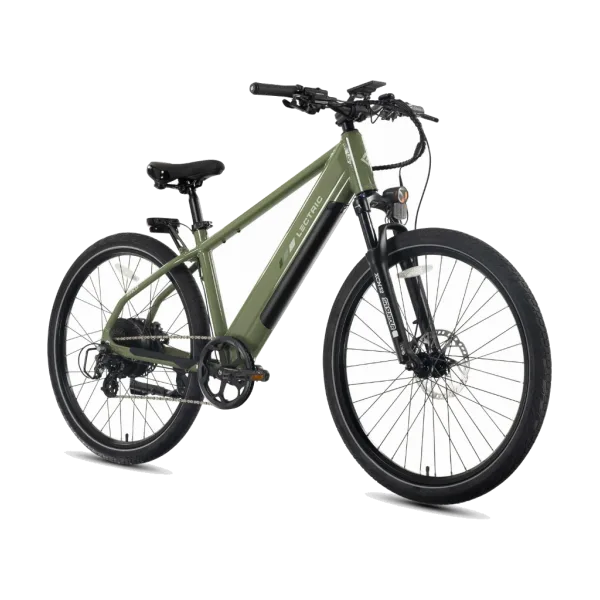
Lectric XPress2 Commuter
The value pick, and the one most people should look at first. A 672Wh pack is generous at this price, and Lectric ships more bikes in the US than anyone.
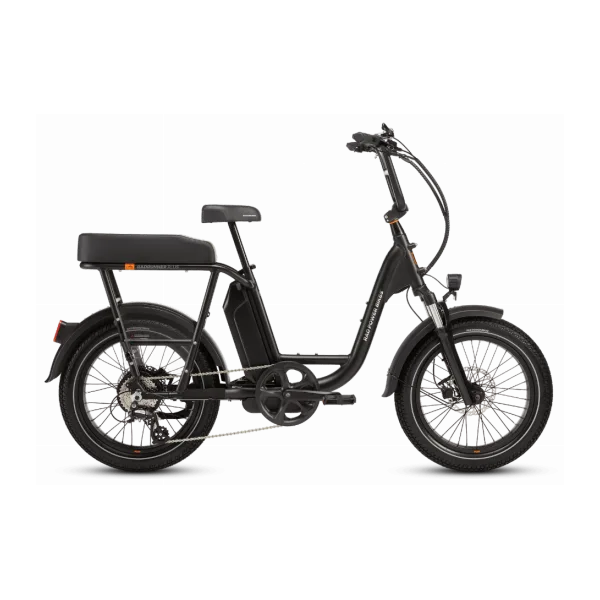
Rad Power RadRunner Plus
A utility bike that will carry a passenger or a week of shopping. Class 2, so it tops out at 20mph — this is a hauler, not a fast commuter.
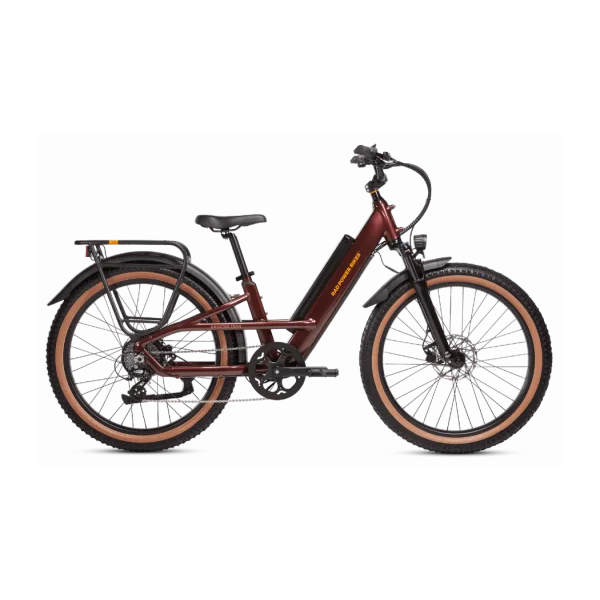
Rad Power Radster Trail
The most torque here at 100Nm, which is what you actually feel on a hill. Class 3 and UL certified to both 2849 and 2271 — worth checking on any bike you buy.
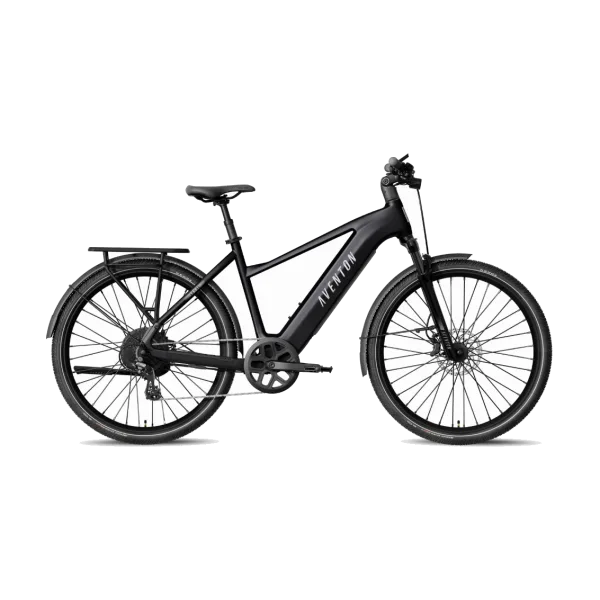
Aventon Level 4 REC
The commuter benchmark. Suspension fork, lights and racks as standard, and the best app of the group. Aventon does not state the pack size plainly, which is a mark against it.
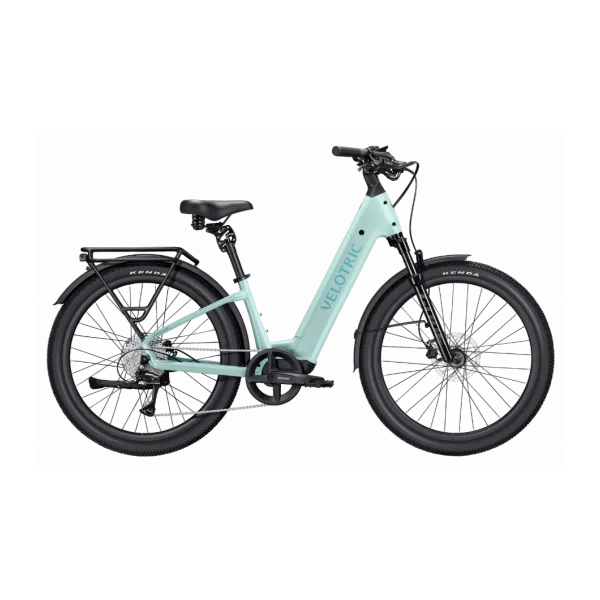
Velotric Discover 3
Built for comfort over outright speed, with an upright position and a long claimed range. The priciest of the commuters here without clearly out-specifying them.
How the brands differ
Lectric
The volume player, and the value benchmark. You get more battery per dollar than anywhere else, at the cost of heavier frames and less refined finishing. Start here unless you have a reason not to.
Rad Power
The most transparent brand of the group. Rad publishes range, payload, torque, battery capacity and UL certification on every product page, which is rarer than it should be. Their utility and cargo bikes are the strongest part of the range.
Aventon
The best commuters and by some distance the best app and connectivity. Specifications are harder to pin down than they should be — the pack size is not stated plainly on the product page.
Velotric
Comfort-led geometry and strong claimed range, priced at the top of this group. Good bikes, but you are paying for ride quality rather than raw numbers.
Check the certification. Look for UL 2849 (the whole electrical system) and UL 2271 (the battery). Several US cities now require it for indoor charging or storage, and insurers are starting to ask. Rad states both; not every brand does.
Common questions
How long does an e-bike battery last?
Most packs are rated for 500 to 800 full charge cycles before they fall to about 80% of original capacity, which for a typical rider is three to five years. Partial charges are gentler than full ones. See electric bike batteries explained.
Do I need a licence or insurance?
In most US states, no, provided the bike fits one of the three classes and stays under 750W. Class 3 is the one with extra rules — some states set a minimum age or require a helmet. Check your own state before buying.
Can I charge one away from the mains?
Yes, and this is where the two halves of this site meet. A 600–700Wh e-bike pack needs a power station of at least 700Wh to manage a full charge with headroom. See charging an e-bike from a power station.
Is a mid-drive motor worth the money?
On hills, yes. A mid-drive puts power through the gears, so it multiplies torque when you drop to a low gear. A hub motor cannot do that and has to brute-force the climb, drawing more current and covering fewer miles per watt-hour.