
Home › Off-Grid & RV › Power for Starlink
Best Power Station for Starlink
What a Starlink Mini actually draws, and exactly how long each battery will hold it up.
What Starlink actually draws
Starlink Mini pulls roughly 40W in steady operation, with brief spikes higher during boot and repointing. That is a modest number that catches people out anyway, because unlike a fridge it never cycles off. Forty watts continuous is 960Wh a day if you leave it running.
This is the load people forget to budget for. In a typical van build Starlink is often the largest continuous draw — bigger than the fridge, because the fridge only runs its compressor part of the time.
How long each station holds it
| Station | Capacity | Starlink only | Realistic mixed use |
|---|---|---|---|
| EcoFlow Delta 2 | 1,024Wh | ~21 hours | Most of a day |
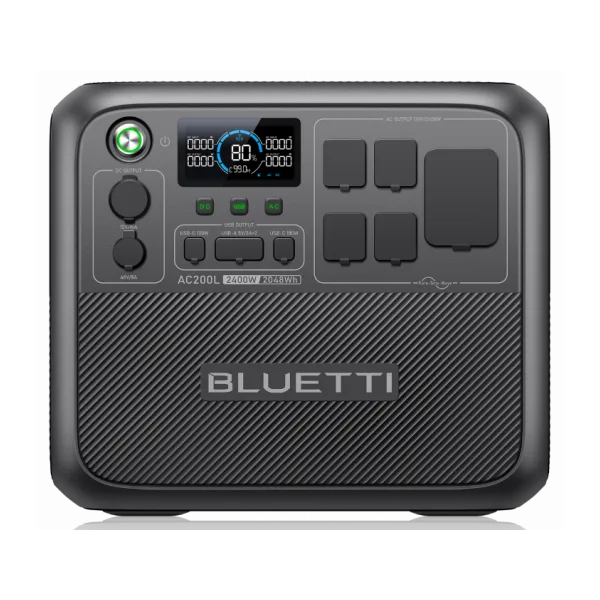 Bluetti AC200L Bluetti AC200L | 2,048Wh | ~43 hours | ~1.5 days |
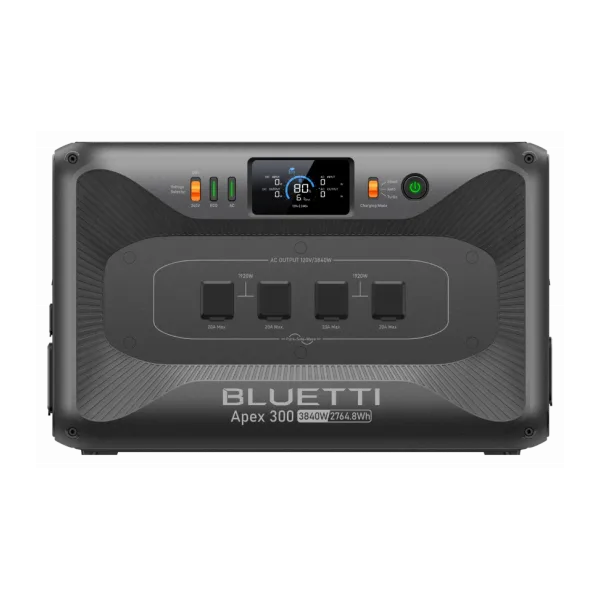 Bluetti Apex 300 Bluetti Apex 300 | 2,764Wh | ~58 hours | ~2 days |
Starlink-only figures assume 40W continuous and roughly 85% usable capacity. Mixed use assumes Starlink plus a 12V fridge, lights, phones and a laptop.
What to actually buy
Weekends and occasional use
A 1,000Wh station like the Delta 2 is fine. You will get a day of connectivity plus the usual devices, and you are recharging between trips anyway.
Full-time van or RV
Target 2,000Wh, which is the AC200L bracket, and pair it with at least 400W of solar. That gives you a day and a half of buffer for genuinely bad weather.
Remote cabin
Go to the Apex 300 and expansion batteries. At that point you are building a small off-grid system rather than carrying a battery.
Three ways to make it last longer
- Turn it off when you are not using it. The single biggest saving available, and the one people resist. Ten hours instead of twenty-four cuts your draw by well over half.
- Recharge during daylight. With enough solar the battery only ever covers evenings, which transforms the arithmetic.
- Run it on DC where possible. Going battery → inverter → AC adapter → DC wastes energy at every step.
On Starlink’s own referral scheme. Starlink does not run a conventional affiliate programme. Its referral offer pays existing subscribers in service credit rather than cash, so treat any site presenting it as a paid endorsement with caution.
Standard Starlink vs Starlink Mini
The draw figures differ enough to change what you buy. The Mini is the efficient one at roughly 40W steady. The standard residential dish pulls considerably more, and on a battery that difference compounds fast over a day.
If you are specifying a system for full-time off-grid use, confirm which terminal you actually have before sizing anything. Getting this wrong is the most common reason people end up short.
Pairing with solar so the battery lasts
Battery alone is a losing game for continuous loads. With panels, the battery only has to cover darkness, which roughly halves what you need. For a Starlink-plus-essentials setup, 400W of panel and around 2,000Wh of storage is the combination that works — see how to size a solar system.
Winter changes the maths completely. Two to three usable sun hours instead of five means the same array returns less than half. Nobody solves a northern winter with a van roof; plan to top up from the alternator or shore power.
What else is drawing power
Starlink rarely runs alone. A realistic off-grid day looks like this:
| Item | Per day |
|---|---|
| Starlink Mini (10h) | ~400Wh |
| 12V fridge | 300–600Wh |
| Laptop | ~250Wh |
| Lights and phones | ~110Wh |
| Total | ~1,100–1,400Wh |
Which is exactly why 2,000Wh is the recommended target — it gives you a day and a half of buffer for weather. Full breakdown on the off-grid and RV page.
Which station to buy
- Weekends: EcoFlow Delta 2 — a day of connectivity, recharges quickly between trips.
- Full-time van: Bluetti AC200L with 400W of panel. The default answer.
- Remote cabin: Bluetti Apex 300 with expansion batteries.
- On a budget: ALLPOWERS or OUPES for more watt-hours per dollar.