
Home › Power Stations › Bluetti Apex 300
Bluetti Apex 300: Specs, Runtimes and Who It Suits
Bluetti’s flagship portable: high output, genuinely expandable, and aimed at backing up a house rather than lighting a campsite.
What this page is. A research page built from BLUETTI’s published specifications and the Apex 300 user manual, both checked in October 2026, not a write-up from using the unit. We have not tested the Apex 300. Runtimes and charge times are arithmetic on the maker’s figures, with the method shown.
The short version
The Apex 300 is the unit to look at if you want one purchase that can grow. It pairs a large LiFePO4 pack with an inverter big enough for real household loads, and it accepts expansion batteries, so the ceiling is far higher than the box you start with.
It is not the right choice if you want something to throw in a car for weekends. It is heavy, it is expensive, and most of what makes it good is wasted on a camping trip.
Buy it if you are backing up a home, you want expandability, or you need high continuous output (Bluetti lists 3,840W); it is not the value pick on stored energy per dollar. Skip it if portability matters or your loads are small — the AC200L is better value for most people.
Specifications
| Specification | Figure | What it means |
|---|---|---|
| Capacity | 2,764.8Wh (51.2V, 54Ah) | Stored energy. About 2,364Wh reaches your devices by BLUETTI’s own formula; see the runtimes below. |
| Cell chemistry | LiFePO4 | BLUETTI rates it for 6,000+ cycles to 80% of original capacity. |
| Continuous AC output | 3,840W | The total for every outlet at once: 32A at 120V. |
| Power Lifting mode | 7,680W | For resistive loads rated 3,840–7,680W, such as kettles and heaters, which then run below their rated power. The manual limits it to those loads, so it is not a motor-start figure, and the spec sheet lists no separate surge rating. |
| Output voltage | 120V and 240V at the same time | BLUETTI says both can run together, including while the unit charges. |
| AC outlets | 4 × NEMA 5-20R (20A), 1 × TT-30R (120V, 30A), 1 × NEMA 14-50R (120/240V, 50A) | The 14-50R carries 240V when the voltage selector is set to 240V; at that setting the manual limits the TT-30R to 16A. |
| USB and 12V DC outputs | None built in | USB-C (2 × 100W), USB-A (2 × 15W), cigarette lighter, DC5521 and Anderson outputs all require the Hub D1, which BLUETTI rates at 700W and sells separately. |
| AC charging, Standard mode | 1,440W | The default, through the included cable from a 120V, 15A outlet. |
| AC charging, Turbo mode | 3,840W | BLUETTI quotes 80% in 45 minutes at 59–77°F. Needs an optional TT-30P or L14-50P cable into the P050A port. |
| Solar input | 2 × 1,200W, 12–60V, 20A each | 2,400W in total, available in Turbo mode; Standard mode caps solar at 1,440W. |
| Maximum combined input | 3,840W | 6,240W with one to six B300K batteries attached. |
| Car input | 12V or 24V | Through a cigarette lighter socket, with the cable in the box: up to 96W from a 12V socket or 192W from a 24V one, per the manual. |
| Expandable | Yes | Up to six B300K, B300S or B300 batteries per unit; 19,353.6Wh with six B300K. |
| UPS switchover | 0ms or 20ms | 0ms only with the output set to 240V, the grid on the 15A input and loads on the two left AC outlets; at 120V it is 20ms. BLUETTI says it is not for servers or workstations that need a high-performance UPS. |
| Self-consumption | About 20W | BLUETTI’s figure. Over 24 hours that is 480Wh, which matters most for small loads. |
| Weight | 83.78lb (38kg) | About 30lb lighter than the EcoFlow DELTA Pro 3; see the comparison below. |
| Dimensions | 20.67 × 12.87 × 12.6in | Length × width × height, as BLUETTI lists them. |
| Temperature range | Charging 32–104°F; discharging -4–104°F | The charging range starts at freezing, so plan winter solar charging around it. |
| Weather protection | IP20 | Not waterproof; BLUETTI says to keep it dry. |
| Certifications | FCC, UL and others | BLUETTI lists UL without naming the standard. |
| Warranty | 5 years | As listed on BLUETTI’s spec page. |
| List price | $1,699 (maker list price, October 2026) | About $0.61 per Wh. |
The Apex 300 figures are from BLUETTI’s Apex 300 spec page or the Apex 300 user manual, both checked October 2026. BLUETTI’s page lists accessory specs (Hub D1, B300K, SolarX 4K) next to the unit’s own, so this table keeps only what applies to the Apex 300 itself. Continuous output decides whether a load can run. For anything with a motor, the starting draw decides whether it starts, and BLUETTI’s manual warns that motors and compressors may start at 2–4 times their rated power and can overload the unit.
What it will actually run
| Load | Draw | Rough runtime |
|---|---|---|
| Full-size fridge | 40–80W avg | 24–39 hours |
| CPAP | 30–70W at the machine (40–80W from AC) | About 3–5 eight-hour nights |
| Gas furnace blower | 300–600W | 4–7 hours |
| Starlink Mini | 25–40W average | 39–53 hours |
| Microwave (bursts, draw from the outlet) | 1,000–1,700W | Handles it |
Runtimes use BLUETTI’s own formula from the Apex 300 manual: capacity × 95% depth of discharge × inverter efficiency ÷ (load + the unit’s self-consumption). The manual puts efficiency at over 90% and self-consumption at about 20W, so about 2,364Wh reaches your devices (2,764.8 × 0.95 × 0.90) and every load carries an extra 20W. That fixed 20W is why small loads run for less time than a flat percentage suggests: a Starlink Mini drawing 40W costs the battery 60W. Starlink lists the Mini’s average draw at 25–40W. Real figures also move with temperature and how hard the inverter is working.
Apex 300 vs EcoFlow DELTA Pro 3, by the numbers
The DELTA Pro 3 is the closest EcoFlow rival: one box, 120V and 240V output, expandable. The figures are each maker’s own, from BLUETTI’s spec page and manual and EcoFlow’s DELTA Pro 3 page, checked October 2026. Highlighted cells are the stronger figure.
| Specification | BLUETTI Apex 300 | EcoFlow DELTA Pro 3 |
|---|---|---|
| Capacity | 2,764.8Wh | 4,096Wh |
| Continuous AC output | 3,840W | 4,000W |
| Surge rating | None listed (the 7,680W lifting figure is for resistive loads only) | 8,000W |
| 120V and 240V at the same time | Yes | Not from the outlets: the 240V button turns the 120V outlets off |
| UPS switchover | 0ms (240V setting) or 20ms | 10ms |
| Solar input | 2,400W (2 × 1,200W at 12–60V) | 2,600W (1,600W at 30–150V plus 1,000W at 11–60V) |
| AC charging from a 120V, 15A outlet | 1,440W (Standard mode, the default) | 15A input; EcoFlow’s FAQ cites 2,000W at 120V |
| Faster AC charging route | Up to 3,840W in Turbo mode, with an optional cable to a 30A or 50A outlet | Up to 4,000W with EcoFlow’s EV X-Stream Adapter and a 240V Level 2 EV charger |
| Rated cycles | 6,000 to 80% | 4,000 to 80% |
| Built-in USB | None (Hub D1 required) | 2 × USB-C 100W, 2 × USB-A 18W |
| Expansion per unit | Up to 6 batteries (19,353.6Wh with six B300K) | 2 Extra Batteries (12kWh) |
| Weight | 83.78lb | 113.54lb |
| Warranty | 5 years | 5 years (3 standard plus 2 with registration in the EcoFlow app) |
| List price (maker list price, October 2026) | $1,699 | $3,299 |
| Per Wh at list price | $0.61 | $0.81 |
What the table settles. At list price the Apex 300 costs about a quarter less per watt-hour ($0.61 against $0.81), weighs 29.76lb less and carries a 50% higher cycle rating. It can also power 120V and 240V devices at the same time from its own outlets. EcoFlow’s FAQ says the DELTA Pro 3 cannot: pressing its 240V button turns off the four 120V outlets and the 30A RV outlet, leaving the L14-30R split-phase outlet and a 6-20R. EcoFlow says that L14-30R, connected to its inlet box, powers 120V and 240V home appliances, so the difference matters most for appliances plugged straight into the unit. The DELTA Pro 3 answers with 48% more capacity in one box, a published 8,000W surge rating, slightly more solar input and USB ports built in.
Wall charging. Neither unit is clearly faster from an ordinary 120V, 15A outlet. Both list a 15A input limit there. In Standard mode the Apex 300 charges at up to 1,440W, and EcoFlow’s FAQ puts the DELTA Pro 3 at 2,000W, but the DELTA Pro 3’s battery is 48% larger. As arithmetic floors the two land close together: 2,764.8 ÷ 1,440 = 1.9 hours against 4,096 ÷ 2,000 = 2.0 hours. Both have a faster route that needs extra hardware: Turbo mode on the Apex 300 (up to 3,840W from a 30A or 50A outlet, 80% in 45 minutes by BLUETTI’s figure), and on the DELTA Pro 3 up to 4,000W through EcoFlow’s EV X-Stream Adapter and a 240V Level 2 EV charger, according to EcoFlow’s FAQ.
The full comparison is in Bluetti vs EcoFlow.
What you actually get in the box
Worth checking before you buy, because the accessory list changes what it costs to make the thing useful. A station on its own is a battery with sockets. To charge it from the sun you need panels and the right cable; to feed household circuits you need either extension leads or an electrician.
For the Apex 300, BLUETTI lists five items in the box: the unit, an AC charging cable, a car charging cable, a grounding screw and the user manual. Not included: the MC4-to-XT60 solar cable, the Hub D1 that supplies every USB and 12V output, and the TT-30P or L14-50P cable that Turbo charging needs.
Budget for the whole system rather than the headline unit. Panels typically add 30–60% to the total, and a transfer switch install is a few hundred dollars on top. Our home battery backup guide breaks down all three routes.
Charging: the three ways in
From the wall
BLUETTI’s manual lists three AC charging modes, and the app adds a Custom setting for the charging current. Standard, the default, takes up to 1,440W through the included cable from an ordinary 120V, 15A outlet: 2,764.8Wh ÷ 1,440W = 1.9 hours from empty as an arithmetic floor, and longer in practice, because the battery management system trims charging power by temperature and charge level. Silent caps the input at 500W for quiet running. Turbo takes up to 3,840W, with 80% in about 45 minutes by BLUETTI’s figure, but only through the P050A port with an optional NEMA TT-30P or L14-50P cable plugged into a 30A or 50A outlet. For Turbo charging the manual recommends overcurrent protection upstream and a licensed electrician to confirm the home circuit can carry the current. How that compares with EcoFlow’s DELTA Pro 3 is in the table above. For a unit that sits full waiting for an outage, Standard mode is enough.
From solar
The Apex 300 has two XT60 solar inputs, each rated 1,200W at 12–60V and up to 20A. Two limits follow. The panels’ open-circuit voltage must stay within 60V on each input; wiring panels in series adds their voltages, and BLUETTI recommends connecting them in parallel. And because current tops out at 20A, an input only reaches 1,200W near the top of that window: an array working at 40V delivers at most 800W (40V × 20A). Below 30V, the manual’s default setting also holds each input to 8.2A; the app’s advanced mode raises that to 20A from 16V up. The manual adds a mode limit: Standard charging caps solar at 1,440W in total, and the full 2,400W needs Turbo mode. For high-voltage strings BLUETTI sells the SolarX 4K, which accepts up to 500V and needs at least one B300K battery. See how to size a solar system for the arithmetic, and solar panels and kits for what to pair it with.
From a vehicle
Slow but useful on the road. BLUETTI includes a car charging cable, and the manual rates car charging at up to 96W from a 12V socket or 192W from a 24V one. It also says to keep the engine running while charging so the car battery is not drained. At 96W, filling the 2,764.8Wh battery from empty takes about 29 hours (2,764.8 ÷ 96) as an arithmetic floor, so BLUETTI’s Charger 1 alternator charger is the faster route if you are living in a van or RV.
Expansion: the reason to buy this one
The Apex 300 accepts additional battery modules, which is the single feature that separates it from cheaper units. A sealed station is a ceiling — when you outgrow it you buy a second one and own two half-solutions. An expandable system grows with you.
The rule of thumb. If your requirement is anywhere near the edge of a unit’s capacity, buy expandable. Batteries also lose capacity as they age, so sizing exactly to today’s need means being short inside two years.
What the Apex 300 takes. BLUETTI lists up to six B300K, B300S or B300 batteries per unit. The B300K matches the Apex 300’s own 2,764.8Wh, so six of them bring a single unit to 19,353.6Wh; six B300 or B300S reach 21,196.8Wh. Adding B300K batteries also lifts the maximum charging input from 3,840W to 6,240W. Beyond that, up to three Apex 300 units can run in parallel through BLUETTI’s Hub A1, for 11,520W of AC output and up to 58,060.8Wh with 18 B300K. Expansion batteries add hours, not watts: one Apex 300 still delivers 3,840W however many batteries sit behind it.
Three scenarios, worked through
A 24-hour outage, gas heat
Fridge averaging roughly 60W (150W while the compressor runs), furnace blower at 400W intermittently, router, phones and a few lights. Add it up: the fridge alone is 60W × 24 hours = 1,440Wh, the blower adds 400Wh for every hour it runs (1,200Wh even if it runs only three hours in total), and the router, phones and lights add a few hundred watt-hours more. That is roughly 3,000Wh of appliance load for the day. The Apex 300’s own self-consumption of about 20W adds 480Wh over 24 hours, so the day costs roughly 3,500Wh, against about 2,364Wh usable from this unit (2,764.8Wh × 0.95 × 0.90). The base unit covers about two-thirds of a day of this load, roughly 16 hours; a full day needs an expansion battery (one B300K roughly doubles the usable energy), or recharging from solar during the day. See how many watts a refrigerator uses.
A weekend off-grid with Starlink
Starlink Mini at 40W, the top of Starlink’s 25–40W average, is roughly 960Wh a day if you leave it up, which is more than most people budget for. Add a 12V fridge and lighting and you are near 1,500Wh daily. Run from the AC outlets, the Apex 300’s own 20W adds another 480Wh, so the day costs close to 2,000Wh and a full charge lasts a little over a day (2,364 ÷ 1,980 = 1.2 days), not two. The unit has no 12V socket of its own: BLUETTI lists its cigarette lighter, DC5521 and Anderson outputs as requiring the Hub D1. Detail in best power station for Starlink.
A job site
Output matters more than capacity here. The high continuous rating handles most corded tools, but sustained heavy draw drains any battery fast. Check a compressor’s or saw’s starting draw against 3,840W, not against the 7,680W lifting figure, which BLUETTI limits to resistive loads. If you are running a compressor all day, a generator is still the right tool — see power station vs generator.
Alternatives worth comparing
| If you want… | Look at | Why |
|---|---|---|
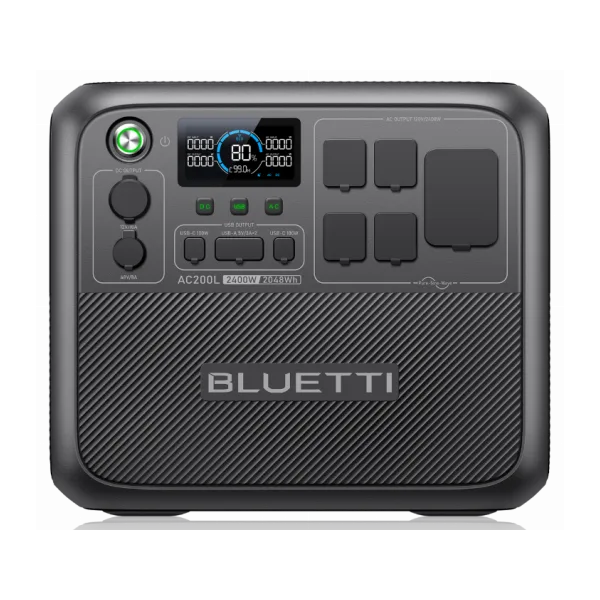 The same job, less money | Bluetti AC200L | Enough for a fridge overnight at a lower price |
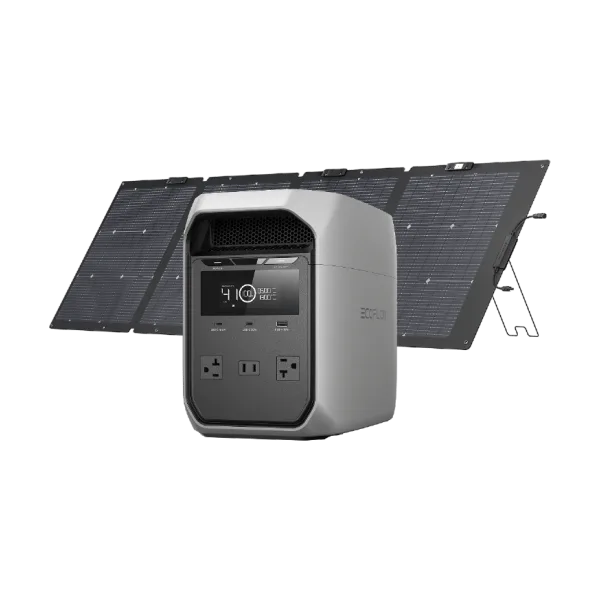 Faster recharge | EcoFlow DELTA 3 Classic Solar Generator | Refills in a fraction of the time, smaller battery |
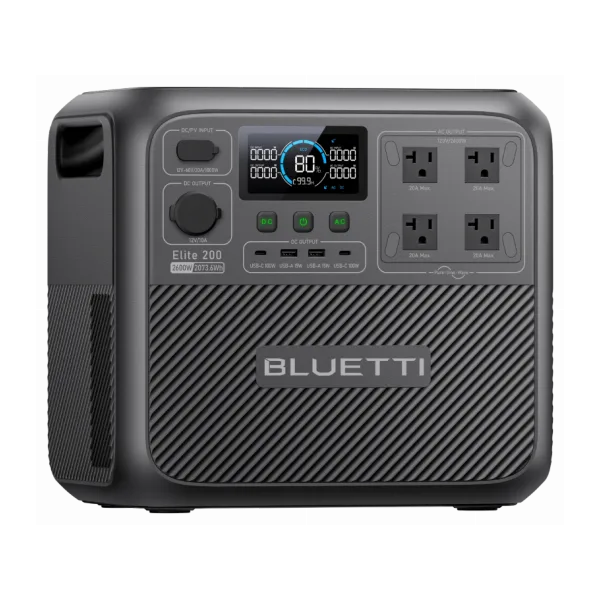 Lighter to carry | Bluetti Elite 200 V2 | Three-quarters of the capacity (2,073.6Wh) at 53.4lb, about 30lb lighter |
| More capacity per dollar | OUPES | Challenger brand competing directly on watt-hours |
| Home backup, expandable | Mango Power | Built for household circuits rather than camping |
Still undecided between the two big names? Bluetti vs EcoFlow reduces it to a single question.