
Home › Power station specs › EcoFlow RIVER 3 Plus
EcoFlow RIVER 3 Plus: Specs, Runtimes and Who It Suits
A 286 Wh LiFePO4 unit rated for 600 W that takes an extra battery: what it runs, how it recharges, and when a different power station fits better.
How this page makes money. Some links on this page are affiliate links: if you buy through them we may earn a commission (on this page: BLUETTI and Amazon). As an Amazon Associate we earn from qualifying purchases. Brands that pay us nothing are included wherever leaving them out would make a comparison less useful.
Arithmetic on the maker’s published specification; we have not tested this unit. Method and the full comparison are in our power station price index.
The short answer
On EcoFlow’s published specs, the EcoFlow RIVER 3 Plus is a 286 Wh LiFePO4 power station with 600 W of continuous AC output, and it takes an extra battery. The 600 W is the point: it is twice the 300 W that most units of 250 to 290 Wh list, so it can carry loads and combinations of loads that they cannot. The 286 Wh is the limit: at the full 600 W it is empty in about 24 minutes, and an 8-hour night of CPAP at 40 W from the AC outlet (a 30 W machine plus inverter idle) needs 320 Wh, about 77 Wh more than it can deliver.
It suits a small outage kit (router, laptop, phone chargers, a CPAP for part of the night), a campsite or van setup with several loads running at once, and a buyer who wants to start small and keep the option of more capacity. It does not suit anyone who needs to keep a full-size fridge, a heater or a microwave going. The sections below show the arithmetic and name the alternatives.
How to read this page. This page works from each maker’s published specifications; we have not used the unit. Runtimes use usable energy = Wh × 0.85, an allowance for inverter losses; real figures move with temperature, load and battery age.
RIVER 3 Plus specs
Every figure in the table is EcoFlow’s published specification for the US model, from its RIVER 3 Plus product page and warranty policy as listed on 9 October 2026.
| Spec | EcoFlow’s figure | What it means |
|---|---|---|
| Capacity | 286 Wh | Rated battery energy; about 243 Wh usable at 85% |
| AC output, continuous | 600 W | 2.10 W of output per Wh of capacity |
| Surge output | 1,200 W | Brief motor starts up to 1,200 W; X-Boost (also 1,200 W) runs some heating appliances at reduced power |
| Battery chemistry | LiFePO4 | Lithium iron phosphate |
| Rated cycles | 3,000 to 80% | Cycles before capacity falls to 80% of new |
| Warranty | 5 years | EcoFlow’s US term for this model |
| Maximum solar input | 220 W | Solar power above 220 W goes unused; EcoFlow lists a full solar charge in as little as 1.5 hours |
| AC charging input and time | 380 W; 0-100% in 60 minutes | A full wall charge in about an hour |
| Weight | 10.4 lb | 27.5 Wh per lb |
| Expandable | Yes | One Smart Extra Battery, 286 or 572 Wh; EcoFlow lists 858 Wh as the maximum |
| Price | Not quoted here | Check the retailer for the current price |
What the specs mean
EcoFlow publishes all ten of the performance figures we compare across power stations (capacity, AC output, surge, chemistry, cycle rating, warranty, solar input, AC charge input, AC charge time and weight). Three of them do most of the sizing work: the 1,200 W surge sets the limit for a motor’s brief starting draw, the 220 W solar ceiling caps how fast any panel can charge it, and the 380 W wall input means a full recharge takes about an hour.
The one standout number is the output-to-capacity ratio. Across the power stations we track whose makers publish both figures, the median is 1.20 W per Wh. The RIVER 3 Plus is at 2.10, the third highest of them. Only two larger units (1,024 to 1,536 Wh) score higher, and the only small unit anywhere near it is the BLUETTI Elite 30 V2 at 2.08.
What 286 Wh runs, load by load
Usable energy is 286 × 0.85 = 243.1 Wh, and hours = 243.1 ÷ the load in watts. Draws are typical running figures in line with our appliance wattage chart, except the TV: the chart lists a 55-inch LED set at 100 W, and 90 W here stands for a somewhat smaller screen. Real appliances vary, so check the nameplate. Loads that exceed the 600 W rating are marked rather than given a runtime, because an overload normally shuts the inverter off instead of shortening the run.
| Load | Draw used | Within 600 W? | Runtime on 286 Wh |
|---|---|---|---|
| Wi-Fi router | 10 W | Yes | 24.3 hours |
| Laptop charger | 65 W | Yes | 3.7 hours |
| CPAP machine, humidifier off | 40 W average from AC (30 W machine plus inverter idle) | Yes | 6.1 hours |
| TV | 90 W | Yes | 2.7 hours |
| Mini fridge, compressor running | 100 W (about 800 W start) | Running yes; start within the 1,200 W surge | 2.4 hours |
| Desktop computer | 200 W | Yes | 1.2 hours |
| Full-size fridge, compressor running | 150 W (about 1,500 W start) | Running yes; start can exceed the 1,200 W surge | 1.6 hours |
| Any steady 500 W load | 500 W | Yes | 29 minutes |
| Microwave (1,000 W cooking power) | 1,500 W from the outlet | No, 2.5 times the rating | Exceeds rating |
| Space heater | 1,500 W | No, 2.5 times the rating | Exceeds rating |
| Well pump, 1/2 HP (240 V) | 1,000 W running, 3,000 W start | No | Exceeds rating |
Combining loads
Loads add. A router and a laptop together draw 75 W, which lasts 3.2 hours (243.1 ÷ 75). A router, a TV and a CPAP draw 140 W for 1.7 hours. The 600 W rating matters most here: a router, laptop, TV, CPAP and a full-size fridge compressor total 355 W, more than any 300 W unit in the 250 to 300 Wh class can carry, and the RIVER 3 Plus can once the compressor is running. Starting the compressor with the other 205 W already on means 1,205 to 1,705 W against a 1,200 W surge rating. The same arithmetic shows the cost, though: 243.1 ÷ 355 is 0.68 hours, about 41 minutes.
The fridge question
A compressor cycles. If it runs one-third of the time (a scenario, not a measurement), 150 W becomes a 50 W average and 243.1 Wh lasts 4.9 hours. That is still far short of an overnight outage, and the 1,000 to 1,500 W start draw of a full-size fridge is above the 600 W rating and can exceed the 1,200 W surge EcoFlow lists. A mini fridge, which starts at about 400 to 800 W, inside that surge, is still the safer pairing. See how many watts a refrigerator uses for the full-size case.
CPAP through the night
Eight hours at 40 W needs 320 Wh of output. The unit supplies 243.1 Wh, so it covers 6.1 hours. The break-even average draw for an 8-hour night is 30 W at the AC outlet (243.1 ÷ 8 = 30.4), inverter idle included; a machine averaging about 15 W, or 25 W at the outlet, would use 200 Wh and fit. A heated humidifier or a high pressure setting pushes the average up, so check CPAP watts and runtimes against your own device.
Recharging from the wall and from solar
EcoFlow lists 380 W of AC charging input, 0-100% in 60 minutes, and a 220 W maximum solar input, with a full solar charge in as little as 1.5 hours. For a lower charge rate or a smaller panel, use the formulas below. Wall charging: hours = 286 ÷ (input watts × 0.85), where 0.85 is our allowance for charging losses. Solar: hours = 286 ÷ (panel rating × 0.70), where 0.70 is our allowance for real-world panel output (angle, heat, cable and controller losses). Both factors are planning assumptions, not specifications.
| Wall charging input | Hours to refill 286 Wh |
|---|---|
| 100 W | 3.4 hours |
| 200 W | 1.7 hours |
| 300 W | 1.1 hours |
| 380 W (EcoFlow’s maximum) | 53 minutes by this formula; EcoFlow lists 60 |
Charging slows as a battery nears full, so the last stretch takes longer than straight division suggests. For scale, the charge times makers publish for small power stations span a wide range: the BLUETTI Elite 30 V2 lists 80% in 45 minutes at 25°C, which is about 307 W averaged into the battery (0.8 × 288 ÷ 0.75), while the Jackery Solar Generator 300 lists 4.5 hours for 294 Wh from its AC adapter, about 65 W. EcoFlow’s 60-minute full charge puts the RIVER 3 Plus at the fast end of that range.
| Panel rating | Assumed output | Strong-sun hours to refill 286 Wh | Energy in a 4 peak-sun-hour day |
|---|---|---|---|
| 50 W | 35 W | 8.2 hours | 140 Wh |
| 100 W | 70 W | 4.1 hours | 280 Wh |
| 200 W | 140 W | 2.0 hours | 560 Wh |
A peak sun hour is an hour of sunlight at 1,000 W per square meter; four is a decent day in much of the US, and winter or overcast days fall well below it. A 100 W panel yields about 280 Wh on such a day, just short of one refill, and refilling 286 Wh in four peak sun hours takes about 102 W of rated panel (286 ÷ (4 × 0.70)); at five hours, about 82 W. The 200 W panel figures hold because EcoFlow lists a 220 W solar maximum, above the 140 W such a panel is assumed to deliver. The EcoFlow panels we track are rated 28, 100, 125, 160, 175 and 220 W, but EcoFlow’s RIVER 3 Plus spec page gives the solar input only as 220 W, with no voltage range (checked October 2026), so ask EcoFlow which panels fit the connector and voltage window rather than inferring it from watts. For array sizing in general see how to size a solar system.
Expansion: what the Smart Extra Battery changes
EcoFlow makes a matching expansion pack, the EcoFlow RIVER 3 Plus Smart Extra Battery, which also uses LiFePO4 cells. EcoFlow sells it in two sizes, 286 Wh (EB300, 7.7 lb) and 572 Wh (EB600, 12.8 lb), and lists 858 Wh, the base unit plus the larger pack, as the maximum. Total usable energy = (286 + X) × 0.85, where X is the pack’s rated Wh: about 486 Wh with the smaller pack and about 729 Wh with the larger.
Two thresholds show what X has to be. A full 8-hour CPAP night at 40 W needs 320 Wh out, which is 376.5 Wh rated (320 ÷ 0.85), so X must be at least 91 Wh. A 24-hour essentials day (router 10 W for 24 hours is 240 Wh, laptop 65 W for 4 hours is 260 Wh, phone chargers 10 W for 3 hours is 30 Wh) needs 530 Wh out, or 623.5 Wh rated. The base unit covers 46% of that, so X must be at least 338 Wh, or the shortfall has to come from solar. The 286 Wh pack clears the first threshold; only the 572 Wh pack clears the second.
Few power stations this small take an extra battery. Of the expandable models we track, only two are under 1,000 Wh: the RIVER 3 Plus and the original EcoFlow RIVER (288 Wh). The next expandable units start at 1,024 Wh, the EcoFlow DELTA 3 Plus and the OUPES Mega 1, with the Anker SOLIX C1000 at 1,056 Wh. So in the 200 to 600 Wh range the expandable choice is the RIVER 3 Plus or the RIVER. EcoFlow’s RIVER page (checked October 2026) lists lithium-ion cells rated for 500 cycles to 80% and a 24-month warranty, against LiFePO4, 3,000 cycles and 5 years for the RIVER 3 Plus, and the RIVER Extra Battery we track is discontinued. In practice the RIVER 3 Plus is the one small unit here with a current expansion pack. Expansion is the real reason to look at the RIVER 3 Plus.
Closest rivals
The nearest units by capacity and output are below, each on its maker’s published figures. All five are LiFePO4. The rivals’ surge ratings, the Elite 30 V2’s wall input, the Explorer 300 Plus’s solar input and the RIVER 2’s solar input, wall input and warranty were checked in October 2026 on BLUETTI’s Elite 30 V2 page, Jackery’s Explorer 300 Plus manual (US model), EcoFlow’s RIVER 2 page, RIVER 2 FAQ and RIVER series comparison, and ALLPOWERS’ VOLIX P300 page. Jackery gives the Explorer 300 Plus’s wall input as 10 A rather than in watts, so that cell reads not stated. $/Wh is list price divided by capacity when we last checked prices, so sales move it. The RIVER 3 Plus’s own figure is not quoted because its retailer link goes to Amazon, and Amazon’s affiliate rules bar a price beside it.
| Model | Wh | AC W | Surge W | Solar in W | AC in W | Warranty (yr) | Weight (lb) | Expandable | $/Wh |
|---|---|---|---|---|---|---|---|---|---|
| RIVER 3 Plus | 286 | 600 | 1,200 | 220 | 380 | 5 | 10.4 | Yes | Not quoted |
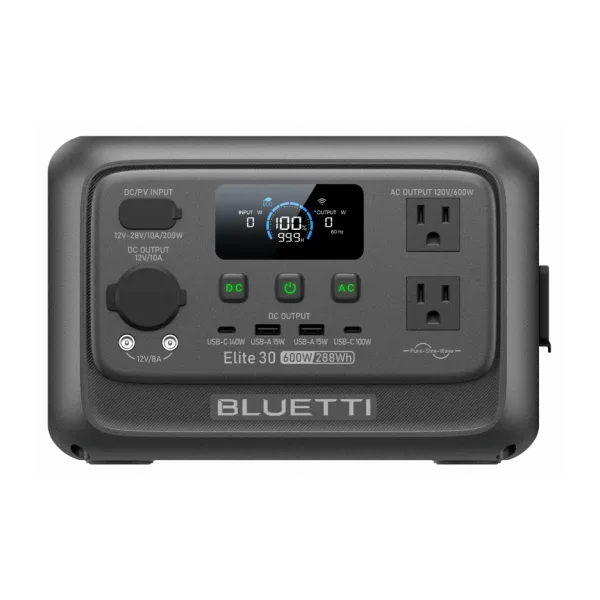 BLUETTI Elite 30 V2 | 288 | 600 | 1,500 | 200 | 380 | 5 | 9.5 | No | 0.83 |
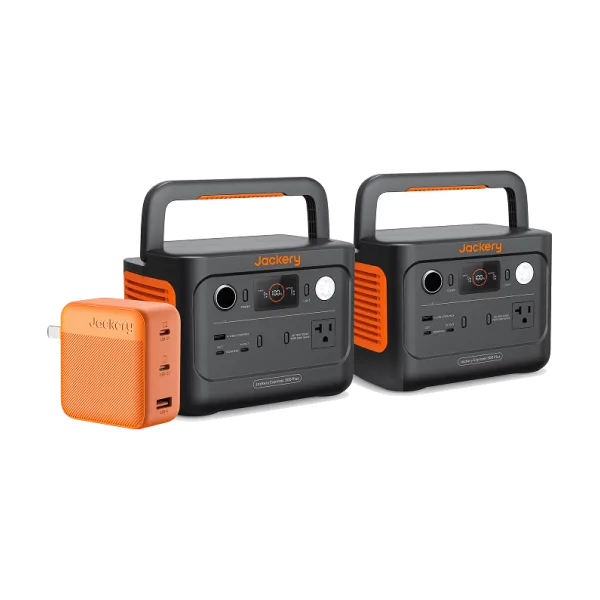 Jackery Explorer 300 Plus | 288 | 300 | 600 | 100 | Not stated | 3 | 8.3 | No | 1.04 |
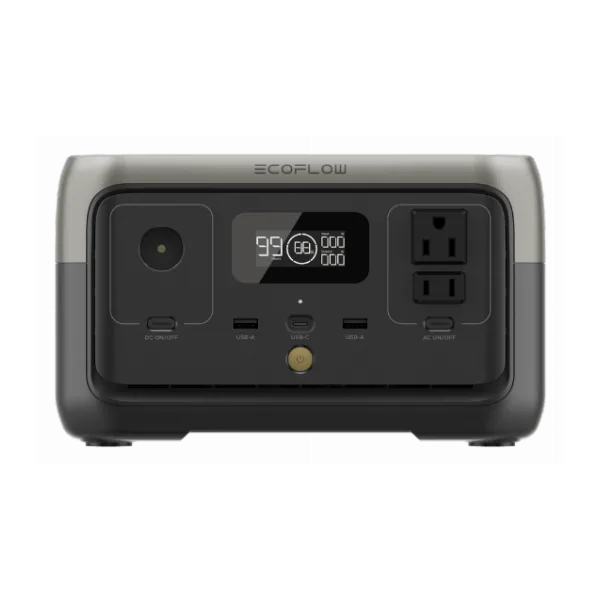 EcoFlow RIVER 2 | 256 | 300 | 600 | 110 | 360 | 5 | 7.7 | No | 0.78 |
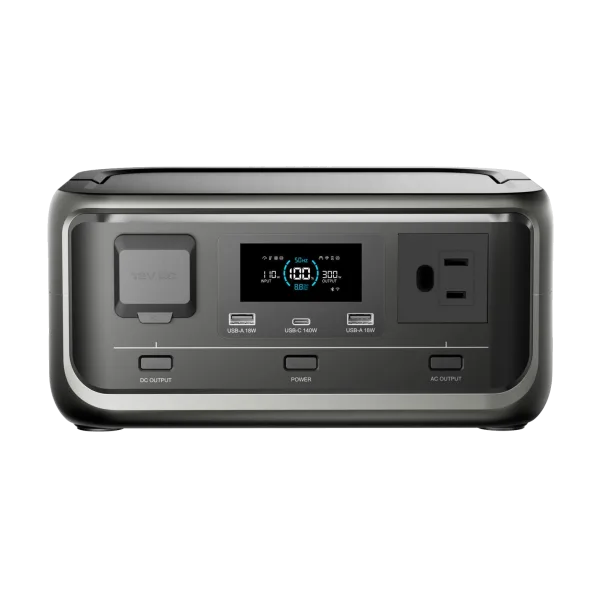 ALLPOWERS VOLIX P300 | 256 | 300 | 600 | 110 | 100 | 5 | 7.9 | No | 0.46 |
Only one rival matches the 600 W rating, and it is the real comparison. The Elite 30 V2 has near-identical capacity and output, and BLUETTI lists a 1,500 W surge against EcoFlow’s 1,200 W, a 200 W solar input against 220 W, and the same 3,000 rated cycles and 5-year term. It weighs 9.5 lb to the RIVER 3 Plus’s 10.4 lb. What it does not do is expand. If you will never add capacity, the higher surge rating and lower weight are the Elite 30 V2’s edge; if you might, the RIVER 3 Plus is the choice. Read Bluetti vs EcoFlow for the brand-level picture.
The 300 W units give up half the output. Weight is published for all four rivals and works out to between 30.3 Wh per lb (Elite 30 V2) and 34.7 (Jackery Explorer 300 Plus), and the RIVER 3 Plus, at EcoFlow’s 10.4 lb, works out to 27.5, the heaviest for its capacity of the five. On price, all four rivals sit above their own brand median: $0.83 per Wh against BLUETTI’s $0.515, $1.04 against Jackery’s $0.570, $0.78 against EcoFlow’s $0.710 and $0.46 against ALLPOWERS’ $0.380. On these four, the small size carries a premium per Wh whichever the brand. To judge the RIVER 3 Plus’s live price, divide it by 286 and set the result beside $0.710 per Wh, the median across the 19 EcoFlow models we track prices for (October 2026).
Against EcoFlow’s own RIVER 3 and RIVER 2
EcoFlow lists the RIVER 3 at 245 Wh, 300 W and a 600 W surge, and it does not take an extra battery. The RIVER 3 Plus adds 41 Wh (16.7% more), doubles the continuous output and takes an extra battery, and its 1,200 W surge is double the RIVER 3’s 600 W. The extra energy is modest: 41 × 0.85 = 34.9 Wh, which is about 52 minutes more on a 40 W CPAP. The RIVER 2 in the table is 30 Wh smaller (10.5% less than the Plus) and at 300 W; see our River 2 vs River 3 comparison for those two. The case for the Plus is the output and the expansion, not the capacity.
Who should buy something else
- You need CPAP all night with no add-ons. Aim for at least 377 Wh rated. The BLUETTI AC50B lists 448 Wh, so 380.8 Wh usable and 9.5 hours at 40 W; EcoFlow lists the RIVER 2 Max 500 at 499 Wh and 500 W, so 424.1 Wh usable and 10.6 hours.
- You want a fridge or freezer through an outage. Think in kilowatt-hours, not hundreds of Wh. A 1,024 Wh unit gives 870.4 Wh usable: 17.4 hours at a 50 W average fridge load, 5.8 hours with the compressor running flat out at 150 W.
- You need heat or cooking. A microwave (about 1,500 W from the outlet for a 1,000 W model), kettle or space heater (1,500 W) is beyond the rating. About three in four of the power stations we track that publish an AC rating are rated 1,500 W or more, so shop in that class; what size power station explains how.
- You want the lowest price per Wh. The ALLPOWERS VOLIX P300 lists 256 Wh for $119, which is $0.46 per Wh, with a 5-year term, 110 W solar and 100 W AC input. The cost is half the output and no expansion.
If a small unit already looks too small, these are the next steps up. The AC50B does not expand; the other two do.
| Model | Wh | AC W | Surge W | Cycles | Warranty (yr) | Expandable | List price | $/Wh |
|---|---|---|---|---|---|---|---|---|
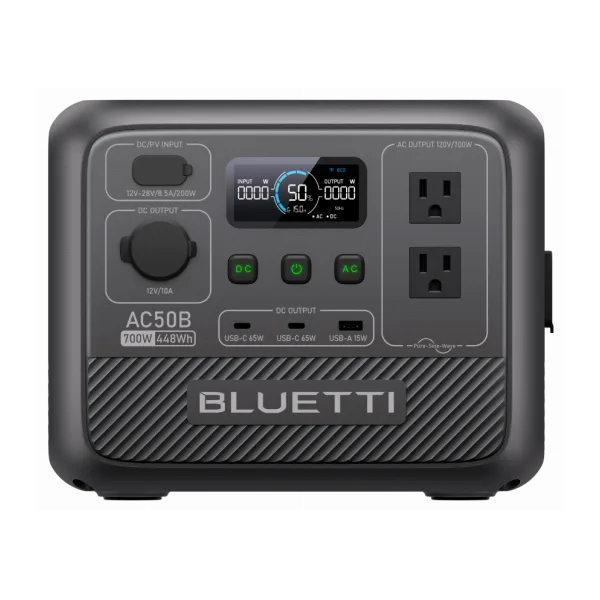 BLUETTI AC50B | 448 | 700 | 1,000 | 3,000 | 5 | No | $399 | 0.89 |
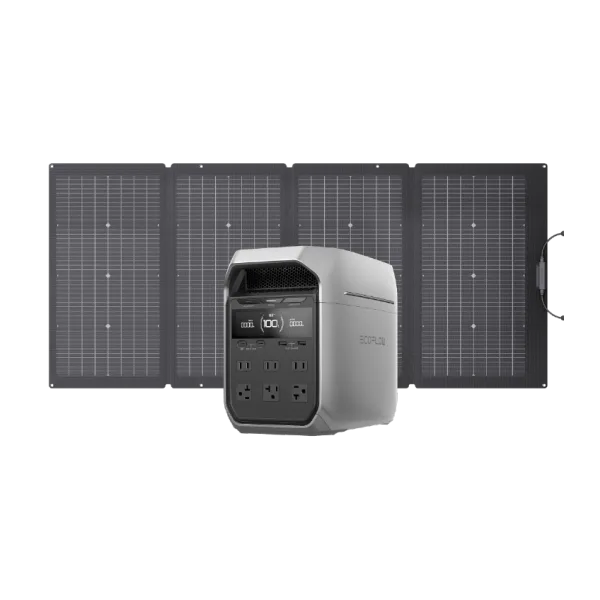 EcoFlow DELTA 3 Plus | 1,024 | 1,800 | 3,600 | 3,000 | 5 | Yes | $769 | 0.75 |
| OUPES Mega 1 | 1,024 | 2,000 | 4,500 | 3,500 | 5 | Yes | $699 | 0.68 |
The OUPES Mega 1 is the cheapest per Wh and has the highest output and surge ratings of the three (2,000 W and 4,500 W). OUPES lists a 5-year warranty for the Mega 1, the same term as the other two, and adds a sixth year free when you register the unit.
Frequently asked questions
Can one RIVER 3 Plus run a CPAP through a whole night?
Only a light machine. At 40 W the usable 243.1 Wh lasts 6.1 hours, so an 8-hour night needs an average at or under about 30 W, which a heated humidifier makes harder. To cover 40 W for 8 hours the Smart Extra Battery would have to add at least 91 Wh of rated capacity, which EcoFlow’s smaller 286 Wh pack does with room to spare.
Why does a 286 Wh unit list 600 W, and what does that buy?
Headroom, not endurance. The ratio is 2.10 W per Wh, against a median of 1.20 across the power stations we track. It means you can run combined loads or one 500 W load that a 300 W unit would refuse, but the battery drains in proportion: 24 minutes at 600 W and 29 minutes at 500 W. Treat it as a unit for short, heavy draws and for stacking small ones, not for long hauls.
How much does the Smart Extra Battery add, and how many can I connect?
One at a time. EcoFlow sells two packs, 286 Wh and 572 Wh, and lists 858 Wh, the base unit plus the larger pack, as the maximum. Usable energy is (286 + X) × 0.85, where X is the pack’s rated Wh: about 486 Wh with the smaller pack and about 729 Wh with the larger.
Is it worth buying small and expanding later?
Run one test: add the base unit’s price to the pack’s, divide by the combined rated Wh, and compare with the figures for one-box expandable units in the table above, $0.75 per Wh for the DELTA 3 Plus and $0.68 for the OUPES Mega 1. If your combination costs more per Wh than those, and your real need is already near 1,000 Wh, skip the staging and buy the larger unit. If your need is genuinely unknown, or portability matters more than cost per Wh, staging is a reasonable hedge.